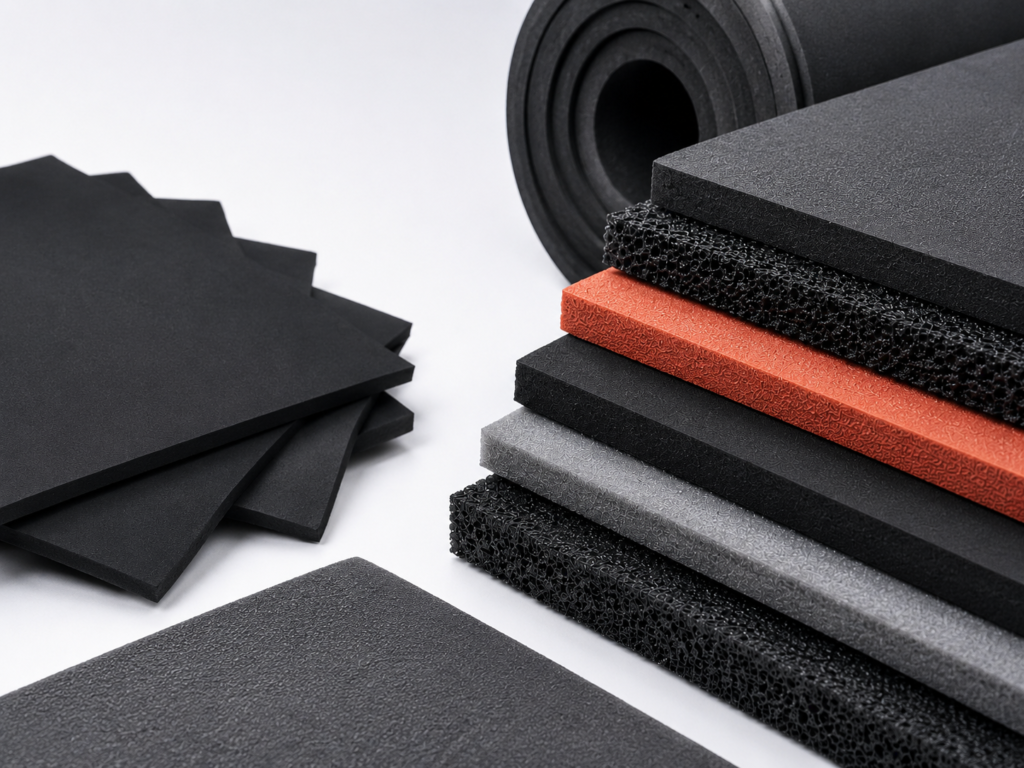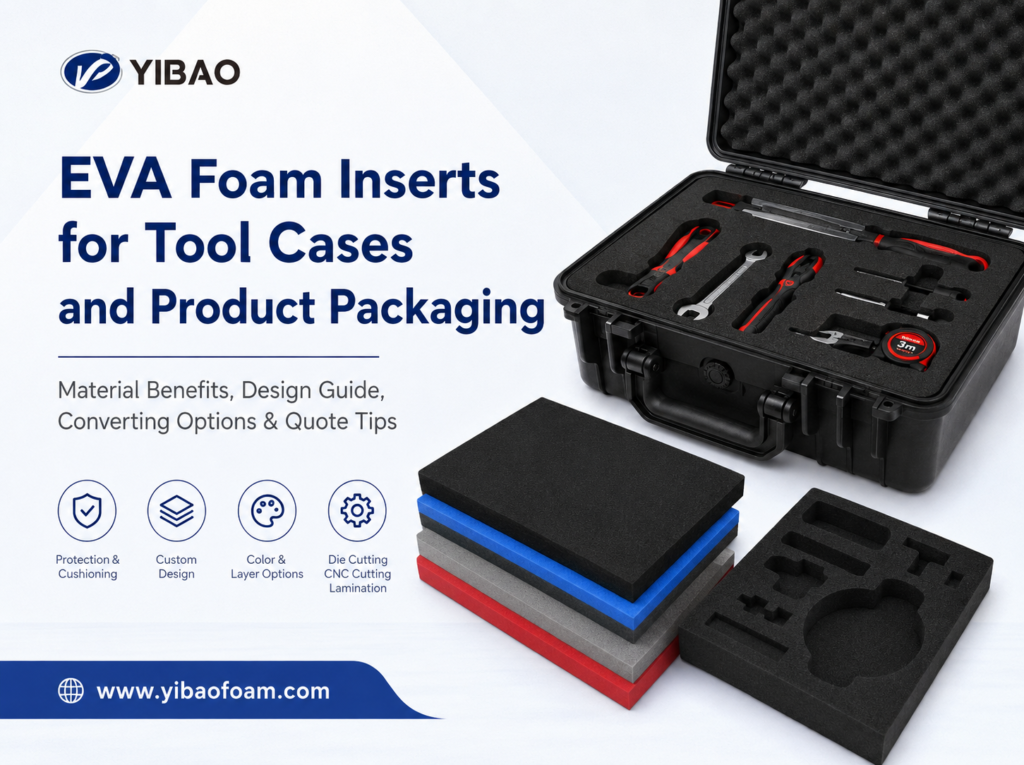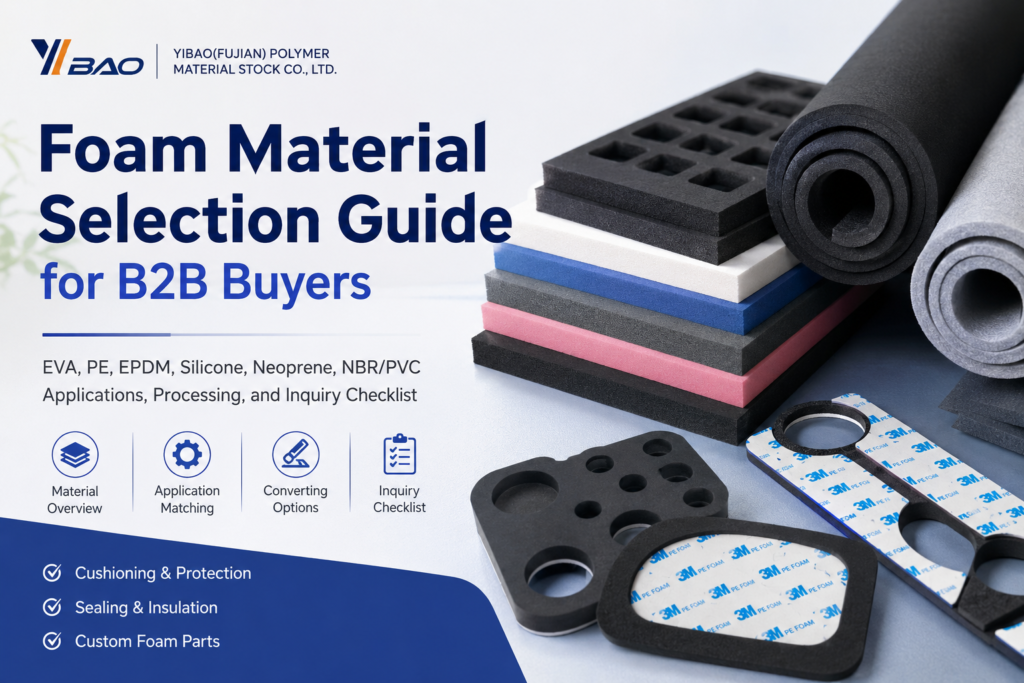
In packaging inserts and industrial die cutting, EVA foam works best when cushioning, cavity fit, clean edges and stable handling must come together. Instead of choosing by thickness alone, a stronger decision starts with product weight, cavity depth, density, tool access, packing pressure and removal experience. Therefore, this guide focuses on real EVA insert scenarios, die cutting decisions, CNC cutting limits and sample checks for production-ready parts.
Why EVA Foam Sheet Works for Packaging Inserts
First, an EVA insert should do more than fill empty space. In a tool case, it must stop metal tools from knocking into each other. In an electronics kit, it should protect edges without pressing too hard on screens, buttons or connectors.
Meanwhile, a medical device pack or instrument box often needs a cleaner, more controlled cavity. The product should sit firmly, yet removal should feel smooth. If the insert grips too tightly, handling slows down and surface scratches may appear.
Therefore, EVA packaging design should consider loading, unloading, shipping vibration and presentation at the same time. A neat top view matters, but the bottom support and side clearance often decide whether the insert works after transport.
Practical judgment: A good EVA insert holds the product securely, releases it without struggle, protects the contact surface and keeps the cavity shape after repeated handling.
Also, display packaging and export packaging need different thinking. Display packaging may value clean edges, color consistency and smooth removal. Export packaging may care more about compression, corner protection, stacking pressure and carton movement.
 View Halogen-free Flame Retardant EVA
 Density and Thickness Decisions for EVA Packaging Parts
Next, density and thickness should be chosen as a pair. Density affects support, cutting feel and edge strength. Thickness affects cavity depth, bottom cushioning and the total height inside a box, case or industrial tray.
For light accessories, a moderate sheet may provide enough protection and keep the package easy to handle. However, heavy tools, metal parts or precision instruments often need firmer support. In those cases, high density EVA foam can help hold shape and reduce cavity deformation.
Still, higher density is not always better. A very firm insert may press against delicate surfaces or make removal difficult. Therefore, the best density is the one that supports the product while keeping handling smooth.
How to judge density by product behavior
- Use softer grades when surface protection and hand feel matter more than load support.
- Use medium grades for general inserts, case liners and light industrial pads.
- Use firmer grades when tools, instruments or metal parts need stronger cavity support.
- Check removal force, not only compression feel during the first touch.
- Test the final thickness after adhesive backing, lamination or multi-layer bonding.
In addition, thickness should match the package structure. A deep cavity can protect a tall product, but it may also hide the product too much. A shallow cavity may look cleaner, yet it may not control movement during transport.
 View Halogen-free EVA
 Practical EVA Selection Table for Inserts and Die-Cut Parts
The table below gives a practical starting point for EVA packaging and industrial parts. However, the final choice should still be confirmed by real product loading, cavity fit, cutting trial and packing test.
| Material / Format | Best for | Key property | Suggested YIBAO page |
|---|---|---|---|
| Standard EVA sheet | General inserts, box lining, soft protective pads | Light weight, cushioning, easy sheet processing | EVA foam sheet range |
| High density EVA sheet | Tool cases, instrument inserts, heavy component support | Better shape holding, firmer support, cleaner cavity walls | EVA Business Department |
| Flame-retardant EVA sheet | Electrical packaging, appliance pads, selected functional parts | Added flame-related function for specific project requirements | EVA Business Department |
| CNC-cut EVA insert | Prototype cavities, complex shapes, deep pockets, small batches | Flexible sample changes and detailed cavity control | Converting support |
| Die-cut EVA parts | Repeat pads, strips, liners, spacers, simple cavity shapes | Repeatability, faster production, consistent part layout | Converting support |
In short, the best option depends on the packaging role. A premium display insert may need cleaner edge appearance. A heavy-duty tool insert may need stronger cavity walls. A prototype insert may need CNC flexibility before the die-cut layout is fixed.
Cavity Design: How to Avoid Tight, Loose or Fragile Inserts
Cavity design is often the difference between a good-looking sample and a usable packaging part. A tight cavity may look secure during inspection. However, it can slow loading, mark the product surface or make removal difficult.
On the other hand, a loose cavity may improve removal speed but reduce protection. The product may rattle during shipping, especially when the package faces vibration, stacking pressure or repeated handling.
Therefore, the cavity should match the product shape and the handling process. Sharp product corners may need more clearance. Smooth cylindrical tools may need finger slots. Small accessories may need grouped pockets instead of isolated narrow cavities.
Useful cavity checks before approval
- Check whether the product can be removed without bending the insert wall.
- Add finger access where tools or instruments sit below the top surface.
- Avoid very thin walls between two cavities when repeated removal is expected.
- Use rounded inner corners to reduce tearing and improve cutting quality.
- Test real loading speed, not only product fit in a static photo.
Additionally, multi-layer inserts can solve some cavity problems. A firmer bottom layer can support weight, while a softer top layer improves contact feel and presentation. This approach is useful when one sheet cannot solve both support and surface protection.
 View Special EVA Material
 Die Cut EVA Foam vs CNC Cutting: Which Route Fits Better?
Die cutting usually fits repeatable parts with stable shapes. Pads, liners, strips, spacers and simple cavity layouts can often move into die cutting after the design is fixed. In higher volumes, die cutting can improve speed and consistency.
CNC cutting fits prototype work, deeper pockets, complex cavities and small-batch trials. It also helps when the cavity design may still change. However, CNC cutting may not always be the most efficient route for simple repeat shapes.
For die cutting, the drawing should avoid extremely narrow bridges, sharp internal corners and weak wall sections. These details can cause tearing, edge roughness or poor shape recovery. A small radius change can make the part much easier to produce.
For CNC cutting, the tool path and cavity depth matter. A deep pocket may need layered design or stepped cutting. Also, very small details should be reviewed before sampling, because tool diameter can limit the final corner shape.
Quick decision guide
- Choose die cutting when the part shape is fixed and repeat volume is stable.
- Choose CNC cutting when cavity depth, prototype changes or complex shapes matter.
- Use larger corner radius when cavity walls are thin or frequently touched.
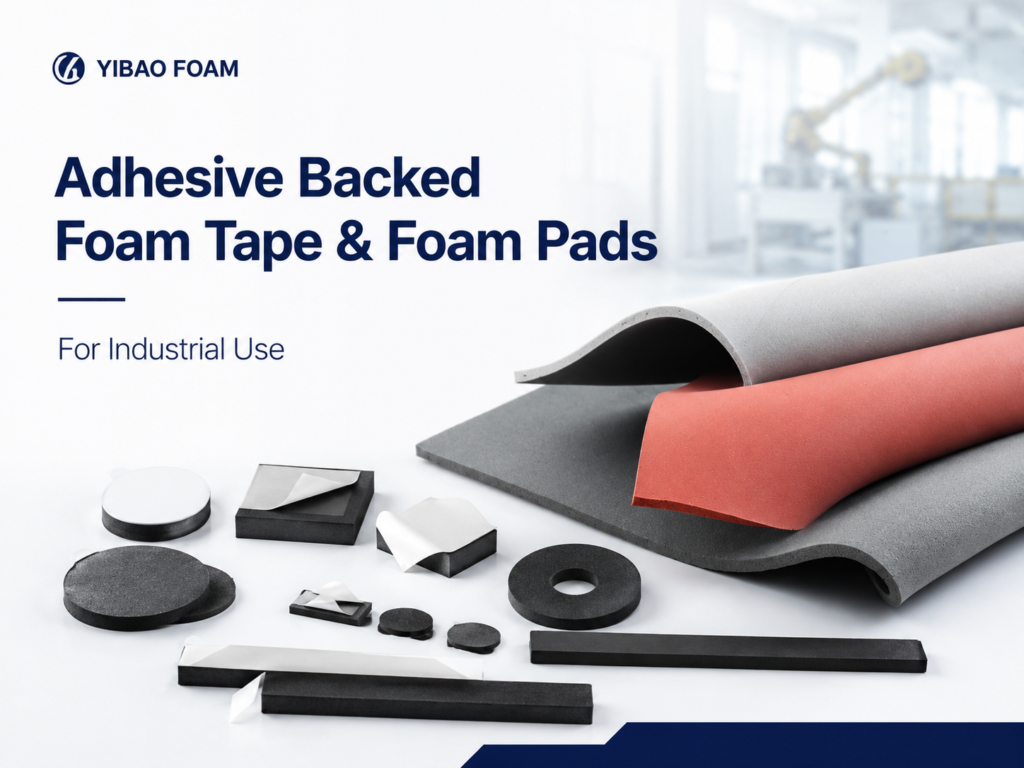
- Review adhesive-backed parts separately because liner stiffness can affect flatness.
- Confirm packing direction to avoid bent corners before shipment.
As a result, die cut EVA foam should be treated as a production part, not only a cut shape. The material, drawing, cutting method, packing method and removal experience all affect the final result.
Typical Industrial Uses for EVA Packaging and Die-Cut Parts
In tool packaging, EVA inserts help separate wrenches, bits, meters, blades and accessories. The cavity layout should prevent metal-to-metal contact while keeping each tool easy to find and remove. Therefore, finger slots and wall width deserve careful review.
In electronics packaging, EVA can protect chargers, adapters, sensors, test devices and small modules. However, the insert should not press too hard on buttons, cables or screens. A softer top layer may help when the product surface is sensitive.
In precision instrument kits, cavity balance becomes even more important. The insert must hold the part during transport but avoid a tight pull when the instrument is removed. For that reason, sample testing should include repeated removal, not only first placement.
In industrial assembly, EVA can also support pads, liners, separators, protective covers and light spacers. Still, temperature, oil exposure, compression time and surface contact should be checked before using EVA in more demanding environments.
 View EVA Application Material
 Quote Checklist for EVA Inserts, Pads and Die-Cut Parts
A useful quote should explain both the material and the process. If a request only lists thickness and color, the first sample may miss important details. Therefore, application notes, drawings and packing expectations should be included early.
For packaging inserts, the inquiry should include product weight, product size, cavity layout, display requirement and carton space. For industrial pads, it should include contact surface, compression condition, tolerance, adhesive needs and repeat volume.
Information to prepare before quotation
- Application type: packaging insert, tool case liner, industrial pad, spacer or protective part.
- Target thickness, density, hardness, color and surface finish.
- Drawing, CAD file, product photo or cavity layout sketch.
- Product weight, contact surface, cavity depth and expected removal method.
- Cutting method preference: die cutting, CNC cutting, slitting or lamination.
- Adhesive backing, film, fabric, coating or liner requirements.
- Sample quantity, pilot quantity, repeat volume and packing method.
Also, feedback after sample testing should be specific. Photos, measured dimensions, cavity fit, edge condition, loading speed, removal feeling and packing comments all help improve the next sample. Vague comments usually create another slow round.
Finally, a pilot run should confirm cutting yield, packing pressure, carton stability, incoming inspection and line handling. This step helps prevent a good sample from becoming a difficult production part.
FAQ: EVA Packaging Inserts and Die-Cut Parts
What if an EVA insert cavity is too tight?
A tight cavity can slow loading, scratch the product or make removal difficult. The usual fix is to add small clearance, adjust cavity depth, use a larger corner radius or add finger access. A softer top layer may also help with sensitive surfaces.
Is high density EVA foam suitable for heavy tools?
High density EVA foam can be suitable for heavy tools when stronger cavity support and better shape holding are needed. However, the insert should still be tested for removal force, wall strength, bottom support and carton pressure.
When should CNC cutting be used instead of die cutting?
CNC cutting is useful for prototypes, deep cavities, complex shapes and designs that may change. Die cutting is usually better when the shape is fixed and repeat volume is stable.
How thick should an EVA foam sheet be for packaging?
Thickness should follow product height, weight, cavity depth and carton space. A thicker insert may improve protection, but it can also increase pressure. Real product loading and removal tests are needed before approval.
What information helps prepare a useful die cut EVA foam sample?
Useful information includes product size, weight, drawing, cavity layout, target density, thickness, surface sensitivity, cutting method, packing method and expected repeat volume. These details help reduce unnecessary sample rounds.
Conclusion: Build the EVA Insert Around Real Handling
In summary, EVA sheet projects should be judged by real handling, not only by material name. A good insert should hold the product, protect the surface, cut cleanly, pack safely and support repeat production.
Therefore, density, thickness, cavity design, die cutting, CNC cutting and packing should be reviewed together. This approach makes the sample stage more useful and reduces production surprises.
- First, test cavity fit with the real product, including loading and removal.
- Second, choose density by support, edge strength and surface sensitivity.
- Finally, confirm die cutting, CNC cutting and packing before repeat production.
For EVA insert samples, material suggestions or custom processing discussion, contact YIBAO Foam through the Contact page.
A practical EVA foam project should make packaging safer, cavity design cleaner and production handling easier.