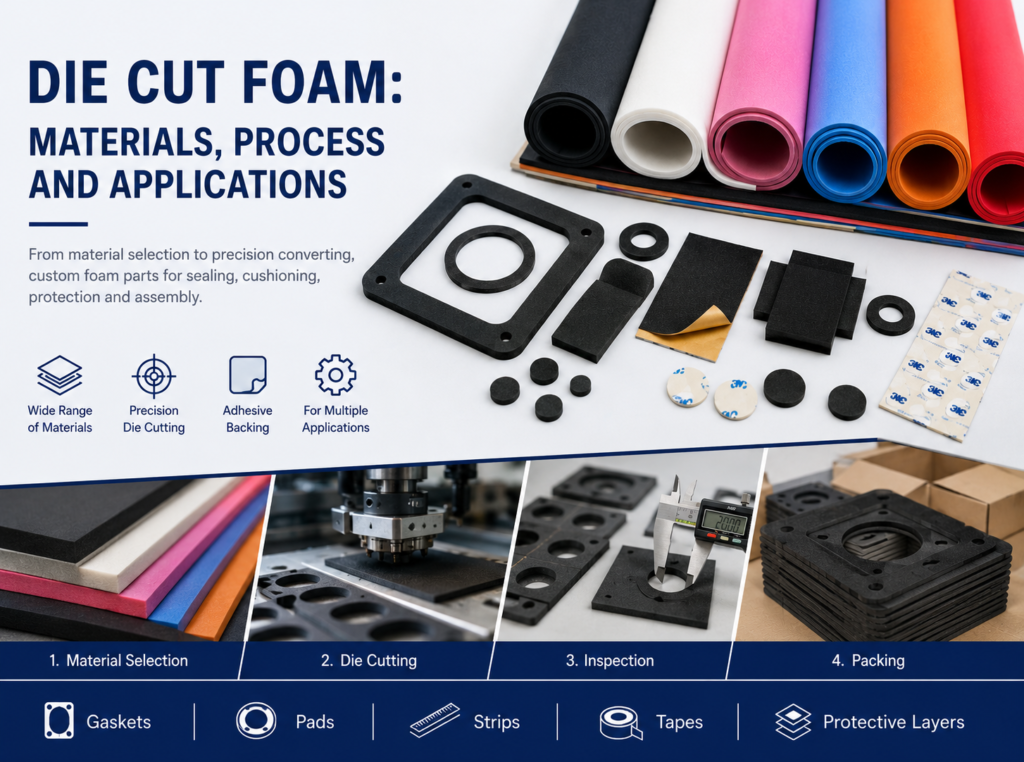
Die Cut Foam: Materials, Process and Applications
For OEM foam projects, die cut foam turns sheet, r […]
Die Cut Foam: Materials, Process and Applications Read More »
For OEM foam projects, die cut foam turns sheet, r […]
Die Cut Foam: Materials, Process and Applications Read More »
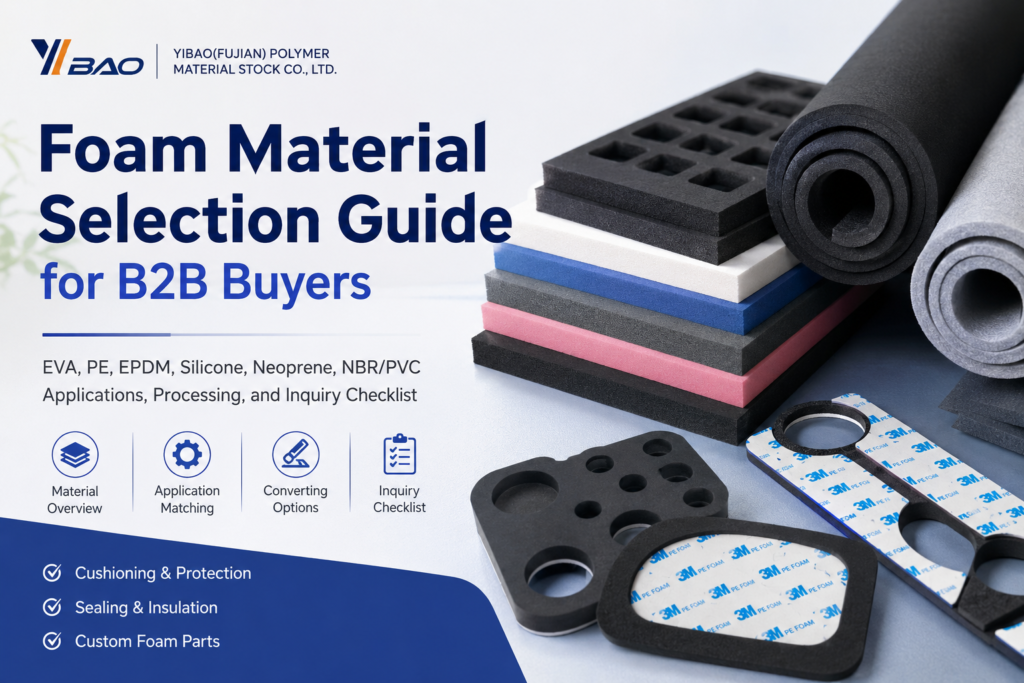
A B2B material selection guide covering closed cell foam benefits, common material options, application scenarios, selection factors, die cutting needs and inquiry preparation for industrial foam projects.
What Is Closed Cell Foam? Benefits, Materials and Applications Read More »
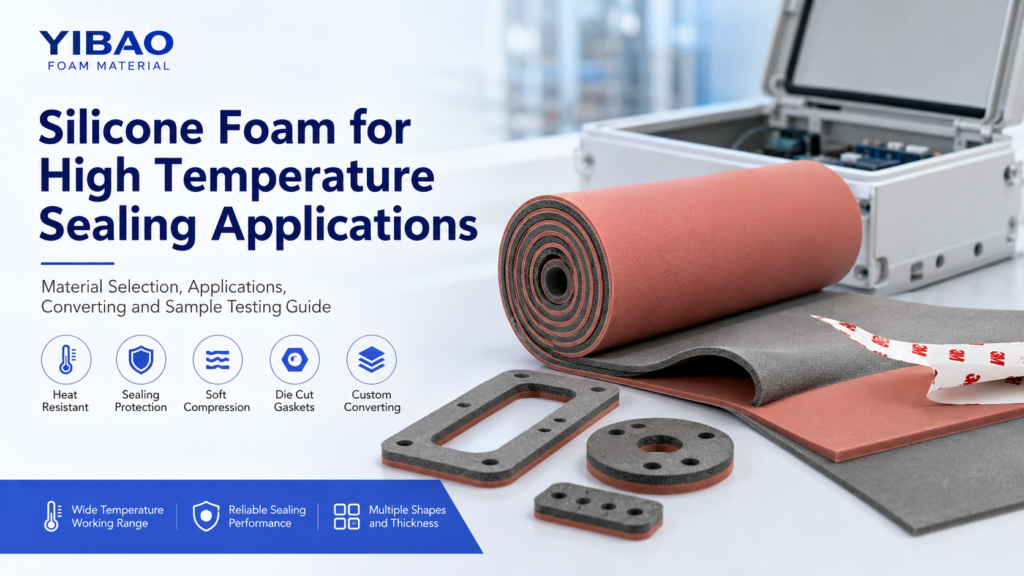
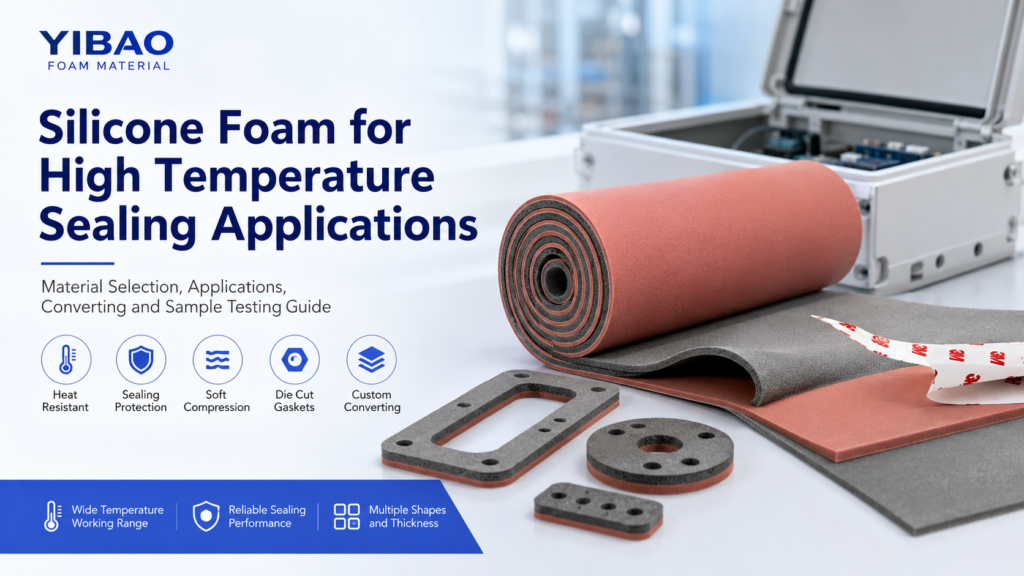
This guide explains how to compare EPDM foam and silicone foam for industrial sealing projects. It covers outdoor weather resistance, high-temperature sealing, compression behavior, adhesive backing, converting methods, application examples and sample information needed before production.
EPDM Foam vs Silicone Foam for Industrial Sealing Applications Read More »
Compare neoprene foam and EPDM foam for rubber foam projects, including soft goods, lamination, outdoor seals, gaskets, compression needs and sample selection.
Neoprene Foam vs EPDM Foam: Which Rubber Foam Is Better for Your Project? Read More »
This guide explains EVA material from a B2B sourcing and application perspective. It covers key properties, common uses, suitable project scenarios, EVA vs PE comparison, specification details, sample review, and quote preparation for sheet materials and custom converted parts.
What Is EVA Foam and What Is It Used For? Read More »
This guide explains how to choose between PE foam and EVA foam for B2B foam sheet projects. It compares cushioning performance, firmness, compression behavior, water resistance, surface finish, cutting methods, application scenarios and inquiry requirements. It also guides project teams toward PE FOAM, EVA solutions and foam converting support based on real application needs.
PE Foam vs EVA Foam: How to Choose the Right Foam Sheet Read More »
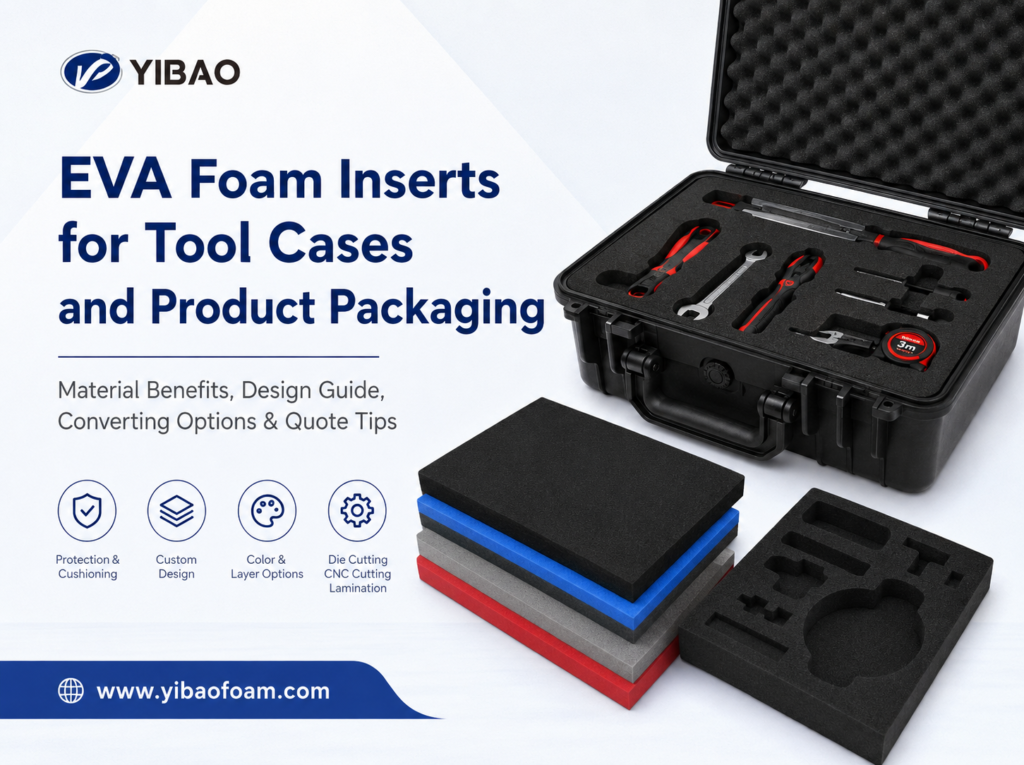
This article explains how custom foam inserts improve protective packaging for industrial products. It covers product shape, protection level, die cutting, CNC cutting, foam material selection, quote file preparation, sample testing, and practical packaging decisions for B2B projects.
Custom Foam Inserts for Protective Packaging Projects Read More »
This article explains how custom foam inserts support protective packaging projects by reducing product movement, improving packing efficiency, protecting sensitive surfaces, and matching foam materials with real shipping conditions. It compares die cutting and CNC cutting, introduces suitable foam options such as EVA, EPDM, CR, PE, and flame retardant EVA, and provides practical guidance for quote files, sample testing, and project planning with YIBAO Foam.
Custom Foam Inserts for Protective Packaging Projects Read More »
This article explains how neoprene fabric supports laminated foam soft goods through cushioning, textile surface feel, cutting stability, roll supply, and custom converting. It helps industrial soft goods projects choose materials based on real product use, not only technical parameters.
Neoprene Fabric for Laminated Foam and Soft Goods Read More »
This article explains how NBR foam works in oily industrial environments, why NBR/PVC blends are useful for pads, seals and insulation layers, and how to judge density, compression, adhesive backing and custom converting before production.
NBR Foam for Oil Resistance, Insulation and Pads Read More »