
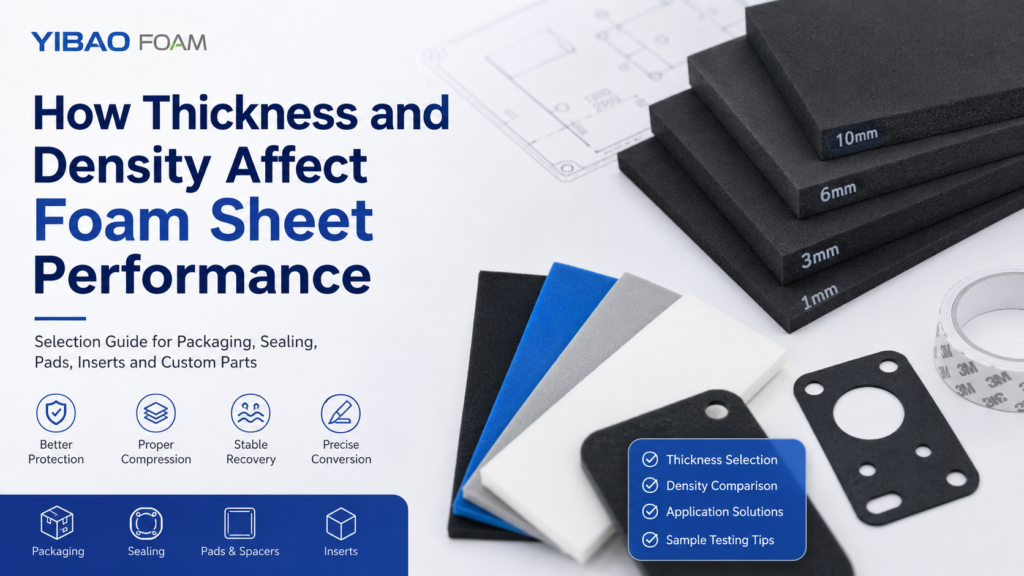
Choosing the right foam sheet thickness and density is not a matter of ordering the thickest or firmest grade. The useful starting point is the job the foam must perform, the installed space available and the force applied to the finished part.
This guide follows the way an industrial buyer actually makes the decision: define the assembly limits, identify the failure risk, compare a narrow sample set and approve the finished construction rather than a loose sheet alone.
Before requesting a quote
Bring four project facts, not one foam number
Follow the decision route
The specification problem
Thickness and Density Do Not Describe the Whole Foam Part
A request such as “10 mm medium-density foam” still leaves the supplier unable to predict closing force, long-term recovery, cushioning travel or edge stability after cutting. Four different properties must be kept separate.
Thickness
The free material height before installation. It controls available cushion travel, gap fill and the finished stack height.
Density
Mass per unit volume. It is useful for comparing grades within the same material family and test basis, but it does not directly tell the buyer how firm the part will feel.
Hardness or compression force
Resistance under a stated test condition. This is closer to the force the part places on a lid, groove, housing or protected surface.
Compression set and recovery
The ability to return toward the original height after load. This matters for reusable inserts, long-life gaskets and pads held under continuous pressure.
Comparison rule: compare density, hardness and compression data only when the polymer family, cell structure and test method are clear. Two materials with the same density can behave very differently in the same assembly.
A constraint-first method
Choose the Foam from the Assembly Backward
The catalogue should not decide the part. The assembly defines the space and load, the application defines the required behavior, and the sample confirms whether the finished construction can deliver both.
Measure the real gap, including tolerance
Record the nominal gap and the smallest and largest possible gap after manufacturing variation. Include every film, fabric, adhesive layer and protective liner that remains in the final assembly.
Map where the force enters the foam
A wide product spreads load, while a narrow metal edge creates local pressure. A lid, equipment foot and shipping impact place different demands on the material even when the total weight is similar.
Define the failure that must be prevented
Packaging may fail through bottoming, movement or difficult removal. A seal may fail through insufficient contact or excessive closing force. A support pad may fail through permanent flattening, movement or adhesive lift.
Request a narrow sample set
Two or three realistic options are more useful than many unrelated swatches. Vary one meaningful factor at a time, such as thickness, compression force or layer construction.
Installed compression
(Free thickness − installed gap) ÷ free thickness × 100%
A 10 mm sheet installed in an 8 mm gap is compressed by 20%. Run the calculation at the minimum and maximum gap, then ask the supplier whether the selected grade is suitable at both limits.
Change the right variable
A performance problem does not always require a thicker sheet
Reducing thickness may remove contact at the largest gap. A lower compression-force grade may solve the problem while preserving installed height.
More cushioning travel may help, but contact area and material response must also be reviewed. A thicker sheet alone can create a case-closure problem.
The better change may be a grade with stronger edge stability, a revised cavity layout or a laminated construction rather than more overall thickness.
Review compression set, static load, temperature and service duration. Higher density alone does not guarantee better recovery.
Application paths
Use Different Selection Logic for Inserts, Seals and Contact Pads
The same thickness and density can produce a good packaging insert and a poor gasket. Each project path needs its own acceptance criteria.
Path A · Protective packaging and inserts
Balance cushioning travel with product control and removal
Packaging foam must control movement without pressing delicate surfaces or making the product difficult to remove. Thickness sets the available travel and cavity depth; the selected grade must also hold narrow walls and remain stable after CNC cutting or lamination.
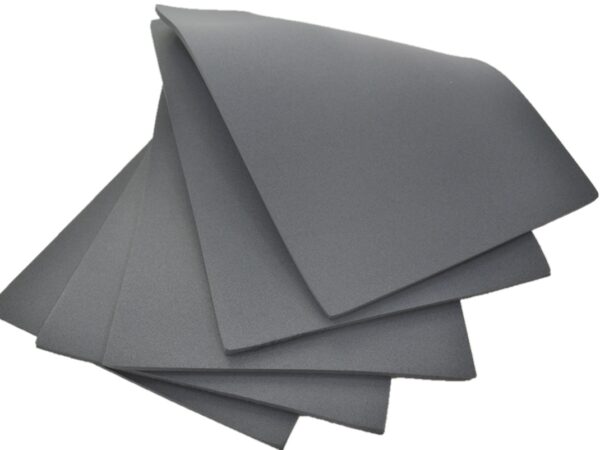
A flat swatch cannot reveal finger-clearance problems, thin-wall collapse, lid pressure or removal force. Test the finished insert in the actual case whenever geometry is already defined.
Path B · Gaskets and weather seals
Design for the complete gap range, not one drawing dimension
A gasket must make contact at the largest gap and avoid excessive force at the smallest gap. Thickness defines the available compression range, while compression-deflection and recovery determine whether the seal remains useful after assembly.
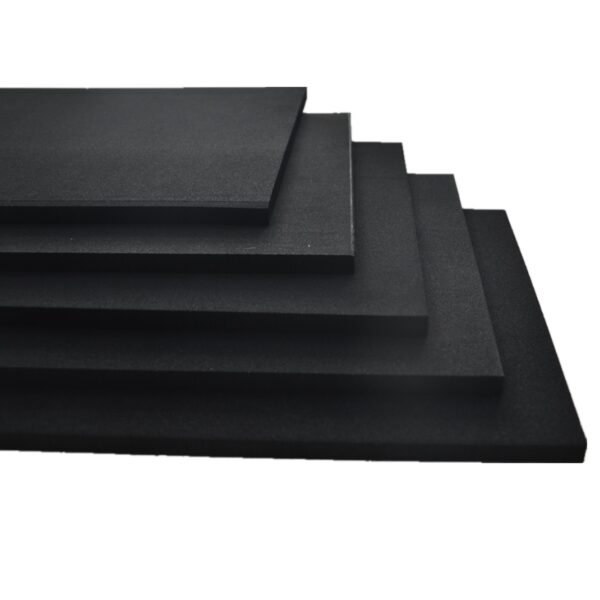
Include outdoor exposure, heat, moisture, oil or cleaning conditions when they are part of the real service environment.
Path C · Heat-exposed and soft-contact parts
Keep contact pressure stable when temperature changes the assembly
Lighting, electronics and industrial covers may need flexible contact alongside temperature resistance. Thickness must fill the designed space without squeezing out of the groove, while the grade must maintain useful recovery in the expected temperature range.
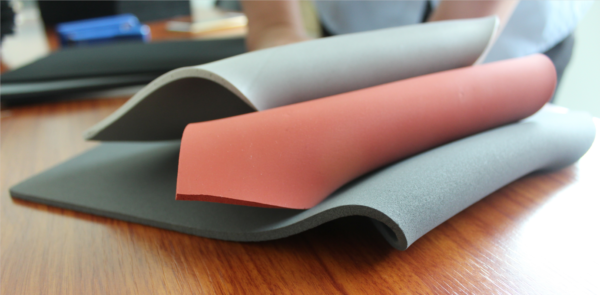
Confirm: groove width, minimum gap and maximum gap.
Confirm: working temperature and expected recovery.
Confirm: substrate and adhesive compatibility.
Confirm: final converted thickness, not only raw sheet thickness.
Where pads and spacers fit
For anti-rattle pads, panel spacers and equipment support pieces, start from installed height, static load, vibration direction and substrate. Final approval should include the adhesive, liner and real contact area rather than a hand-feel comparison alone.
RFQ quality control
Five Specifications That Should Be Sent Back for Clarification
Weak wording creates unnecessary sample cycles and forces the supplier to guess. Clarify the missing condition before price becomes the main comparison.
From sample to production
Use a Sample Brief That Produces a Decision
The purpose of sampling is not to collect swatches. It is to decide whether a defined finished construction works in the real assembly and can be reproduced for production.
Buyer provides
Define the assembly and expected service
- Drawing, dimensions, tolerance and installed gap.
- Load, contact area, closing force or product weight.
- Temperature, moisture, weather, oil and service conditions.
- Final form, adhesive, laminate, liner, quantity and packing requirement.
Supplier confirms
Translate the application into a reproducible construction
- Material family, available thickness and tolerance capability.
- Density, hardness or compression data under a stated method.
- Relevant material limitations for the service environment.
- Converting method, finished thickness and sample construction.
Sample approval checks
Inspect the finished part under realistic conditions
- Fit at minimum, nominal and maximum gap.
- Bottoming, surface pressure, movement and recovery.
- Performance after representative exposure or conditioning.
- Cut quality, liner release, bonding, assembly handling and repeatability.
When a flat sheet sample is enough
Use it for early screening of material family, color, surface and general handling when geometry and adhesive are not yet fixed.
When a finished part sample is necessary
Use it when the project includes cavities, narrow strips, tight tolerance, lamination, adhesive backing, a groove or a defined assembly force.
Send the application conditions before locking the foam specification
Share the drawing, installed gap, target function, load, environment, adhesive requirement and expected quantity. YIBAO can use that information to narrow the material and sample direction before bulk converting.
Questions Buyers Ask Before Approving Foam Thickness and Density
These answers support early screening. Final approval should still use the selected material grade, finished geometry and actual assembly condition.