
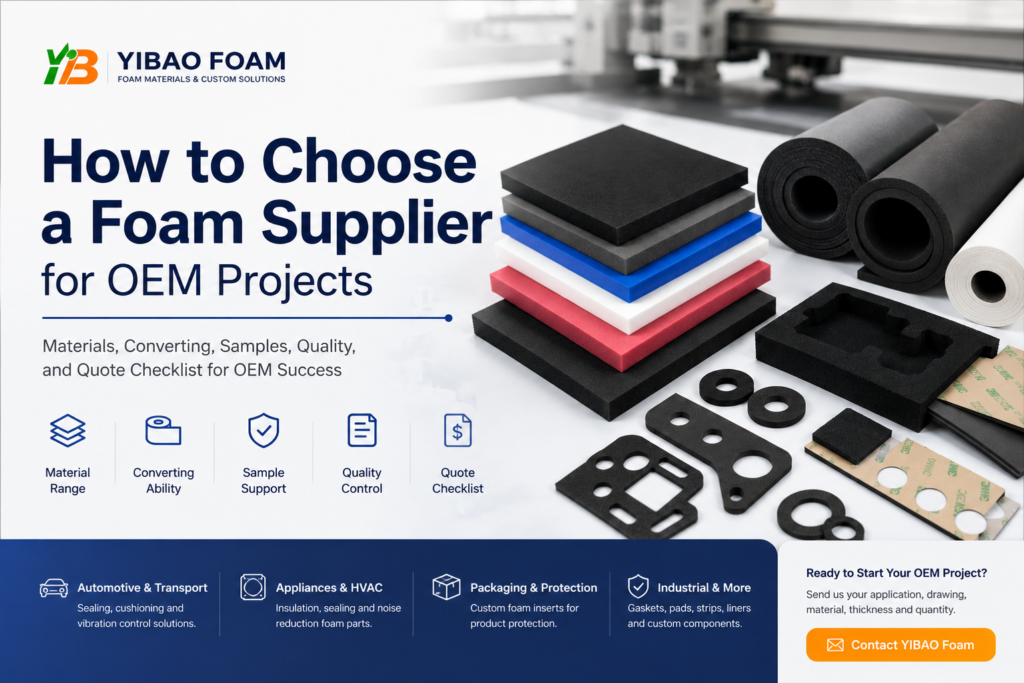
Choosing a foam supplier for an OEM project involves more than comparing sheet prices. The supplier must be able to connect the required function with a suitable foam grade, converting method, adhesive option, sample process, packing format, and repeat-production plan. Whether the finished part is a gasket, pad, insert, strip, liner, spacer, or laminated component, the sourcing decision should make the route from drawing to production clear and practical.
Jump to:
Why Choosing a Foam Supplier for OEM Projects Requires More Than Sheet Price
An OEM foam part rarely works by shape alone. A drawing may show a gasket, pad, strip, spacer, liner, grip, cushion, insulation layer, or protective insert. The drawing may still leave out compression feel, recovery, surface contact, adhesive performance, or assembly pressure.
A practical sourcing process should connect the drawing with the material. EVA foam, PE foam, EPDM foam, neoprene foam, silicone foam, NBR/PVC foam, flame-retardant foam, and laminated foam can all serve different functions. Meanwhile, each material can change by density, hardness, cell structure, thickness, surface skin, color, and backing.
In many projects, the first sample does not represent the final production part. Instead, it helps confirm direction. For example, a soft EVA pad may feel correct during handling, yet it may compress too much under load. Likewise, a closed-cell EPDM seal may fit the weather-resistance target, but thickness may still need adjustment after an assembly trial.
The best sourcing path checks how the material performs inside the real product. It also checks whether the same manufacturing partner can support sampling, die cutting, CNC cutting, laminating, adhesive backing, sheet supply, roll supply, and later production scaling.
Low sheet price can create hidden project cost
At first, a lower sheet price may look attractive. Foam parts also create cost in several other places. Cutting waste, adhesive failure, poor thickness control, inconsistent compression, delayed samples, weak packing, and unclear drawings can all increase total project cost.
For example, a gasket with uneven edges can slow assembly. Meanwhile, a cushioning insert that changes density between batches may affect product fit. In addition, an adhesive-backed foam strip that lifts during storage can create rework before final installation.
The better question is not only the material price. A stronger question is whether the material, converting route, sample process, and repeat production plan can support the complete OEM requirement.
OEM-ready foam support connects material and process
An OEM-ready foam partner should understand both material behavior and production process. The material direction should match the application, while the converting process should match the final shape, tolerance, adhesive side, and packing method.
For instance, PE foam can support lightweight cushioning, appliance sealing, packaging protection, and building-related insulation uses. EPDM foam often fits outdoor sealing, automotive pads, appliance gaskets, and long-term compression parts. Silicone foam may suit heat-adjacent sealing, electrical insulation support, and flexible high-temperature gasket designs.
At the same time, OEM-ready support includes slicing, splitting, slitting, laminating, adhesive backing, kiss cutting, die cutting, CNC cutting, and custom packing. Material and process should be reviewed together rather than treated as separate purchases.
Review the Material Range Before Finalizing the Part
Material range should be reviewed before the final part structure is fixed. A broad foam portfolio helps an OEM program avoid forcing one material into every function. The early discussion should cover both the material family and the performance expected from the finished part.
The YIBAO foam product range includes foam materials for sealing, cushioning, protection, insulation, lamination, adhesive-backed parts, and converted components. The final selection should still depend on environment, pressure, contact surface, thickness, and assembly method.
EVA foam for structure, cushioning, and clean presentation
EVA foam often suits projects that need a balance of cushioning, shape support, appearance, and process flexibility. For example, it can support tool inserts, case liners, sports pads, footwear components, packaging trays, handle grips, protective blocks, and molded-feel parts.
EVA foam can vary widely. A soft, low-density grade may support comfort and light cushioning, while a firmer grade can provide cleaner cutouts, more stable walls, and better part presentation. Density and hardness should be discussed in relation to the target application.
EVA can be die cut, CNC cut, laminated, embossed, shaped, or combined with adhesive depending on the project. This makes it useful when a foam component needs both visual order and functional cushioning.

EVA foam can support structured cushioning, organized inserts, protective layers, and industrial components that need clean cutting and stable shape.
PE foam for lightweight cushioning and insulation support
PE foam is useful when light weight, closed-cell structure, cushioning, water resistance, and dimensional stability matter. For instance, PE foam may appear in packaging inserts, appliance seals, automotive support pads, door and window sealing strips, sound insulation layers, and transport protection.
But PE foam should not be selected only because it looks simple. Different grades can feel soft, firm, resilient, or more structural. Consequently, thickness, compression load, recovery, and installation pressure should be checked before a production decision.
PE foam can support sheet supply, roll supply, cutting, slitting, lamination, and adhesive backing. This makes it practical for projects that need lightweight parts with repeatable dimensions.
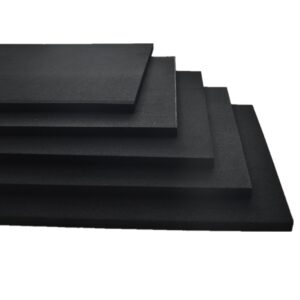
PE foam is a practical option for lightweight cushioning, sheet supply, converted pads, carton protection, and insulation-related foam parts.
EPDM foam for sealing, weather exposure, and compression stability
EPDM foam often fits sealing parts that need weather resistance, ozone resistance, compression recovery, and stable performance in outdoor or semi-outdoor environments. For example, it can support automotive seals, appliance gaskets, enclosure seals, lighting seals, door seals, HVAC pads, and industrial strips.
Still, EPDM foam should be reviewed by cell structure and surface condition. Open-cell, semi-closed-cell, closed-cell, crust-skin, and low-odor directions can behave differently. A useful application note should describe the gap, pressure, water exposure, and required softness.
In sealing projects, compression behavior is especially important. A seal that is too soft may not close a gap. Meanwhile, a seal that is too firm may create assembly resistance or part deformation.
Neoprene, SBR, SCR, and CR foam for flexible and laminated parts
Neoprene-related foam materials, including SBR, SCR, and CR foam, often support soft goods, protective equipment, sports supports, neoprene fabric lamination, cushioning pads, and industrial gasket parts. In many cases, these materials provide a rubber-like feel with useful flexibility.
At the same time, laminated fabric options can improve appearance, comfort, and handling. A support wrap, bag panel, protective sleeve, sports pad, or wearable part may need both foam performance and textile finish. Because of that, fabric type, stretch direction, lamination strength, and edge finish should appear in the sample discussion.
For industrial pads and strips, CR-related materials may also support protective cushioning and flexible sealing. Still, thickness, rubber content, fabric type, and lamination method should be reviewed before a quote is finalized.
Silicone foam for heat-related sealing and flexible gasket designs
Silicone foam is often considered for heat-related sealing, electrical enclosure support, flexible gasket structures, and parts that need stable softness in tougher temperature conditions. The material still needs a clear specification path.
For example, a silicone gasket may need a specific thickness, surface skin, compression range, adhesive backing, and flame-retardant direction. As a result, working temperature, contact surface, installation pressure, and environmental exposure should be shared before quoting.
Silicone foam projects often need careful adhesive review. Some surfaces require a different adhesive direction than PE, EVA, or rubber foam. Confirm the bonding surface and installation pressure early in the project.
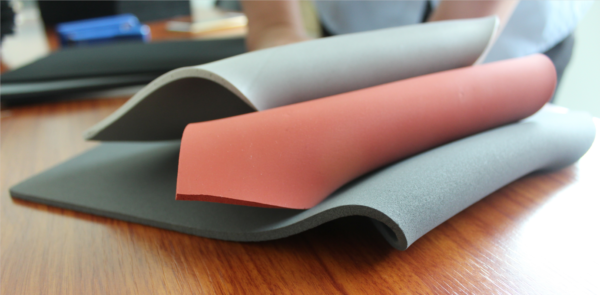
Silicone foam can support flexible gasket, insulation, and heat-adjacent sealing applications when compression and surface contact are reviewed carefully.
NBR/PVC foam and specialty foams for targeted functions
NBR/PVC foam can support sealing, cushioning, insulation, and certain flame-retardant directions. Meanwhile, specialty foam options may support low-odor requirements, ultra-lightweight designs, bio-based material direction, or industry-specific handling needs.
Still, terms such as low odor, flame retardant, eco-friendly, soft, firm, and heat resistant can mean different things across industries. The project note should describe the application, test expectation, and working environment instead of relying on a broad label.
Match Foam Selection to Function, Not Only to Material Name
A material name should never replace functional thinking. The same foam family may support sealing, cushioning, vibration control, insulation, spacing, protection, lamination, or comfort depending on grade and processing.
The following table offers a practical starting point. It connects common OEM foam needs with possible material directions while leaving room for sample testing and drawing review.
| Project need | Possible material direction | Useful OEM review points |
| Lightweight protective packaging | PE foam, EVA foam, ultra-light foam | Check product weight, drop risk, surface protection, carton space, and insert shape. |
| Outdoor sealing or weather-exposed gasket | EPDM foam, closed-cell rubber foam | Review compression, gap size, water exposure, UV exposure, and edge design. |
| Heat-related flexible gasket | Silicone foam, flame-retardant silicone foam | Review working temperature, compression pressure, adhesive backing, and contact surface. |
| Soft support or sports protection | Neoprene, SBR, SCR, CR foam, laminated fabric foam | Consider skin contact, stretch, fabric finish, comfort, and thickness. |
| Appliance sealing or insulation | PE foam, EPDM foam, NBR/PVC foam | Check assembly pressure, noise reduction, insulation needs, and long-term fit. |
| Electronics pad or enclosure liner | EVA foam, silicone foam, PE foam, flame-retardant foam | Review thickness tolerance, adhesive side, die-cut shape, and packing format. |
| Automotive pad, strip, or spacer | EPDM foam, PE foam, NBR/PVC foam, CR foam | Consider temperature, compression, vibration, odor direction, and repeat production control. |
| Adhesive-backed strip | PE, EPDM, EVA, silicone, NBR/PVC | Check bonding surface, release liner, storage condition, and installation pressure. |
This table should not replace sampling. Instead, it narrows the first direction. After that, material samples, cut samples, adhesive samples, and assembly trials can confirm the final route.
Check Converting Ability Before Approving the Part
At the same time, converting decides whether the chosen material becomes a clean, usable, repeatable part. Slicing, splitting, skiving, slitting, laminating, adhesive backing, die cutting, kiss cutting, CNC cutting, drilling, embossing, and packaging can all affect the final result.
The foam converting capability matters because it connects material thickness, cutting tolerance, edge finish, adhesive lamination, and packing method. As a result, it can reduce handoff between separate process sources and keep the approved part easier to repeat.
Slicing and thickness preparation
Foam sheets often need controlled thickness before cutting. A small thickness change can affect compression force, gap filling, assembly feel, and final fit. Slicing or splitting should be reviewed whenever a project needs a non-standard thickness.
For example, a 3 mm gasket and a 5 mm gasket may look similar in a drawing. Under pressure, they can behave very differently, so thickness planning must connect design intent with the converting route.
Laminating and adhesive backing
Adhesive backing can simplify assembly, but it also adds risk when the wrong tape or liner is selected. The adhesive should match foam surface, bonding surface, installation pressure, storage condition, and end-use environment.
Similarly, fabric lamination should match the part function. A sports support material may need stretch and comfort. An industrial pad may need stronger bonding and cleaner edge behavior. Lamination quality should be checked during the sample stage.

Converting can turn foam sheets into die-cut pads, adhesive-backed strips, custom inserts, laminated materials, and finished foam components.
Die cutting and CNC cutting
Die cutting works well for repeated flat shapes, gasket rings, strips, pads, washers, spacers, and adhesive-backed parts. It can support efficient production after the shape and material are confirmed.
On the other hand, CNC cutting can help during prototyping, smaller batches, thick foam blocks, cavity inserts, stepped pockets, and complex layouts. Because no die tool is needed at the earliest stage, CNC cutting can support faster design checks.
In practice, the best method depends on quantity, shape, tolerance, thickness, material firmness, adhesive backing, and expected repeat orders. Choose the process before treating the quotation as final.
Packaging and part presentation
Packing should not be left until the end. Thin gaskets may bend, long strips may stretch, and adhesive-backed pads may lift if liners are not controlled. The packing method should protect the approved shape and make later assembly easier.
For example, small kiss-cut pads may need sheet-format packing. Long sealing strips may need roll packing. Larger inserts may need carton planning to prevent compression during transport. As a result, packing style belongs in the quote discussion.
Review Sample Support, Communication, and Repeat Stability
After material and process are reviewed, samples become the most useful decision tool. A sample can show compression feel, edge quality, adhesive behavior, cut accuracy, surface finish, and assembly fit. Sample support should be planned rather than improvised.
A practical sample process records material grade, thickness, density direction, adhesive type, liner type, cutting method, drawing version, and revision number. Consequently, each sample becomes a traceable step toward production, not just a loose reference.
Good samples answer real application questions
For instance, a sealing strip should be tested under real compression. A cushioning insert should hold the actual product. Likewise, an adhesive-backed pad should be tested on the real bonding surface. This practical testing gives better feedback than hand feel alone.
Also, feedback should be specific. Instead of a vague note such as too soft, the project record can mention compression too high, recovery too slow, adhesive lift, edge tearing, thickness too high, or surface too rough. Then the next sample direction becomes clearer.
Clear quote response matters more than a fast number
Fast reply speed is useful. A clear technical reply is more valuable for OEM foam parts. A price without material explanation, process route, adhesive note, sample plan, or packing assumption may not move the project forward.
A useful quote should clarify whether it covers sheet supply, roll supply, die-cut parts, CNC-cut parts, adhesive-backed parts, laminated foam, or finished packing. It should also state which details are still missing.
Repeat production needs a reference standard
Repeat production stability matters when a foam part becomes part of a product line. The approved sample should define material, thickness, hardness direction, color, adhesive backing, liner type, shape, and packing method.
Any later change in material grade, adhesive, liner, sheet size, or process route should be reviewed before production. This habit protects the agreed part performance and reduces unexpected assembly issues.
Application Scenarios That Need OEM Foam Support
Foam appears in many product systems because it solves practical problems. It can cushion impact, seal gaps, reduce vibration, improve comfort, protect surfaces, manage noise, support insulation, and simplify assembly. Each scenario still needs its own selection logic.
Automotive and transport parts
Automotive and transport applications often require sealing, cushioning, anti-rattle support, vibration control, water resistance, sound reduction, and long-term compression performance. For example, foam can appear around lights, doors, mirrors, dashboards, trunks, panels, and interior trim.
These parts may face temperature changes, movement, pressure, and repeated assembly. These conditions may bring EPDM foam, PE foam, NBR/PVC foam, CR foam, or adhesive-backed strips into the material review.
Appliances and HVAC products
Appliance and HVAC projects often use foam for sealing, insulation, vibration reduction, air control, noise control, and spacing. Refrigerators, air conditioners, freezers, vending machines, ventilation products, and equipment housings may all need foam strips or pads.
In these applications, compression and thickness are important. A seal that is too soft may not control the gap. Meanwhile, a seal that is too firm may create assembly resistance. As a result, the part should be tested under real closing force or mounting pressure.
Electronics and electrical enclosure parts
Electronics and enclosure projects may need pads, spacers, insulation layers, protective inserts, enclosure gaskets, vibration pads, or adhesive-backed components. At the same time, some programs may need flame-retardant direction, clean surfaces, tight tolerance, or stable liner presentation.
For example, an enclosure gasket may need closed-cell foam and clean die cutting. A small pad may need kiss cutting on a release liner. Consequently, drawing accuracy can affect assembly speed and part consistency.
Sports, soft goods, and wearable products
Sports and soft goods often use neoprene, SBR, SCR, CR foam, EVA foam, and laminated fabric foam. These materials can support comfort, cushioning, stretch, shape, and surface appearance.
But tactile feel matters more in these parts than in many industrial gaskets. Sample review should include touch, flexibility, stretch direction, edge feel, fabric surface, and lamination quality.
Packaging, cases, and protective inserts
Packaging foam must protect the product while staying practical for packing and shipping. PE foam, EVA foam, CR foam, EPDM foam, and ultra-light foam may support inserts, trays, dividers, blocks, liners, and corner pads.
Packaging design should balance product weight, drop risk, surface sensitivity, carton size, and packing workflow. For transport packaging decisions, ISTA test procedures provide a useful reference for thinking about distribution hazards and packaged-product performance. Actual product dimensions and physical samples make the insert design more accurate.
Construction, building, and general industrial parts
Construction and general industrial projects may need sealing strips, expansion joint fillers, insulation pads, sound control layers, door and window seals, machine pads, spacers, and protective liners. These parts often need durability and simple handling.
For instance, a building seal may face moisture, pressure, and outdoor exposure. Meanwhile, a machine pad may need vibration control and stable thickness. Because of this, material choice should consider environment, pressure, gap size, installation method, and expected service conditions.
Suitable OEM Projects for YIBAO Foam Support
In practical terms, YIBAO Foam is a good fit when a project needs both material direction and converted foam part support. This includes projects that start from foam sheets but later require cutting, lamination, adhesive backing, shape control, or packing.
For example, the following project types can benefit from early material and process review:
Protective Packaging
Foam inserts, case liners, trays, dividers, blocks, and corner protection for transport and storage.
Sealing and Gasket Parts
EPDM, silicone, PE, NBR/PVC, and rubber foam parts for gaps, doors, enclosures, and appliances.
Adhesive-Backed Foam
Die-cut pads, strips, liners, spacers, and kiss-cut parts with release liner presentation.
Laminated Soft Goods
Neoprene fabric, SBR, SCR, CR, and EVA foam parts for sports, bags, protection, and wearable components.
What to Include When Asking YIBAO for an OEM Foam Quote
A clear quote request saves time because it reduces guessing. A useful request should explain the part, application, material direction, thickness, drawing, tolerance, adhesive, sample need, and target quantity.
But the first message does not need to be perfect. A project can start with a drawing, photo, physical sample, or short application description. Then the material and process details can be refined step by step.
OEM quote checklist
- Part name: gasket, pad, strip, liner, spacer, insert, cushion, roll, sheet, or laminated foam component.
- Application: sealing, cushioning, insulation, anti-vibration, protection, comfort, spacing, noise reduction, or lamination.
- Target material: EVA, PE, EPDM, neoprene, SBR, SCR, CR, silicone, NBR/PVC, flame-retardant foam, bio-based sponge, or unknown material for review.
- Thickness: preferred thickness, acceptable range, and any compression condition.
- Dimensions: length, width, hole size, corner radius, cutout details, strip width, or roll size.
- File: PDF, DXF, DWG, STEP, AI, dimensioned photo, or physical sample reference.
- Color: black, white, gray, custom color, or material natural color.
- Density or hardness: known value, previous sample reference, or desired feel.
- Adhesive: no adhesive, single-sided adhesive, double-sided adhesive, release liner, kiss-cut liner, or adhesive sample request.
- Surface contact: metal, plastic, painted surface, glass, fabric, wood, rubber, or another foam.
- Operating environment: indoor, outdoor, heat exposure, humidity, oil contact, pressure, or vibration.
- Quantity: prototype quantity, pilot order quantity, and estimated repeat order range.
- Packing: loose parts, sheets, rolls, bags, flat packing, carton unit, label requirement, or special protection.
- Timeline: sample timing, trial order timing, and expected production schedule.
Drawing and file details
A drawing helps control shape and tolerance. Common file types may include PDF, DXF, DWG, STEP, AI, or a clear dimensioned image. The most important point is not the file extension. The drawing must show the final part clearly.
For die-cut gaskets and pads, the drawing should include outer size, inner cutouts, hole diameter, corner radius, and thickness. For adhesive-backed parts, the drawing should also show the adhesive side and liner presentation.
Material and performance targets
When the material is not fixed, performance targets can guide selection. Useful targets include softness, compression feel, waterproof direction, flame-retardant direction, odor requirement, surface finish, temperature exposure, and bonding surface.
For example, “soft pad for handheld equipment” is more useful than “black foam.” Likewise, “closed-cell gasket for outdoor enclosure” gives more direction than “rubber foam sheet.” As a result, the application description often matters more than a guessed material name.
Adhesive and liner details
Adhesive-backed foam parts should include the bonding surface. The part may bond to metal, ABS, PC, PVC, powder-coated surface, glass, wood, fabric, or another foam. Since each surface behaves differently, adhesive selection should match real installation conditions.
Also, the request should mention whether the part needs single-sided adhesive, double-sided adhesive, transfer tape, removable liner, easy-peel tab, or kiss-cut presentation. These details affect converting, packing, and assembly.
FAQ
What should be asked before ordering OEM foam parts?
The request should define the part function. The part may need sealing, cushioning, insulation, spacing, anti-vibration support, surface protection, comfort, or adhesive installation. Next, the request should include material direction, thickness, drawing, quantity, adhesive needs, and packing expectation.
Why does in-house converting matter?
In-house converting matters because the final part depends on more than raw material. Cutting, laminating, adhesive backing, splitting, slitting, CNC cutting, die cutting, and packing all affect performance. That process support reduces confusion between sheet supply and finished parts.
Can one source support foam sheets and finished foam parts?
Yes. One experienced foam manufacturing partner can support both sheet supply and finished foam parts when the material range and converting setup match the project. For example, PE foam sheets can become cut inserts, while rubber foam sheets can become gaskets, strips, spacers, or laminated components.
What files are needed for an OEM foam project?
A dimensioned PDF drawing is often enough for many simple parts. DXF, DWG, STEP, AI, or another clear technical drawing can help when the shape has holes, cutouts, curves, or tight tolerances. For packaging inserts or complex parts, product samples and photos may also help.
How can the right foam material be selected when the exact grade is unknown?
A project can start from function instead of grade. For example, the request can describe whether the part needs sealing, cushioning, heat resistance, outdoor exposure, compression recovery, flame-retardant direction, adhesive installation, or fabric lamination. After that, suitable material samples can be compared.
Related Reading
Foam Sheet Material Guide: EVA, PE, EPDM and Silicone
Compare common foam sheet materials for cushioning, sealing, thickness planning, cutting, and samples.
Read MoreCustom Foam Inserts for Protective Packaging Projects
Learn how foam inserts support protection, organization, packing speed, and product-specific fit.
Read MoreNeoprene Fabric Laminated Foam for Soft Goods
Review laminated neoprene foam for sports supports, bags, sleeves, protection, and flexible components.
Read MoreHow to Make the Final Foam Supplier Decision
OEM foam sourcing works best when material, converting, samples, documentation, and repeat production are evaluated together. A simple sheet price may be enough for basic raw material needs. Custom pads, gaskets, strips, inserts, liners, laminated parts, adhesive-backed foam, and finished components need a more complete review.
Three practical actions can make the next project easier:
- Define the part function before choosing the material name.
- Second, prepare a drawing, target thickness, sample need, adhesive direction, and estimated quantity.
- Compare material range, converting ability, sample support, and repeat production planning before confirming the order.
With a clear application, drawing, target material, thickness, and quantity, YIBAO Foam can review OEM foam sheet and custom foam part needs through a practical sourcing path. For the next project, send the application details, drawing, target material, thickness, adhesive needs, and quantity to discuss OEM support with a foam supplier.
Discuss Your OEM Foam Part with YIBAO
Send the application, drawing or sample photo, target thickness, adhesive requirement, trial quantity, and estimated production volume. YIBAO Foam can review the material direction, converting route, sample format, and packing method before quotation.
Send Project Details