In a protective packaging project, the insert is often the part that decides whether a precision component arrives clean, stable, and ready for assembly. Custom foam inserts should not be treated as simple fillers inside a carton or case. A well-planned insert controls movement, absorbs shock, separates fragile surfaces, and makes packing work easier to repeat. It also helps the receiving team understand the product layout at a glance.
This guide focuses on practical choices: product shape, protection level, die cutting, CNC cutting, material matching, sample checks, and file preparation. Instead of listing parameters only, it explains how a foam insert behaves during real packing, shipping, opening, inspection, and reuse.
What a protective foam insert really solves
First, a protective insert solves movement. During shipping, a product does not fail only because the outside carton is weak. Many failures begin inside the package, when a part slides, tilts, knocks against another part, or rubs against a hard wall.
The insert creates a controlled space around the product. The cavity, wall thickness, base thickness, and top clearance all work together. When these details are correct, the product stays in the intended position even after repeated handling.
Movement control is only the first requirement. A good insert also spreads force across safer contact areas. For example, a painted housing may tolerate pressure on a metal frame but not on a printed panel. Likewise, a precision sensor may need support around the body while the lens area remains untouched.
In addition, the insert makes packing more repeatable. A clear pocket layout reduces guesswork on the packing table. As a result, the same product can be packed in the same way across shifts, batches, and production sites.
Finally, foam inserts improve inspection after arrival. When each part has a fixed place, missing accessories become easier to notice. The package also looks organized, which supports professional sample kits, tool sets, repair parts, electronic assemblies, and export packaging programs.
Product shape and protection level
Product shape should guide the insert design. A flat control panel, a curved handle, a cable set, a machined block, and a delicate optical part do not need the same cavity. The drawing should begin with real contact zones, not only outside dimensions.
For a simple rectangular part, straight-wall cavities may be enough. Products with buttons, connectors, lenses, rubber feet, threaded areas, or polished surfaces need more careful relief space. In other words, the foam should hold the strong areas and avoid stressing the sensitive areas.
Product weight also affects pocket depth and base thickness. A heavy metal part can compress soft foam too far if the support area is small. By contrast, a lightweight plastic assembly may need surface separation more than deep cushioning.
Protection level changes with the transport route. Local delivery may need basic separation and light cushioning. Export packaging may face warehouse stacking, long vibration, mixed handling, sea freight humidity, and repeated loading. The same product may need different insert structures for different routes.
Support points matter more than copying every outline
At first, many insert drawings try to copy the product outline perfectly. However, a perfect outline is not always the safest structure. Foam needs room to compress, and operators need room to remove the product without pulling too hard.
A better approach starts with support points. These are the areas that can safely touch foam. For example, a metal base may accept firm support, while a display window may need clearance. Similarly, a connector may need an open relief area, not a tight wall.
Finger access should also be part of the design. A deep cavity without a notch may look secure, but it can make unpacking slow and risky. A simple notch often prevents twisting, pulling, and accidental surface scratches.
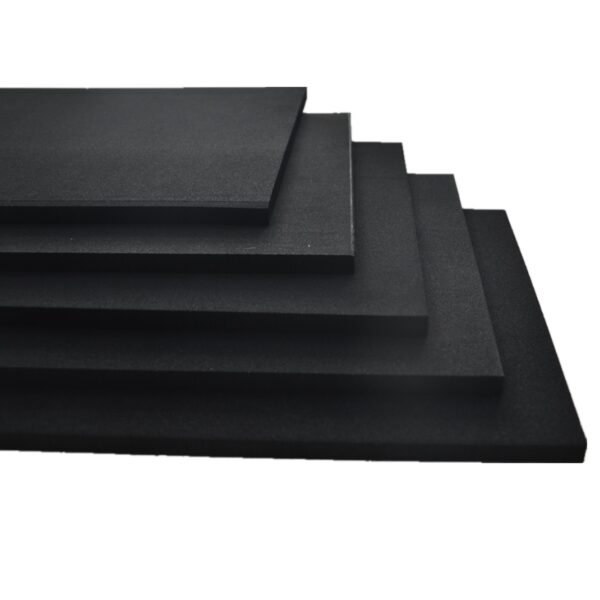
EPDM foam can support cushioning and protective contact in packaging layouts that need stability during transport and storage.
View EPDM FoamDie cut foam inserts vs CNC foam inserts
For many protective packaging projects, die cut foam inserts are suitable when the shape is mostly flat, the outline repeats, and the production rhythm needs efficient batch cutting. The method works well for pads, separators, liners, flat trays, simple cavities, adhesive-backed spacers, and repeated insert shapes.
However, die cutting has limits. Deep pockets, stepped cavities, thick blocks, tight three-dimensional support, and complex geometry may need a different process. In those cases, CNC foam inserts can create more controlled pocket depth, relief zones, finger notches, and layered structures.
The right choice depends on geometry, tolerance, foam thickness, project stage, and expected order rhythm. A simple accessory tray may fit die cutting. A heavy precision instrument may need CNC-routed pockets before the design is locked.
When die cutting makes practical sense
Die cutting makes sense when the insert is mostly two-dimensional. A repeated grid, a straight outline, or a simple cavity can often move through production efficiently. This process can support stable unit cost for repeat packaging programs.
Moreover, die cutting suits foam pads, corner protection, thin sheet inserts, carton dividers, tray liners, and simple accessory pockets. These parts do not always need complex depth control. Instead, they need clean outlines, stable dimensions, and repeatable cutting quality.
When CNC cutting becomes the stronger option
CNC cutting becomes useful when the insert needs detailed depth. For example, a machined aluminum part may need support under the base while a raised connector stays untouched. A CNC pocket can create this relief more clearly than a simple flat cut.
CNC cutting also helps during early sample development. A project team can test one cavity, adjust the drawing, and compare several foam materials. Once the structure is proven, production can move toward the most suitable cutting route.
In short, die cutting often supports efficiency, while CNC cutting supports detail. The best result may use both at different project stages, especially when a new package moves from prototype to repeat production.
Materials for foam packaging inserts
Material choice should begin with product risk. For foam packaging inserts, the main goal is not simply softness. The foam must match product weight, surface finish, shipping distance, compression behavior, storage environment, and handling frequency.
Very soft foam may feel safe by hand. However, it can bottom out under a heavy item and allow the product to hit the case wall. On the other hand, foam that feels too firm may transfer impact into fragile details.
Material selection should balance cushioning, recovery, durability, cleanliness, cutting behavior, and appearance. The insert should still look neat after packing, transport, opening, and repacking.
EVA foam for clean structure and organized layouts
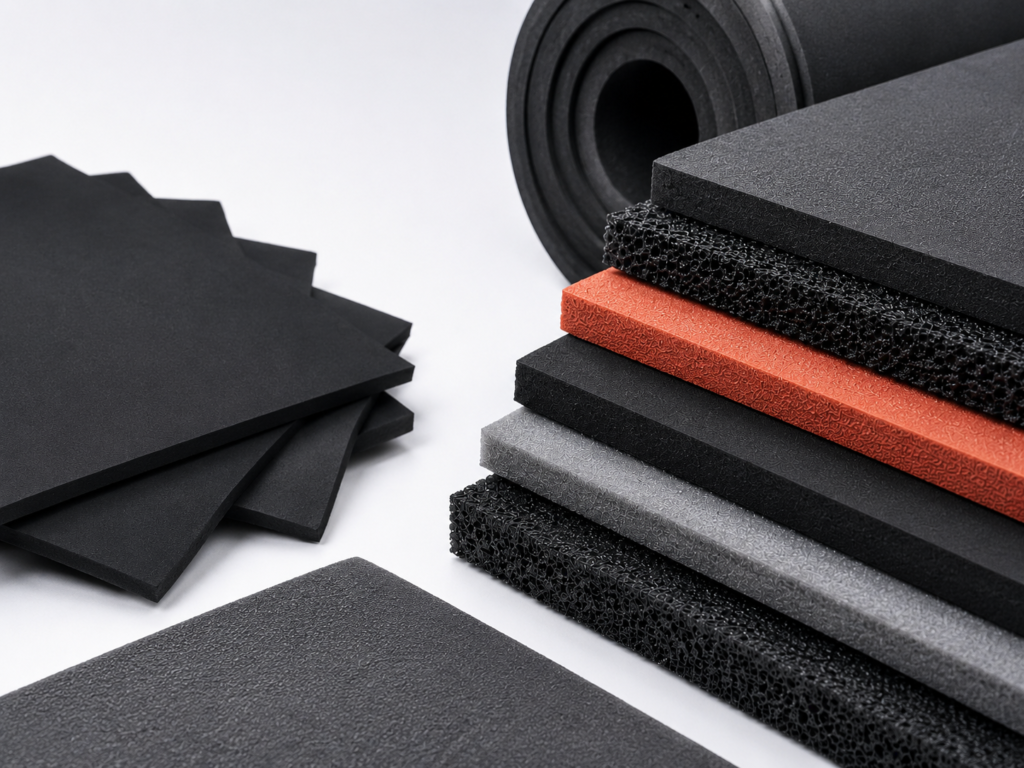
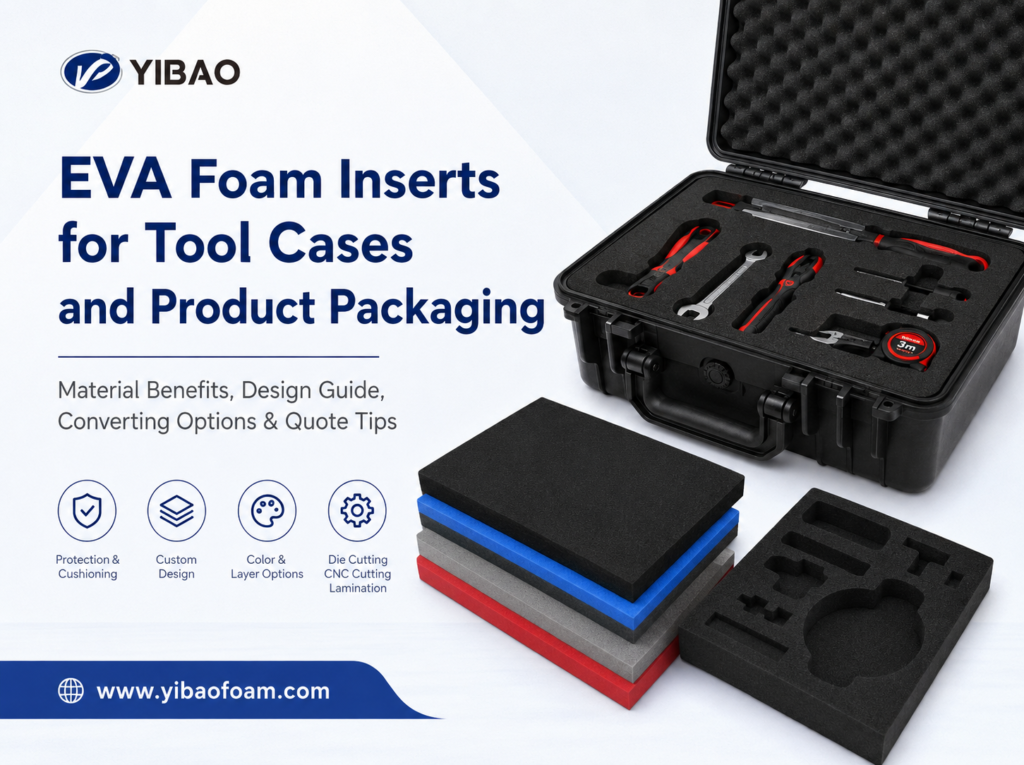
EVA foam often suits projects that need clean cutouts, stable cavity walls, and a neat appearance. It works well for tool kits, sample cases, electronics accessories, display kits, hardware sets, and reusable packaging. EVA can give the insert a firm and organized feel.
The density and thickness should match the product. A light display sample needs a different feel from a heavy machined component. Sample review should check insertion, removal, edge pressure, and visual finish.
EVA is also useful when presentation matters. A precise cavity layout can make an engineering sample case or sales demonstration kit look controlled and professional. Operators can identify each part more quickly during packing.
EVA foam is often selected when a protective insert needs clean cutouts, stable support, and a tidy product presentation.
View EVA FoamEPDM foam for cushioning and environmental stability
EPDM foam can be useful when a package needs cushioning plus stable behavior in changing environments. Some industrial packages sit in warehouses, workshops, vehicles, field kits, or long-term storage areas. Aging resistance and compression recovery may become important beyond the first shipment.
EPDM can also support parts that need protective contact with sealing-like behavior. This is useful for reusable cases, transport trays, appliance parts, automotive electronic parts, and precision device packaging. The material can help reduce impact and vibration risk.
EPDM should still be checked through a real sample. Product weight, cavity depth, support area, and surface contact all affect performance. The final decision should come from fit testing rather than material name alone.
CR foam for resilient support and repeated handling
CR foam can suit projects that need resilient support, rubber-like contact, and repeated handling. For example, it may support industrial components, automotive parts, tool protection, protective pads, and transport liners. In these applications, the insert often needs to recover after compression.
At the same time, CR foam should be matched carefully with product weight. If the product is heavy, the design may need wider support zones or a thicker base. If the product has delicate details, relief pockets and finger access become even more important.
CR foam should not be selected only because it sounds durable. The practical test is how the product sits, how the foam recovers, and how the cavity behaves after repeated loading and unloading.
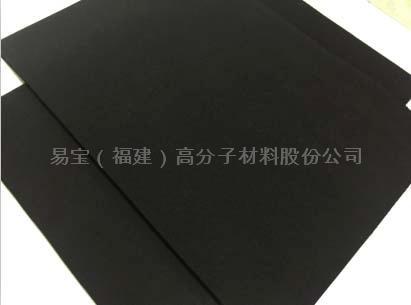
CR foam can help insert designs that need resilient support, protective contact, and better recovery during repeated handling.
View CR FoamFlame retardant EVA for sensitive industrial kits
In some packaging projects, the insert sits near electrical parts, battery-related assemblies, power modules, test equipment, or controlled industrial samples. Flame retardant EVA may become part of the material discussion when the program has stricter material expectations.
However, flame retardant requirements do not replace mechanical fit and compression review. The insert still needs correct thickness, cavity fit, compression behavior, edge quality, and surface contact. Documentation requirements should also be discussed early when a project has compliance needs.
For this reason, flame retardant EVA works best when material choice and package structure are reviewed together. A tight cavity can still damage a product, even when the selected material category looks suitable.
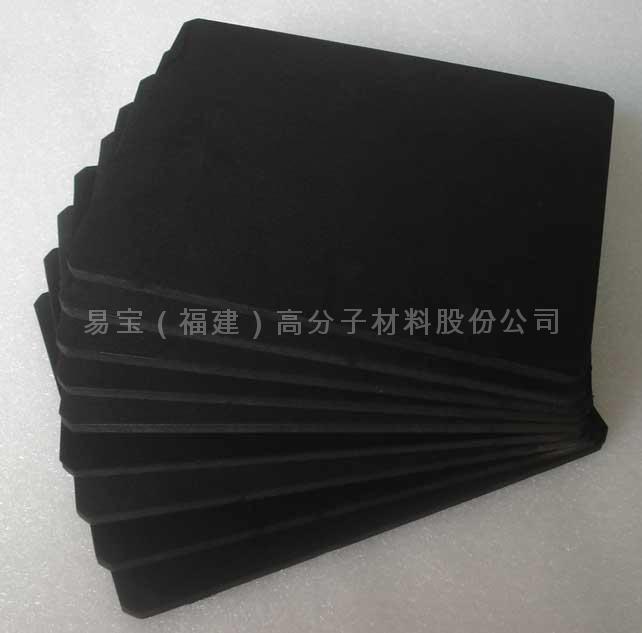
Flame retardant EVA can be considered for protective insert projects involving electrical equipment, battery-related parts, and sensitive assemblies.
View Flame Retardant EVAPractical material selection table
The table below offers a practical starting point. Final selection should still depend on product shape, weight, surface sensitivity, shipping route, package type, and sample test results.
| Material | Best for | Key property | Recommended page |
|---|---|---|---|
| EVA foam | Tool kits, sample cases, electronics accessories, reusable trays | Clean cutouts, stable cavity walls, tidy presentation | Halogen-free EVA |
| EPDM foam | Protective trays, cushioning pads, transport packaging | Cushioning, aging resistance, environmental stability | Open-cell EPDM foam |
| CR foam | Automotive parts, industrial components, resilient liners | Rubber-like resilience and repeated handling support | YB-2530 Domestic CR Foam |
| Flame retardant EVA | Electrical kits, power modules, sensitive industrial assemblies | Flame retardant direction with neat insert structure | Halogen-free Flame Retardant EVA |
| PE foam | Lightweight separators, pads, carton inserts, transit cushioning | Light cushioning and cost-conscious packing support | PE Foam |
| Converted foam parts | Cut pads, shaped trays, adhesive spacers, layered insert sets | Cutting, lamination, slicing, routing, and project-specific shaping | Converting |
How insert design affects packing speed
A good insert reduces decision time at the packing table. Each pocket tells the operator where the product belongs. The package becomes easier to repeat across shifts, sites, and production batches.
The insert can also help detect missing parts. If a cable, wrench, sensor, or small accessory has its own pocket, an empty space becomes visible before sealing. This simple visual control can prevent avoidable packing errors.
A clear layout supports incoming inspection. When the receiving team opens the package, the parts remain organized. As a result, the unpacking process becomes faster and less likely to damage the product.
However, too many tiny pockets can slow down packing. A layout that looks beautiful on screen may become difficult on the line. The design should balance protection, access, and speed.
A real packing scene: where small details become expensive
In a busy workshop, packaging often happens near the end of the production schedule. Parts may already be inspected, labeled, and waiting for shipment. At that moment, a tight cavity, unclear accessory pocket, or difficult removal notch can slow the whole process.
The insert should make the correct action obvious. A main component should drop into its pocket without force. Accessories should sit in visible positions. Heavy parts should not crush light parts. Finger access should allow removal without tools.
This practical view matters because packaging is not only a design file. It is a repeated action performed under time pressure. A better foam insert saves time because it reduces hesitation, rework, and hidden handling risk.
Surface protection and product finish
Surface finish should guide contact decisions. A painted shell, polished metal part, coated lens, soft-touch housing, printed panel, or rubberized surface may react differently to foam contact. Insert design should never depend on compression data alone.
For sensitive surfaces, the safest design may use wider contact areas and gentler support zones. However, if the foam is too soft, the product may still slide during shipping. In that case, a firmer base with a softer contact layer may work better.
Rubbing risk should be reviewed early. Movement can create scratches even when the foam feels soft. A protective insert should prevent sliding, not only cushion impact.
Pressure marks, dust, residue, and color transfer should be checked during sample review. When appearance matters, the sample should sit under light pressure for a realistic period before final approval.
Layered insert structures for mixed protection needs
Layered inserts are useful when one foam material cannot solve every problem. For example, a firm base can support product weight, while a softer top layer can reduce contact pressure. Lamination can make the insert more balanced.
Layered structures can also separate accessories from the main product. A lower layer may hold cables or tools, while an upper layer supports the main assembly. This makes the package cleaner and easier to inspect.
However, each layer adds design decisions. Adhesive choice, alignment tolerance, material thickness, and cavity registration all matter. If layers shift, the insert may lose both appearance and function.
Layered samples should be checked as complete assemblies. A single material swatch is useful, but it cannot show how the final insert opens, closes, compresses, and recovers.
Quote file checklist for a faster foam insert sample
A clear quote file saves time because foam insert projects depend on shape, fit, material, and application details. A useful request should include more than the product name and outside dimensions.
A 2D drawing helps when the insert uses flat cavities, pads, spacers, or simple outlines. DXF, PDF, or CAD-exported line drawings can confirm shape and dimensions. Critical tolerances and no-contact zones should be marked clearly.
A 3D file helps when the product has complex geometry. STEP or STP files can support CNC routing review, depth control, and support-zone planning. Real product photos can explain handling direction better than drawings alone.
Package information should also be included. A foam tray inside a carton behaves differently from a foam block inside a hard case. Similarly, a returnable case requires stronger repeated-use thinking than one-way shipment packaging.
The target order stage matters as well. Prototype, pilot run, small batch, and repeat production may lead to different process choices. CNC samples can support early testing, while die cutting may suit stable repeat designs.
Useful information to prepare
- Product dimensions, weight, and fragile areas.
- Photos from top, side, bottom, and key detail angles.
- 2D cavity drawing with scale and tolerance notes.
- 3D model for complex shapes or stepped pockets.
- Carton, case, or tray inside dimensions.
- Preferred foam color, thickness, density range, and surface feel.
- Shipping route, storage condition, and handling frequency.
- Sample quantity, target timeline, and expected repeat order rhythm.
- Any material restrictions, documentation needs, or assembly requirements.
How to test a sample insert before approval
The product should enter the cavity smoothly without forcing. A good fit feels controlled, not trapped. If removal needs too much effort, the cavity may be too tight, too deep, or missing a useful notch.
Next, the insert should hold the part during gentle movement. The product should not slide freely inside the pocket. However, it should also avoid hard pressure on fragile details.
The closed package should be checked for lid contact. In a hard case or carton, top foam may press down on the product. A compression check can prevent hidden stress during storage and transport.
Repeated loading can reveal recovery behavior. Foam may look good in the first test but lose shape after several cycles. This matters for service kits, reusable cases, internal logistics trays, and display sample boxes.
For export or higher-risk packaging projects, buyers can refer to ISTA Procedure 3A packaged-product testing guidance, which evaluates package performance against vibration, shock, and other transport stresses before final approval.
Another useful reference is ASTM D4169, a standard practice for performance testing of shipping containers and systems. It helps packaging teams think beyond a single drop or compression check and review the full distribution environment more systematically.
Finally, the product surface should be inspected after contact. Pressure lines, dust, residue, rubbing marks, and edge scratches all give useful feedback. If any appear, material choice or cavity design should be adjusted before production.
Common protective packaging scenarios
In electronics packaging, inserts often need clean cavities, accessory pockets, and surface protection. EVA or PE-based layouts may be considered, depending on weight and appearance needs. Anti-scratch thinking is important around screens, connectors, and printed panels.
For precision instruments, the insert should control vibration and protect calibration-sensitive areas. The design should avoid pressure on knobs, lenses, ports, or measurement surfaces. A shaped pocket with relief zones can improve safety.
For automotive components, parts may be heavier, irregular, or exposed to workshop conditions. The material should match both cushioning and handling needs. CR, EPDM, or other rubber foam options may be considered depending on the part and route.
For medical device accessories, clean layout and easy inspection matter. Packaging may need organized pockets for tubes, small tools, replaceable parts, or sample components. Material selection should consider contact, cleanliness, and documentation expectations.
For exhibition sample kits, the insert must protect products and present them clearly. Neat cavity edges and a stable display layout matter. A reusable insert can also reduce repacking time after demonstrations.
Balancing protection, cost, and repeatability
Protection should define the minimum safe design. A cheaper insert that allows damage is not economical. However, overbuilding the insert can also increase package size, material use, cutting time, and assembly cost.
The best design usually removes unnecessary complexity. A cavity should be accurate where accuracy matters. Non-critical areas can remain simple, open, and easy to cut.
Repeatability matters for long-term supply. A design that depends on manual trimming or inconsistent packing may create hidden cost. A clear cutting method and stable drawing help keep repeat orders more predictable.
Early prototypes should not be judged only by unit price. During development, a slightly higher sample cost can prevent larger production mistakes. Once the design is proven, process optimization becomes easier.
Related foam materials and converting options
For projects that need more material comparison or converting review, the following pages can support the next step.
FAQ
How do die cut foam inserts differ from CNC-routed insert designs?
Die cut foam inserts usually work best for flat outlines, repeated shapes, pads, spacers, liners, and simpler cavities. In contrast, CNC-routed insert designs can create deeper pockets, stepped shapes, relief areas, and more complex product support. Therefore, die cutting often suits stable simple geometry, while CNC routing supports detailed sample development and complex protection needs.
When do CNC foam inserts make sense for heavy or irregular parts?
CNC foam inserts make sense when the product needs controlled pocket depth, multiple support levels, or clearance around fragile details. For example, a heavy machined part may need a strong base pocket and side relief zones. In addition, CNC routing can help test product fit before a repeat production method is finalized.
Which materials work best for foam packaging inserts?
Foam packaging inserts may use EVA, EPDM, CR, PE, silicone foam, or other material families depending on product weight, surface finish, environment, and handling frequency. Material selection should begin with product risk instead of a single material name. A sample check should review fit, recovery, surface contact, and packing speed.
How much compression should a protective insert allow?
A protective insert should hold the product securely without forcing it into the cavity. In general, the foam should control movement, but it should not press hard on delicate areas. Sample testing should include loading, removal, closed-package compression, repeated handling, and surface inspection.
What information helps YIBAO Foam prepare a more accurate insert sample?
A useful request includes product dimensions, weight, photos, drawing files, package inside size, shipping route, material preference, and target sample quantity. Details about fragile areas, surface finish, and packing workflow help improve the insert design. With that information, material advice and cutting process discussion become more accurate.
Summary: make the insert work in the real package
In short, a protective insert should hold the product, guide the packing process, reduce movement, and support safe arrival. The best result comes from matching material, cavity shape, cutting method, and package structure. A strong project review should focus on real handling scenes, not only a material name.
For a new packaging program, three actions are especially practical:
- First, define the product risk: weight, fragile zones, surface finish, shipping route, and package type.
- Second, prepare clear files: photos, dimensions, drawings, CAD files, and inside box or case size.
- Finally, test the sample as a full package: loading, closing, movement, removal, surface contact, and repeated use.
YIBAO Foam can support material direction, sample structure, die cutting, CNC cutting, lamination, and converted foam part planning for protective packaging projects. To discuss custom foam inserts, sample needs, or a project-specific converting plan, send product files and packaging requirements through the Contact page.
Need a protective foam insert sample?
Send product dimensions, photos, drawings, package size, and shipping requirements. YIBAO Foam can help review suitable foam materials, cutting methods, sample structure, and converting options for the next protective packaging project.
Contact YIBAO Foam