A seal often looks simple before it enters service. However, rain, dust, heat, vibration, and repeated closing quickly show whether the material choice was right. For outdoor gaskets, appliance doors, automotive lighting, and industrial pads, EPDM foam gives project teams a practical starting point when weather resistance, cushioning, and stable compression need to work together.
The Real Problem: Small Gaps Create Big Failures
First, most sealing issues do not begin with dramatic damage. They begin with a narrow gap that looks harmless during assembly. After several weeks outdoors, that gap may collect dust, allow water traces, or create a light rattle when the product vibrates.
In an automotive lamp, the sign may appear as fogging, dust marks, or a slight looseness near the housing edge. In an equipment cabinet, the sign may show as fine powder around the door seam. Meanwhile, in an appliance panel, the first warning may be a small noise when the cover closes.
Therefore, the seal has to do more than fill empty space. It must keep contact while the product moves, heats, cools, and ages. A foam gasket also needs to tolerate production variation, because real parts rarely keep a perfect gap across the full sealing path.
This is why a useful weather seal should be judged in real use, not only by a material name. A good part feels controlled when compressed. It stays where it is placed. Moreover, it still recovers enough after the cover opens or after the assembly sits closed for a long period.
Principle: Why Closed-Cell EPDM Helps Weather Seals Work
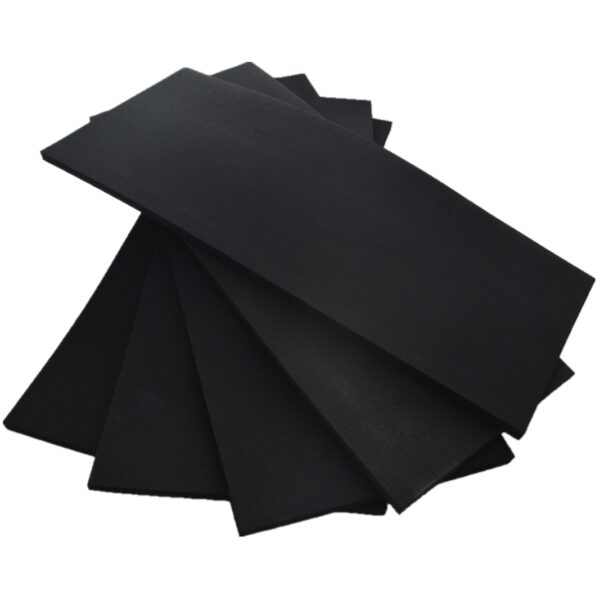
To understand the material, picture a foam structure as many small cells. In closed-cell foam, most cells stay separated from each other. As a result, water and air do not move through the body as easily as they would through a very open sponge-like material.
However, the closed-cell structure is only one part of the story. A gasket works because compression creates contact pressure. When the foam is slightly squeezed between two surfaces, it follows small surface changes and closes possible leak paths.
Meanwhile, EPDM rubber chemistry gives the material a strong reason to appear in outdoor sealing work. It is commonly selected where ozone, weather, moisture, and temperature change matter. Therefore, it fits applications where general indoor cushioning foam may age too quickly.
In simple terms, the material helps in three ways. It blocks and slows movement through the joint, it cushions hard contact, and it keeps enough recovery to maintain pressure over time. That combination explains why expanded EPDM rubber appears in weather strips, gaskets, pads, spacers, and anti-rattle parts.
1. Cell structure
Closed cells help slow water and air movement. Therefore, the foam gives a seal a better barrier base.
2. Compression
Controlled squeeze creates contact pressure. Moreover, it helps the gasket follow small surface changes.
3. Recovery
A useful seal springs back after load. As a result, it can support repeated opening and closing.
Why Weather Gaskets Fail Even When the Material Looks Correct
Sometimes the selected foam grade is reasonable, yet the seal still fails. Usually, the reason sits in the design details. The foam may be too thin for the largest gap, too thick for the smallest gap, or too narrow for stable contact.
For example, a cover may close tightly near screws but barely touch the gasket between fasteners. In that case, the foam near the screw points becomes crushed, while the middle section stays under-compressed. Therefore, the leak path appears where pressure is lowest.
Corners create another common failure point. A sharp inside corner can pull the strip during installation. A small outside corner can lift after the liner is removed. In addition, a long strip may shrink back if it was stretched while being applied.
Adhesive can also mislead a design review. It helps the part stay in place, but it does not create sealing pressure by itself. In other words, adhesive-backed foam still needs proper compression from the product structure.
Scene-Based Judgment: Where This Material Makes Sense
A practical selection should begin with the working scene. First, identify whether the part mainly blocks water, dust, air, noise, vibration, impact, or surface contact. Then, match the material form and converted shape to that function.
For outdoor housings, the key concern is usually long-term sealing under weather exposure. For automotive lighting, the concern may include fogging, vibration, low odor, and clean contact around a curved housing. Meanwhile, for packaging pads, shock absorption and recovery may matter more than water sealing.
The following table offers a quick field-style judgment. It avoids overloading the early decision with parameters. Instead, it connects visible symptoms with likely causes and useful next steps.
| Observed scene | Likely reason | Judgment method | Useful direction |
|---|---|---|---|
| Dust gathers along one edge | Uneven compression or weak contact line | Check contact marks after closing the real assembly | Adjust gasket width, thickness, or fastener spacing |
| Water mark appears near a corner | Corner lift, stretched strip, or sharp radius | Inspect corners before and after liner removal | Increase corner radius or use die-cut frame format |
| Cover becomes hard to close | Foam is too thick, too firm, or too wide | Compare closure force with and without the seal | Test thinner or softer samples before tooling |
| Strip shortens after placement | The strip was stretched during assembly | Mark the strip length and recheck after rest time | Use placement guides and avoid tension during bonding |
| Noise remains after pad placement | Pad is under-compressed or placed away from contact zone | Close the assembly and look for real contact points | Move the pad or change thickness and support area |
Selection Tips: How to Make a Better Choice Without Overthinking
First, measure the gap like a real assembly, not like a perfect drawing. A nominal 3 mm gap may become 2.4 mm near a screw and 3.8 mm at a corner. Therefore, one foam thickness may feel too tight in one area and too loose in another.
Next, press a sample into the gap and check the contact mark. A good seal usually leaves a continuous but not crushed impression. If the foam looks flattened and the cover feels stressed, the gasket may be too thick or too firm.
Then, look at the sealing land. A narrow rib creates high local pressure and may cut into the foam. A wider flat land spreads force and gives the gasket more room to work. Moreover, rounded edges help the material survive repeated compression.
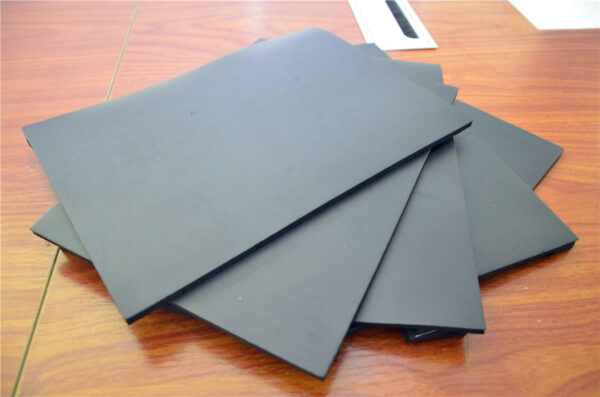
Finally, decide how the part will be supplied. Sheet stock suits early testing because it allows quick trimming. However, stable production often needs slit strips, die-cut frames, kiss-cut liners, or adhesive-backed pads. This is where material selection naturally connects to converting.
For water and dust sealing
Choose a closed-cell direction, then confirm compression in the real gap. In addition, check corners and fastener spacing before approving the final shape.
For vibration and rattle control
Look for stable contact without excessive force. Meanwhile, place pads where movement actually happens, not simply where space is available.
For long strips
Review strip length early. Therefore, longer sheet formats or no-joint material can reduce weak points and unnecessary waste.
Natural Product Fit: Matching the Problem to a YIBAO Foam Page
After the sealing problem is clear, the product direction becomes easier. A long strip problem may need a sheet format that reduces joints. A lamp housing problem may need a grade designed around lighting conditions. A general enclosure gasket may only need a stable closed-cell EPDM family and the right converting method.
Therefore, the table below does not push one material for every case. Instead, it connects common use situations with relevant YIBAO Foam pages. Project teams can use it as a starting map before requesting samples or converted prototypes.
| Material / option | Best for | Practical advantage | Suggested YIBAO page |
|---|---|---|---|
| Closed-cell EPDM sheet family | Weather seals, gaskets, pads, and cushioning strips | Useful for weather resistance, ozone resistance, and controlled compression | EPDM Division |
| EPDM Foam YB-E8011 | Long gasket blanks, weather strips, appliance seals, and sheet-based trials | Longer sheet format can help reduce joints and improve material use | View YB-E8011 |
| Closed-cell crust EPDM YB-6025P | Automotive headlight seals and lighting interfaces | Crusted surface direction supports sealing, adhesion, and automotive light use | View YB-6025P |
| Low-odor closed-cell EPDM YB-6022CV | Automotive interiors, appliances, and enclosed equipment spaces | Useful when low odor, low VOC direction, cushioning, and insulation matter | View YB-6022CV |
| Closed-cell EPDM material with no joints | Long strips, long frame sections, and high-continuity sealing paths | Helps reduce weak points where strip joints may crack or lift | View no-joint material |
Experience Tips: How to Use Foam Seals More Reliably
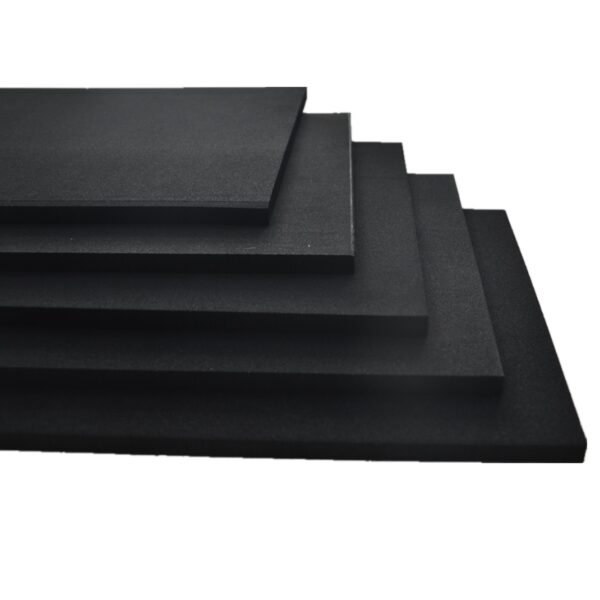
A foam seal often fails during installation before it ever faces weather. Therefore, the handling method should be part of the design review. A clean part, a stable liner, and a simple placement route can reduce rework on the production line.
First, avoid stretching long strips. A stretched strip looks neat at the moment of placement, but it may shrink back later and leave a short uncovered area. Instead, the strip should be guided into position with light pressure and no tension.
Next, clean the bonding surface before adhesive-backed parts are applied. Dust, oil, release agent, or loose paint can weaken the bond. In addition, plastic surfaces may need adhesive testing because not all plastics accept the same adhesive equally well.
Finally, press the adhesive-backed part evenly after placement. The goal is not to crush the foam. Rather, steady pressure helps the adhesive contact the surface. Then, sealing performance comes from product closure and foam compression.
For die-cut frames
Die-cut frames should be removed from the liner carefully, especially when the frame wall is narrow. A thin frame can stretch or distort during handling. Therefore, kiss-cut supply on a carrier liner can make assembly easier.
In addition, corners should be placed first. After the corners sit correctly, the straight sections can be pressed down. This simple order helps reduce corner lift and keeps the sealing path aligned.
For pads and spacers
Pads should sit where the product actually touches. A pad placed too far from the movement point may not stop noise. Meanwhile, a pad under a sharp rib may compress too quickly.
Therefore, a close-open test is useful. Close the part, open it again, and look for a clean contact mark. If the mark is missing or heavily crushed, the pad size, thickness, or location needs adjustment.
From Sheet to Finished Part: Why Converting Matters
Sheet material is useful during early development. It allows quick cutting, fast comparison, and simple trial fitting. However, production parts usually need a more controlled shape and a better handling format.
For example, long strips may need slitting and roll packing. Gasket frames may need die cutting or kiss cutting. Pads may need adhesive backing, liner control, and clean packaging. Therefore, converting has a direct effect on assembly speed and consistency.
YIBAO Foam lists converting capabilities such as slicing, die cutting, rolling, CNC cutting, and lamination. As a result, a project can move from material testing to finished pads, strips, and frames with fewer hand-cut variables. For process planning, the Converting page is a useful next step.
Testing Before Orders: A Simple Practical Method
Testing should begin with the real product whenever possible. First, cut a sample strip or pad and place it on the intended sealing land. Then, close the assembly with normal screw torque, latch force, or clip pressure.
After opening the assembly, inspect the contact mark. A continuous light impression usually means the seal is working in a reasonable range. However, a crushed area near screws and an untouched area between screws show that pressure distribution needs improvement.
Next, keep the sample compressed for a period. After release, check whether the foam recovers enough. This step matters for door seals, cabinet gaskets, and fixed pads that stay closed for long periods.
Finally, test the environment that matters most. Outdoor housings may need water spray and heat aging. Automotive lighting may need heat, fogging, low odor, and vibration review. Packaging pads may need drop testing and recovery under load.
Fit check
Close the actual assembly and inspect the full sealing path. Moreover, check corners and screw areas first.
Recovery check
Compress the sample for a defined time. Then, release it and compare height, feel, and contact ability.
Adhesion check
Bond samples to real metal, plastic, paint, or glass. In addition, check corners after heat and humidity exposure.
Use check
Repeat opening, closing, transport, or vibration. As a result, handling risks become visible before bulk orders.
Common Mistakes in Foam Gasket Selection
The first mistake is choosing the thickest foam as a safety measure. This may feel safer at first. However, excessive thickness can make a cover hard to close and may bend plastic parts or stress screw bosses.
The second mistake is ignoring the joint. On a long weather strip, a joint can become the first weak point. Therefore, long sheet options or no-joint material should be reviewed when the sealing path is long.
The third mistake is testing only a flat sample. A flat bench cannot show corner lift, screw-point over-compression, or housing warpage. As a result, the test may look successful while the real assembly still leaks.
The fourth mistake is separating material selection from converting. A good foam can become difficult to use if the liner, cut shape, packaging, or adhesive format does not fit production. Therefore, final approval should include both material and part format.
Extended Reading and Useful YIBAO Foam Pages
For deeper project review, the following pages help connect material family, application scene, and processing route. Each page supports a different decision stage, from early exploration to sample request.
FAQ: Weather Seals, Gaskets, and Pads
These questions focus on practical judgment. Therefore, they are useful during drawing review, early sampling, and production format planning.
Final Takeaway and Next Step
A good seal is not only a strip of material. It is a small working system made from foam structure, compression, part geometry, adhesive, surface condition, and handling method. Therefore, the safest path is to explain the real problem first, test the material in the real assembly, and then decide the converted format.
For weather seals, gaskets, pads, and long strip projects, YIBAO Foam can review application notes, gap ranges, drawings, sample needs, and converting requirements. In addition, EPDM foam selection can be matched with sheet supply, die-cut parts, adhesive-backed strips, or no-joint material direction when the application requires it.
- Send the target gap range, sealing path, working temperature, and exposure conditions.
- Include photos or drawings showing corners, fasteners, ribs, and adhesive areas.
- Request material samples or converted prototypes before confirming bulk production.