In many industrial assemblies, the smallest sealing pad often decides whether the finished product feels stable or unfinished. A cover may rattle after vibration. A gasket may leave a weak corner. A liner may flatten after repeated pressure. Therefore, CR foam becomes a practical material choice when a project needs rubber-like compression, controlled cushioning, and cleaner converted parts.
This article focuses on real use, selection logic, application scenes, and sample testing. It avoids turning material selection into a specification list. Instead, it explains how chloroprene foam sheet behaves inside covers, cases, panels, trays, protective pads, and adhesive-backed parts.
What CR Foam Sheet Does in Real Products
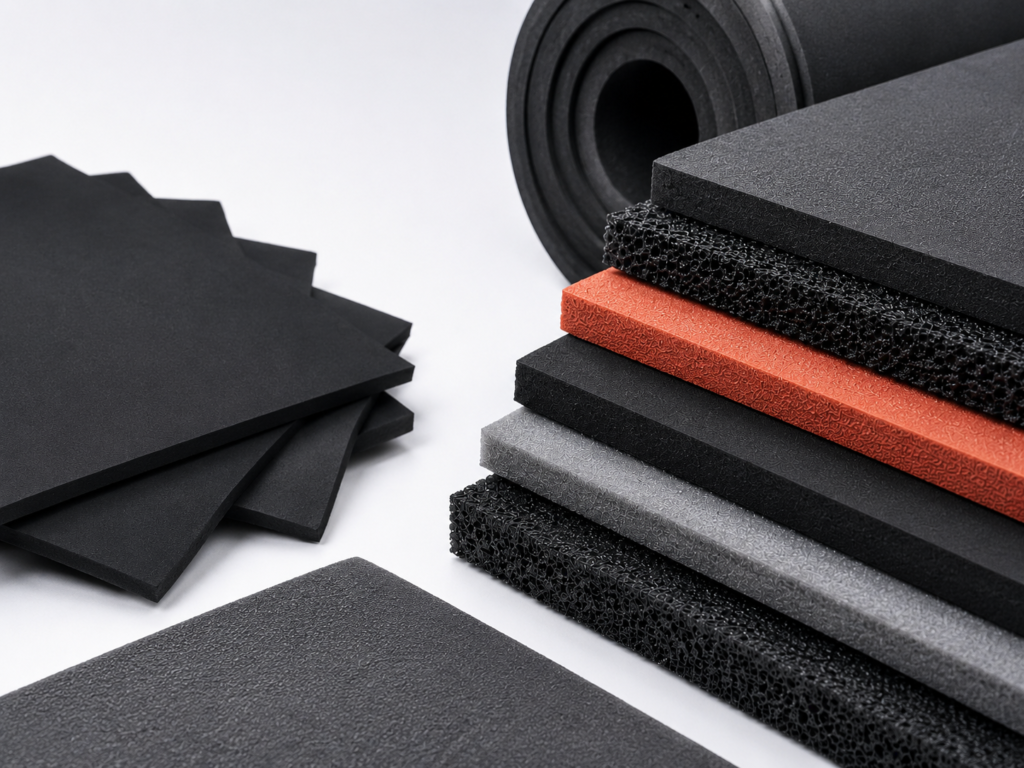
First, chloroprene foam sheet works as a soft functional layer between harder parts. It can fill small gaps, reduce vibration noise, protect surfaces, and improve contact feel. In real production, the sheet may become a gasket, strip, washer, pad, liner, spacer, or laminated part.
However, the material is not selected only because it is soft. Many soft foams collapse too quickly under pressure. A rubber-like chloroprene sponge is useful when the part needs compression and recovery at the same time. As a result, it can support sealing and cushioning without making the assembly feel loose.
For example, a machine cover may need a strip that follows a slightly uneven frame. An electronics housing may need a thin pad that prevents rattle. A transport tray may need a liner that protects coated parts during movement. In each scene, the sheet solves a small but important contact problem.
Why rubber-like feel matters
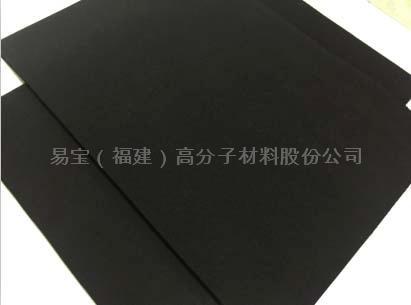
Rubber-like feel is not only a touch description. It also affects how the part behaves after pressure. A weak sponge may feel soft at first, yet it may flatten after a cover stays closed. By contrast, a controlled chloroprene sponge can keep a firmer response.
In assembly work, this difference is easy to notice. A better strip compresses smoothly and stays in place. Meanwhile, a poor strip may twist, stretch, or lose contact after repeated use. Therefore, the selection should focus on the way the foam behaves inside the real structure.
Where this material usually appears
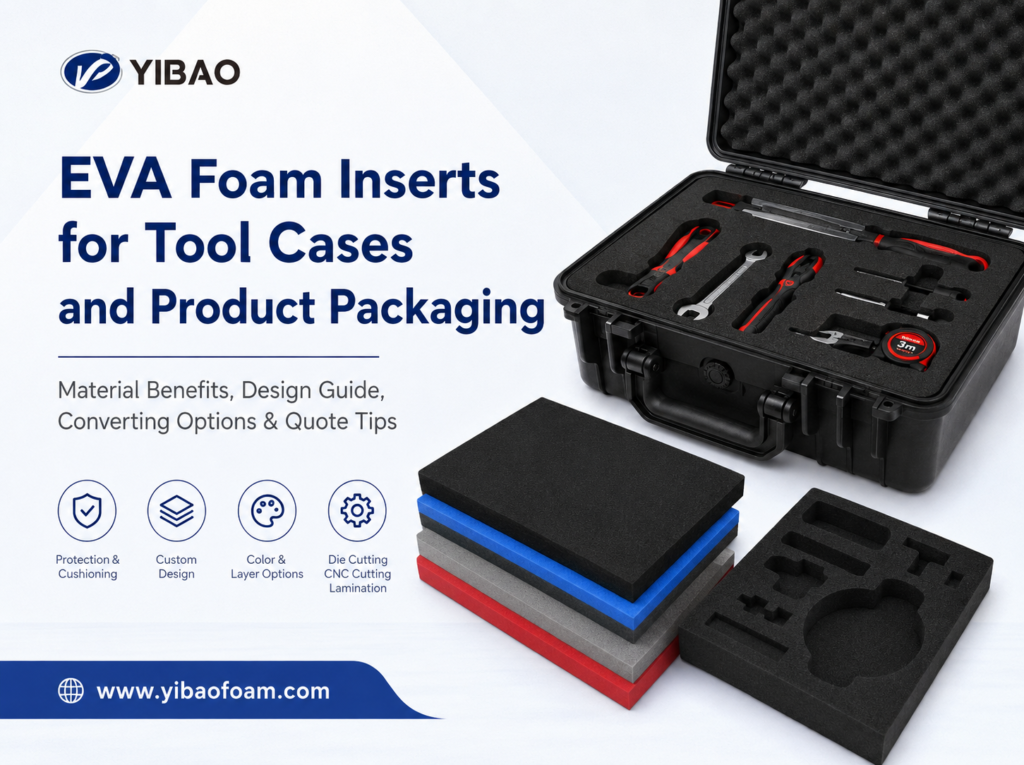
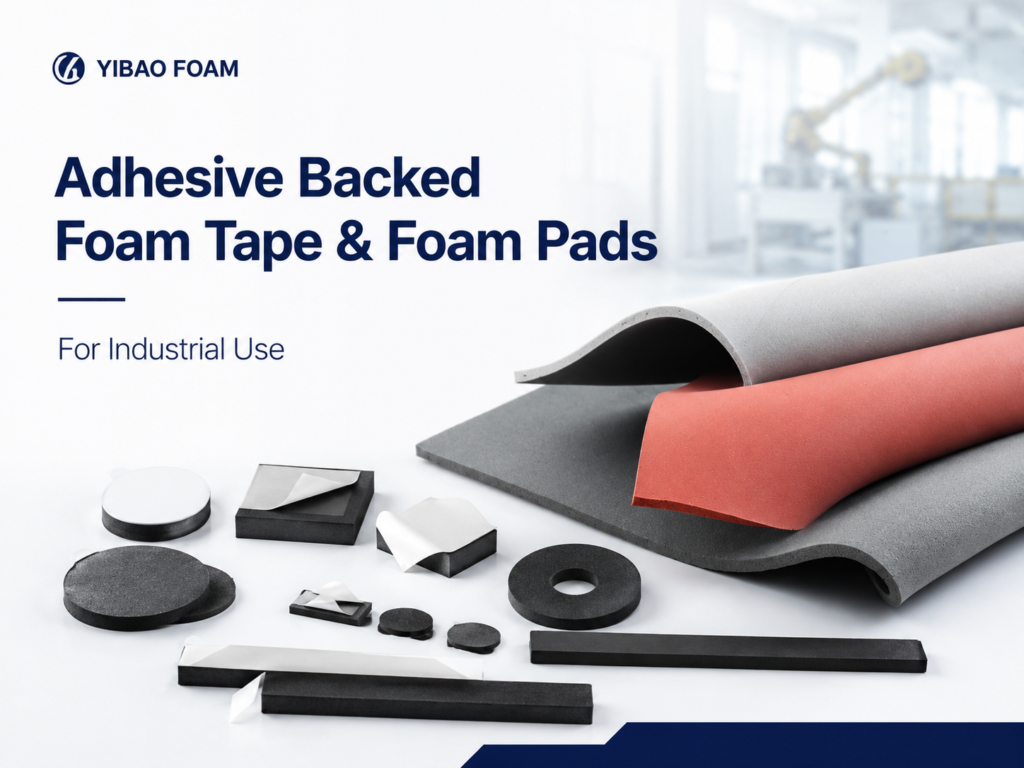
Common uses include enclosure gaskets, access panel seals, anti-rattle pads, tool case liners, protective transport pads, grip layers, bag inserts, small washers, and custom die cut spacers. In addition, adhesive-backed strips can make assembly faster when placement needs to be repeatable.
The same sheet can feel different after cutting, lamination, or adhesive backing. Therefore, a sheet sample is only the first step. The converted part should also be tested because a narrow gasket, a thick pad, and a laminated liner do not behave in the same way.
Chloroprene Foam Performance Without Parameter Overload
A material data sheet can show density, thickness, and hardness. However, those numbers do not fully explain the field result. In sealing and cushioning work, the better question is simple: does the part compress cleanly, recover enough, and stay stable after cutting?
Therefore, performance should be judged through contact behavior. A foam strip must follow uneven surfaces. A pad must protect without bottoming out. A liner must cushion without shifting. These practical details matter more than a long parameter list.
Compression should match the closing force
First, compression should match the way the part closes. A screw-fastened cover can create more pressure than a plastic clip. A hinged lid may press strongly near one side and lightly near another. Therefore, the same sheet thickness can perform differently in two assemblies.
If the foam is too soft, it may flatten and lose sealing force. If it is too firm, it may push the cover upward or make the product hard to close. A good choice gives enough resistance without fighting the structure.
Recovery should be checked after time
Secondly, recovery should not be judged by a quick finger press. Many pads stay compressed for hours, days, or longer. Therefore, a more useful test leaves the foam inside the real assembly and checks the shape after pressure is released.
A deep permanent mark suggests that the sheet may be too soft, too thin, or too heavily loaded. In that case, the design can be improved by adjusting density, thickness, contact area, or the pressure path. This is often more effective than simply choosing a harder material.
Surface and cell structure affect final quality
In addition, surface condition affects sealing, lamination, and appearance. A smoother surface can improve contact and reduce loose particles. Meanwhile, a slightly textured surface may help certain bonding or grip applications.
Cell structure also matters after cutting. Fine and stable cells usually create cleaner edges, especially on small washers or narrow gasket strips. As a result, the finished part looks more controlled and installs more easily.
CR Foam Sheet for Sealing: How to Read the Gap
Sealing work starts with a gap, not a material name. A frame may look flat, yet small height differences can appear after welding, molding, bending, or screw fastening. Therefore, a compressible strip helps create a more even contact line.
In many products, the seal does not need to resist extreme pressure. It may need to reduce dust entry, control minor airflow, stop rattle, or soften cover contact. However, even a light-duty seal still needs the right compression range.
The strip should compress, not collapse
First, the strip should compress enough to fill the gap. However, it should not collapse fully. When a foam strip bottoms out, the assembly loses the benefit of a soft seal. The hard surfaces begin to carry the load again.
A simple test can reveal this problem. After closing the cover, open it again and inspect the compression mark. If the mark is too deep and the strip feels flat, a firmer grade or a larger contact area may be needed.
The cover should still close naturally
On the other hand, a strip that is too firm creates another issue. It can make screws work harder, bend thin covers, or keep clips from locking. In that case, the problem is not poor sealing intention. The material is simply fighting the structure.
Therefore, the best test uses the real closing method. Screws, clips, hinges, and pressure plates all create different force patterns. A bench press test may look acceptable, but the actual part may reveal uneven pressure at corners or edges.
Where sealing strips are commonly used
Typical scenes include inspection covers, electrical boxes, lighting housings, small machine doors, instrument panels, control cabinets, storage cases, and protective lids. In these locations, the sheet helps reduce noise and fills minor unevenness.
Meanwhile, the strip layout should avoid unnecessary joints. Every joint is a possible weak point. If a joint cannot be avoided, it should be placed away from the most critical sealing area and tested under real closing pressure.
Cushioning Use: Protection Without Making the Product Bulky
Cushioning work often begins with visible damage or noise. A painted component rubs against a tray. A tool knocks inside a box. A metal edge leaves a mark during transport. Therefore, a rubber-like sheet can act as a quiet protective layer.
However, adding thick foam everywhere is not a good solution. The better method is to place the pad where contact actually happens. This improves protection while keeping the final product compact and clean.
Protective pads for hard-contact points
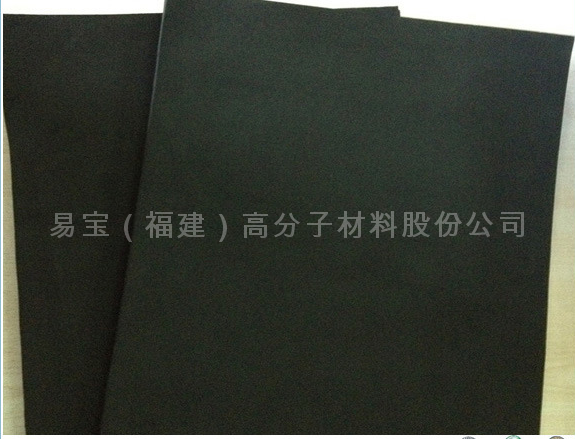
First, protective pads should sit at the actual contact point. A small pad in the right place can protect better than a large sheet placed too far away. For example, a corner pad can stop a metal part from striking the inside of a case during transport.
At the same time, the pad should not slide or curl. Adhesive backing helps, but it must match the surface. Smooth metal, painted coating, textured plastic, and rubberized surfaces all need different bonding checks.
Spacers for controlled distance
Secondly, foam pads often work as spacers. They hold a controlled distance between two parts while still allowing slight movement. This role appears in housings, covers, battery compartments, tool trays, and internal support areas.
A spacer pad should not collapse fully. If it does, the two hard surfaces may touch again. Therefore, the sheet should be selected by pressure area and load, not by thickness alone.
Comfort and grip layers
In grip or wearable accessory applications, the material should feel soft but stable. A weak layer may feel comfortable for a moment, yet it can wrinkle or shift in use. A more controlled sponge creates a firmer and more reliable hand feel.
In addition, lamination can change the final effect. Fabric lamination may improve touch. Film may improve surface protection. Adhesive may improve assembly. Therefore, the final layered structure should be tested together.
Cutting, Adhesive Backing, and Converted Part Quality
A sheet only becomes useful after it is converted into a real part. Therefore, cutting method, edge quality, hole size, adhesive backing, and liner handling should be considered early. Waiting until the sheet is approved can create avoidable problems.
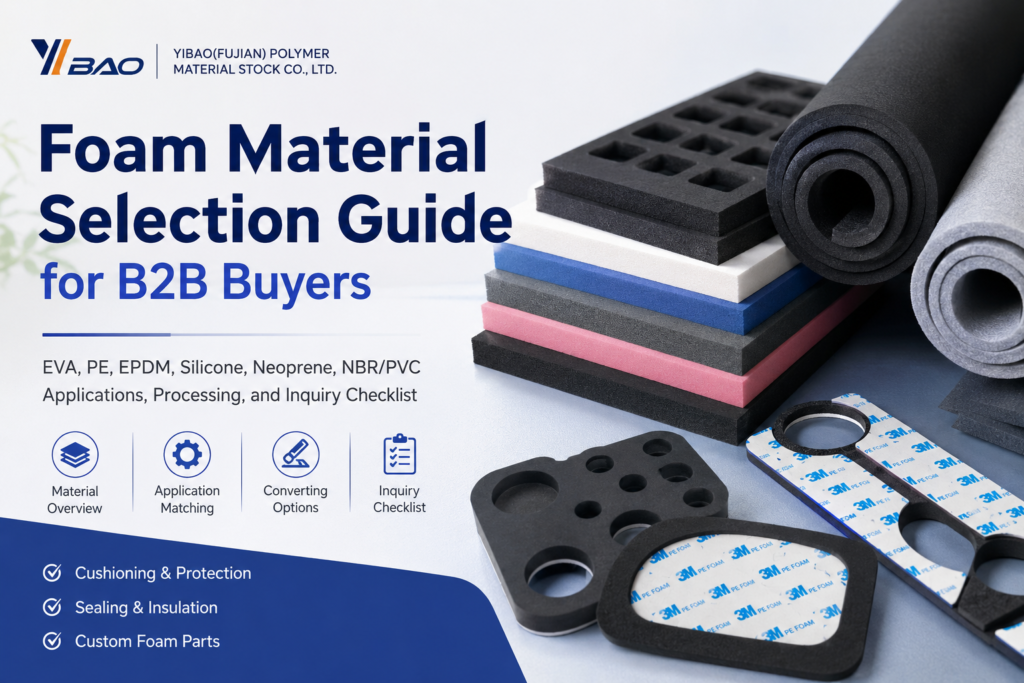
For repeated production, foam converting connects material selection with the final drawing. Die cutting, CNC cutting, slicing, lamination, and adhesive backing each change how the finished part behaves.
Die cutting for gaskets and washers
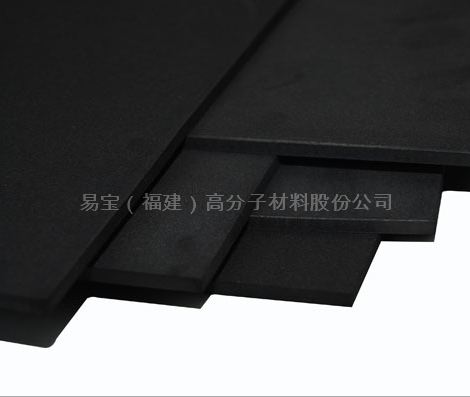
Die cutting works well for repeated shapes such as gaskets, washers, pads, and strips. However, foam is flexible. A narrow wall or sharp internal corner may stretch, tear, or deform during cutting.
Therefore, the drawing should allow practical widths and corner radii. A small design change can improve edge strength and reduce waste. In addition, a nesting review can make the part more economical without changing its function.
CNC cutting for early trials
CNC cutting is useful when several shapes need to be tested before tooling. It allows quick comparison of part width, hole position, corner radius, and thickness. As a result, the design can be improved before repeat production.
However, a CNC prototype should still be reviewed with the final production method in mind. A part that works in a small sample run may need die cutting later for speed and consistency. Therefore, the trial should include both function and production planning.
Adhesive backing and release liner design
Adhesive backing helps strips and pads stay in position before final compression. This is especially useful for covers, panels, frames, trays, and assembly lines. However, adhesive is part of the design, not a last-minute add-on.
The adhesive must match the real surface. Painted metal, powder coating, plastic, textured parts, and smooth glass all behave differently. Meanwhile, larger pads may need split liners, so placement can be controlled without touching the adhesive surface.
Practical Selection Table for Sheet and Converted Parts
The following table helps organize material direction before sample testing. It should not replace a real assembly trial. However, it can prevent random sampling and keep the discussion focused.
| Material | Best for | Key property | Suggested YIBAO page |
|---|---|---|---|
| Chloroprene foam sheet | Gaskets, sealing strips, pads, liners, washers | Rubber-like compression and balanced recovery | CR FOAM category |
| Fine-cell sponge grade | Narrow die cut gaskets and detailed washers | Cleaner edge control and better shape stability | Converting |
| Flame-retardant CR direction | Functional pads and parts needing extra project review | Special grade direction for stricter applications | YB-2030 flame retardant CR |
| EPDM foam | Outdoor seals and ozone-exposed parts | Weathering direction for external exposure | EPDM Division |
| Silicone foam | Heat-sensitive sealing and soft high-temperature contact | Heat resistance and soft sealing response | Silicone Division |
In short, the table is a starting map. If the application is mainly indoor, rubber-like, and conversion-focused, chloroprene sheet stock is usually worth testing early. However, outdoor exposure, high heat, or special standards may point to another material family.
How to Compare Chloroprene Foam with Other Materials
Material comparison should stay close to the application. Otherwise, the project becomes a broad material debate. A better method asks which problem matters most: sealing pressure, weather exposure, heat, edge quality, grip feel, or cost control.
Therefore, the goal is not to prove one material is always better. The goal is to reduce risk. A suitable sheet should match the working environment, final shape, and assembly method.
Compared with EPDM foam
EPDM often becomes important when outdoor weathering, ozone exposure, and long-term environmental resistance lead the requirement. Therefore, it may suit external seals, outdoor equipment, and weather strips.
However, not every pad needs EPDM. If the part works inside a protected assembly, a chloroprene sponge sheet may give a better balance of rubber-like feel, cut quality, and practical cushioning. The final decision should follow the actual exposure condition.
Compared with silicone foam
Silicone foam is often considered when heat resistance and soft sealing behavior are central. It can be useful in higher-temperature environments or special sealing tasks. However, it may not be the most practical route for ordinary protective pads.
For this reason, silicone should be compared when the application truly needs it. Otherwise, chloroprene sheet stock may provide a more balanced starting point for many gasket, pad, liner, and spacer applications.
Compared with general sponge
General sponge can work for simple cushioning. However, it may feel too weak for controlled sealing or repeated compression. After pressure, it may lose thickness and leave the assembly unsupported.
By contrast, a rubber-like chloroprene sponge can provide firmer rebound and cleaner support. This makes it useful where a part must protect, seal, and still look stable after cutting.
Application Scenes That Make Selection Easier
Real scenes make material choice clearer. A gasket, a pad, and a liner may all come from sheet material, yet each asks for a different balance. Therefore, the part should be judged by what it touches, how it compresses, and how often it moves.
Electrical enclosures and machine covers
In an electrical enclosure, a strip often sits between the cover and the frame. It needs to follow the surface and reduce small gaps. Meanwhile, it should not make the cover hard to close or distort screw pressure.
A useful trial places the strip around the real cover, then checks closing feel and contact marks. If the corners show weak marks, the strip may need different thickness or softness. If the cover bends, the material may be too firm.
Transport trays and protective packaging
In protective packaging, the sheet may line a tray or separate hard parts. The goal is to reduce marks, rubbing, and movement during handling. Therefore, the surface must be stable and should not shed particles easily.
For sensitive finishes, trial contact should happen under load. A pad that feels safe during a short touch may still mark a surface after long compression. Therefore, both pressure and time should be part of the test.
Automotive interior and trim contact points
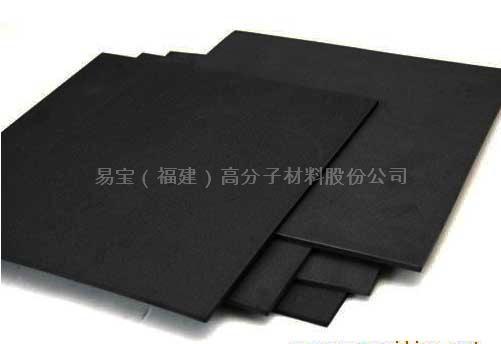
Automotive and mobility-related parts often use soft strips to reduce buzz, squeak, and rattle. A small pad placed at the correct point can make the assembly feel quieter. However, the pad must match temperature, odor, compression, and surface requirements.
In this scene, position is often more important than size. A small pad near the moving contact point may solve the issue better than a larger pad placed away from the vibration. Therefore, testing should include real movement where possible.
Gear, bags, and soft-contact accessories
In gear and bag applications, the sheet may act as a comfort layer or protective insert. It should feel soft enough for contact, yet firm enough to hold shape. Meanwhile, lamination can change appearance and touch.
A fabric-laminated sample may behave differently from bare sheet. For that reason, the complete layered sample should be reviewed before final approval. This prevents later surprises in hand feel, edge appearance, or bonding behavior.
Sample Testing Method Before Production
A good sample test is not complicated, but it must be realistic. The sheet should be pressed, cut, bonded, installed, and left under load in a condition close to the final application. This gives a clearer answer than checking the material only by hand.
Therefore, a sample request should include application type, target thickness, drawing, pressure condition, surface material, adhesive needs, and expected cutting method. With that information, YIBAO Foam can suggest a more practical starting route.
Check 1: fit inside the real gap
First, place the sample inside the real gap. Then close the assembly using the normal screw, clip, hinge, or cover pressure. A hand press cannot show the same force pattern as the final structure.
After opening the part, check the contact marks. Even marks usually show stable contact. Uneven marks may show surface warping, wrong thickness, or poor pressure distribution.
Check 2: recovery after compression
Secondly, leave the sample under pressure for a realistic period. Then remove it and check how much thickness returns. A material that looks good after one minute may behave differently after a full day.
If the part keeps a deep mark, the design may need a different density, thickness, or contact area. In some cases, changing the part shape is more effective than changing the material family.
Check 3: edge and hole quality
Next, review the converted sample. Holes, narrow bridges, and inner corners reveal whether the drawing is practical. A sheet can feel excellent, yet still fail if the part shape is too delicate.
Therefore, edge quality should be checked by fit and by touch. If the gasket stretches during installation, the drawing may need wider walls, rounded corners, or a revised cutting direction.
Check 4: adhesive on the real surface
Finally, adhesive backing should be tested on the real substrate. Smooth metal, coated metal, plastic, rubber, fabric, and painted surfaces all behave differently. A clean laboratory plate does not always represent production.
A useful adhesive test includes press time, dwell time, peel direction, and temperature. If the pad lifts at one corner, the issue may come from surface cleaning, adhesive selection, liner handling, or stretching during placement.
Common Mistakes When Choosing Rubber-Like Foam Sheet
Many foam part problems come from early assumptions. A project may choose the softest sheet because it feels comfortable. Another project may choose the thickest strip because the gap looks large. However, the final assembly often tells a different story.
Mistake 1: selecting only by hand feel
Hand feel gives a first impression, but it does not show long-term compression. A very soft sheet may feel pleasant at first. However, it may collapse when a cover stays closed for several days.
A better method combines hand feel with assembly testing. The sample should be installed, compressed, and checked again after time. This gives a more reliable view of real function.
Mistake 2: ignoring part geometry
Foam parts need practical geometry. A narrow gasket wall may look fine on a drawing, but it can tear during cutting or stretch during installation. Therefore, drawings should be reviewed with soft material behavior in mind.
Rounded corners, wider bridges, and simpler placement features can improve the final part. Meanwhile, a small orientation mark can reduce assembly mistakes when two sides look similar.
Mistake 3: treating adhesive as an afterthought
Adhesive is part of the design. It changes thickness, stiffness, handling, and bond behavior. Therefore, adhesive-backed samples should be reviewed before production approval.
In addition, a strip should not be pulled during placement. If it is stretched, it may shrink later and lift at the ends. Smooth placement and suitable liner design help reduce this issue.
Mistake 4: approving only the sheet sample
A sheet sample can show material feel. However, the final product may be a narrow strip, ring gasket, laminated pad, or adhesive-backed washer. These converted formats behave differently.
Therefore, sheet approval should be followed by converted sample approval. This second step confirms edge quality, liner handling, part size, fit, and real assembly behavior.
How to Prepare a Clear Material Request
A clear request speeds up material advice. Instead of asking for a general foam sheet, describe the working scene. This helps connect sheet selection, thickness, density, adhesive, and cutting method from the beginning.
For example, the request can mention whether the part is a gasket, pad, strip, liner, washer, spacer, or laminated layer. It can also include the contact surface, compression gap, temperature range, adhesive needs, and expected quantity.

Useful information to include
- Application type: seal, cushion, spacer, liner, grip layer, washer, or protective pad.
- Target thickness and expected compressed thickness inside the assembly.
- Surface contact: metal, plastic, paint, coating, fabric, glass, or rubber.
- Processing route: sheet supply, die cutting, CNC cutting, lamination, adhesive backing, or roll format.
- Working condition: indoor use, outdoor exposure, temperature range, vibration, and contact pressure.
With this information, material advice becomes more specific. In addition, sample testing becomes faster because the purpose of the sample is clear before it arrives.
Extended Reading and Related YIBAO Pages
The following pages help connect material selection with related foam families and processing services. These links are used for practical decision-making and site navigation.
CR FOAM category
Review focused chloroprene sheet products for sealing strips, gasket pads, cushioning sheets, and rubber-like sponge applications.
Open category →NEOPRENE division
Use this page when SBR, SCR, and chloroprene-based material families need to be compared in early project planning.
Open division →Converting service
Use this route when the final part needs die cutting, CNC cutting, slicing, lamination, or adhesive-backed production.
View converting →Contact YIBAO Foam
Send drawings, thickness targets, sample needs, or current material issues for practical sheet and converting discussion.
Contact now →FAQ
What is CR foam used for in industrial products?
CR foam is used for sealing strips, cushioning pads, protective liners, soft spacers, washers, grip layers, and custom die cut parts. It helps fill gaps, reduce rattle, protect surfaces, and improve rubber-like contact feel.
How is CR foam sheet different from ordinary sponge?
CR foam sheet usually provides a firmer, more rubber-like response than many ordinary lightweight sponge materials. Therefore, it is often preferred when the part needs controlled compression, cleaner recovery, and better shape stability after cutting.
Is chloroprene foam suitable for die cut gaskets?
Yes, chloroprene foam can suit die cut gaskets when thickness, density, and part geometry are matched correctly. However, narrow walls, small holes, and sharp internal corners should be reviewed before tooling.
Can CR sponge foam be supplied with adhesive backing?
Yes, CR sponge foam can be combined with adhesive backing for strips, pads, liners, and washers. However, adhesive should be tested on the actual surface because metal, plastic, coating, and paint can behave differently.
When should EPDM or silicone be compared?
EPDM should be compared when outdoor weathering, ozone exposure, or long external use is important. Silicone should be compared when heat resistance leads the requirement. Otherwise, chloroprene sheet stock may be a practical starting point for many sealing and cushioning parts.
Final Selection Advice
A rubber-like sealing or cushioning part should be selected by function, not by a single data point. Therefore, thickness, density, compression feel, recovery, adhesive backing, and cut shape should be reviewed together. When the material is tested inside the real assembly, the final decision becomes more reliable.
For sheet selection, sample support, drawing review, or custom cutting discussion, YIBAO Foam can help evaluate converted samples, adhesive-backed parts, and production-ready options for applications using CR foam.
- First, define the real function: sealing, cushioning, spacing, anti-rattle support, grip comfort, or surface protection.
- Secondly, test the converted sample with the real gap, pressure, adhesive, and surface material before tooling.
- Finally, compare EPDM, silicone, or other foam families only when the working environment clearly requires them.