
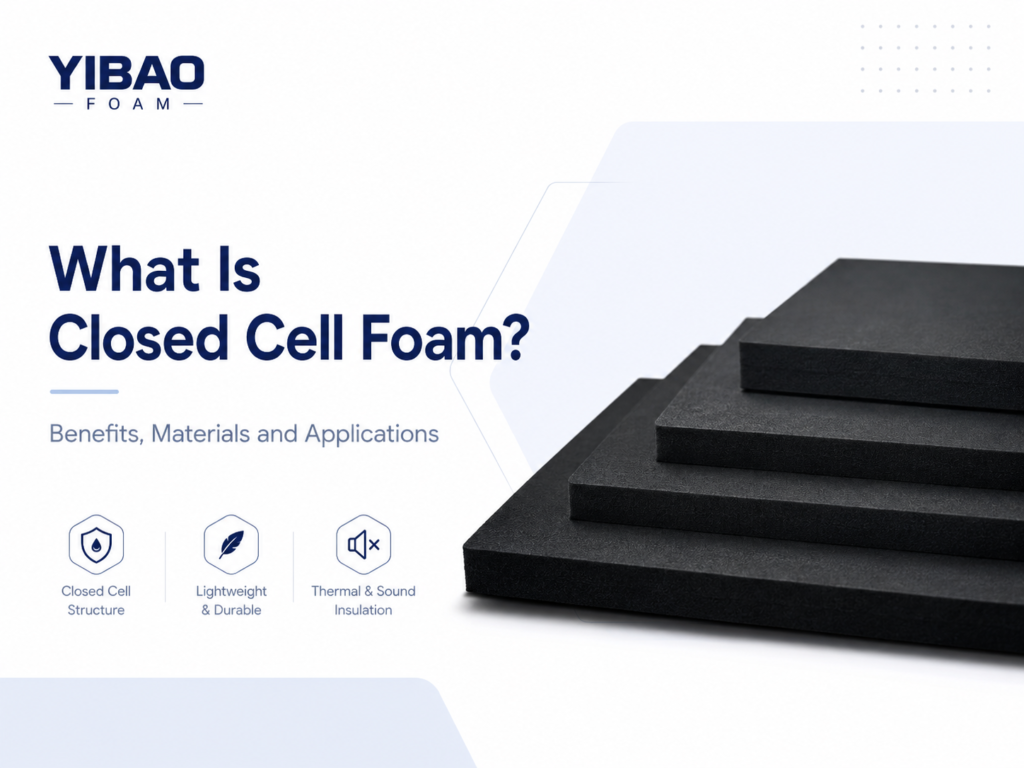
Closed cell foam is a practical material structure for sealing, cushioning, insulation, spacing, packaging protection, and converted foam parts. In simple terms, the foam contains many tiny cells that are mostly sealed from one another. Therefore, air and moisture move through the material less easily than in open-cell sponge. For industrial projects, this structure is usually the first selection filter before choosing PE foam, EVA foam, EPDM foam, silicone foam, or a custom converting route.
Closed-Cell Foam Meaning in Simple B2B Terms
First, the phrase describes a foam structure, not one single polymer. The cells inside the foam are mostly separated, so the material can limit water absorption, hold shape under pressure, and provide more stable support than many soft open-cell sponge materials.
However, the structure does not replace material selection. PE, EVA, EPDM, silicone, CR, and NBR/PVC foam can all serve different roles. Therefore, the correct route should start from the working environment, part function, compression need, and processing method.
For early screening, the broadest starting point is the YIBAO foam product range. This page helps separate general sheet materials from PE foam, EVA foam, EPDM foam, silicone foam, flame-retardant foam, neoprene foam, NBR/PVC foam, and converting services.
Quick Selection Idea
In practical sourcing work, structure answers the first question: should the foam resist moisture, support compression, cushion impact, or fill a gap? After that, the polymer family answers the second question: should the project move toward PE, EVA, EPDM, silicone, or a converted foam part?
Why the Structure Matters for Water Resistance, Cushioning, Sealing and Insulation
To begin with, sealed cells reduce the movement of water and air through the foam body. Therefore, the structure often supports moisture-resistant pads, sealing strips, protective packaging, appliance liners, and industrial spacers.
At the same time, the structure helps distribute impact. A suitable foam grade can reduce direct pressure on corners, edges, housings, screens, instruments, and coated surfaces. As a result, PE and EVA routes often appear in protective packaging and custom insert projects.
For sealing work, compression behavior becomes the key. A gasket must fill the gap without creating excessive assembly force. Therefore, thickness, hardness, density, adhesive backing, compression recovery, and part width should be reviewed together.
For insulation, the same compact structure can slow air movement inside the foam. In addition, the material can reduce vibration transfer and soften contact between panels. This is why foam pads often appear in appliances, automotive parts, enclosures, HVAC-related assemblies, and industrial covers.
Open-Cell vs Closed-Cell Structure
Open-cell foam has connected pores. Therefore, it usually feels softer and more breathable. This can suit acoustic absorption, comfort layers, filtration, airflow, and soft padding.
By contrast, sealed-cell foam is usually chosen when the project needs lower water absorption, firmer support, gap filling, cleaner die cutting, or more stable cushioning. Still, the final choice should depend on the real assembly, not only a material name.
| Selection point | Open-cell foam | Sealed-cell foam |
|---|---|---|
| Cell structure | Connected pores | Mostly separated cells |
| Typical feel | Softer and breathable | Firmer and supportive |
| Moisture behavior | Higher absorption risk | Better water resistance |
| Common role | Comfort, airflow, sound absorption | Sealing, cushioning, insulation, spacing |
| Processing route | Can tear if too soft | Often suitable for die cut gaskets and pads |
Common Materials: PE, EVA, EPDM and Silicone
Next, the material family decides the practical use range. PE foam, EVA foam, EPDM foam, and silicone foam may all support compact cell structures, but they solve different engineering and procurement problems. Therefore, material selection should be guided by application conditions.
PE Foam for Packaging, Spacing and General Protection
PE foam is often reviewed for packaging pads, separator sheets, protective liners, appliance protection, industrial spacing, and transport cushioning. In addition, it can support sheet supply, roll supply, slitting, lamination, adhesive backing, and die cutting.
Because PE foam is lightweight and practical, it often fits repeated packaging programs and large protective pad requirements. However, density, thickness, recovery, and part shape should still match the real load and transport condition.
EVA Foam for Clean Inserts, Color Options and Shaped Protection
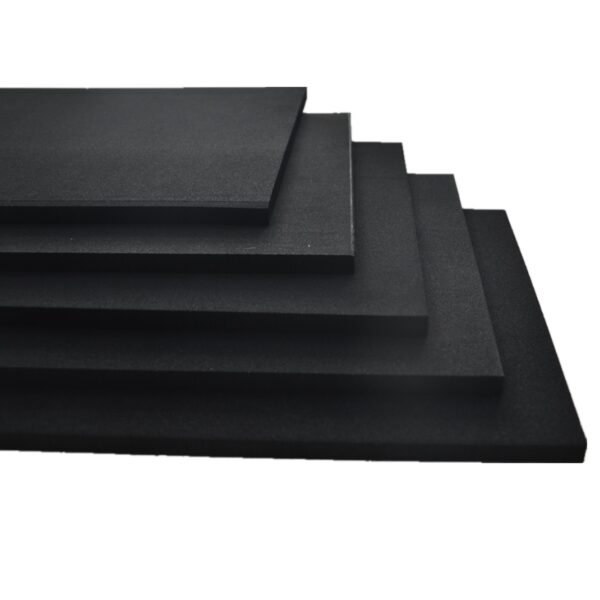
EVA foam is often useful when cushioning and presentation need to work together. For example, tool trays, case inserts, display inserts, sports pads, protective blocks, and shaped packaging can benefit from EVA’s supportive feel and clean appearance.
Moreover, EVA can support layered structures, cavity cutting, backing, splitting, and lamination. Therefore, it is a practical option when the foam part must protect the product and also keep the packaging layout organized.
EPDM Foam for Weather Sealing, Gaskets and Industrial Pads
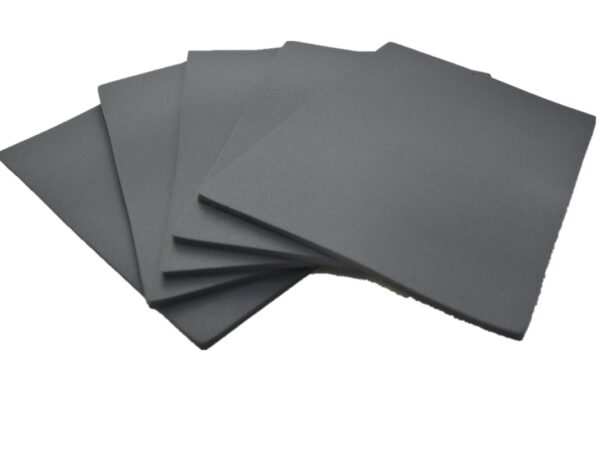
EPDM foam often becomes relevant when a part faces outdoor exposure, repeated compression, automotive-style assembly, appliance sealing, door and window gaps, or long strip requirements. Therefore, it is commonly reviewed for weather-facing gaskets and compression seals.
However, sealing performance depends on the full part design. Width, thickness, compression ratio, adhesive side, joint position, corner radius, and contact surface all affect the result. Therefore, EPDM selection should be paired with a drawing or assembly sketch.
Silicone Foam for Temperature, Soft Sealing and Specialty Applications
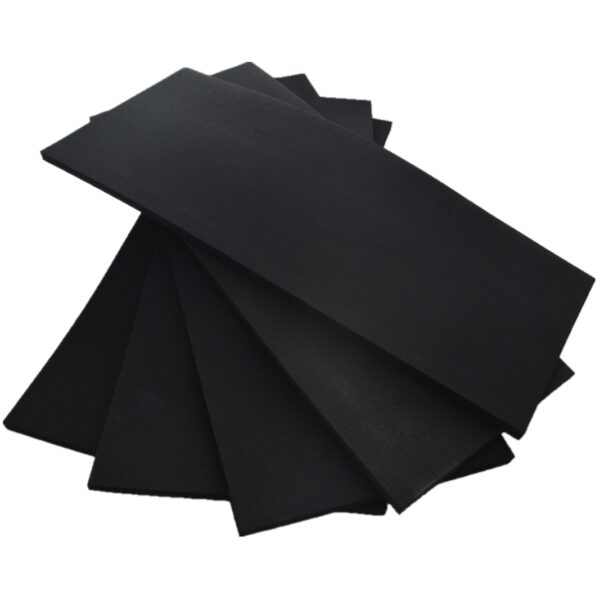
Silicone foam is often considered when heat exposure, soft compression, flame-retardant needs, electrical insulation, or specialty sealing becomes important. In addition, it can support electronics, lighting, enclosure gaskets, appliance insulation, and thermal buffer pads.
Nevertheless, silicone foam should be chosen for a clear performance reason. If the part only needs simple cushioning in dry packaging, PE or EVA may provide a simpler route. Conversely, heat and recovery requirements may justify silicone review.
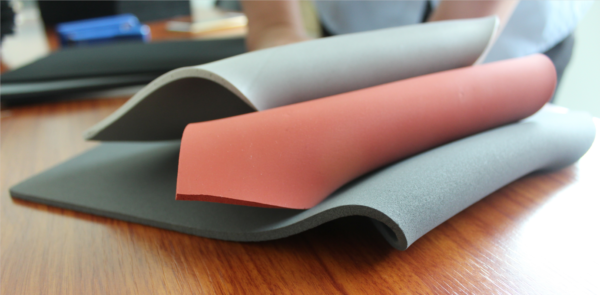
Application Map: Packaging, Automotive, Electronics, Gaskets and Industrial Pads
After the material route becomes clear, the application decides the part form. A sheet can become a simple pad, roll, gasket, narrow strip, laminated layer, adhesive-backed part, or CNC-cut insert. Therefore, application mapping helps prevent over-specification.
Protective Packaging
PE and EVA often fit transport pads, case inserts, separator sheets, corner protection, and precision instrument packaging.
Automotive Assemblies
EPDM and selected rubber foam routes can support light barriers, mirror pads, tail light seals, door strips, trunk seals, and anti-rattle pads.
Electronics and Enclosures
Silicone, EPDM, PE, and EVA may support insulation pads, dust seals, spacing layers, adhesive pads, and enclosure gaskets.
Gaskets and Seals
EPDM and silicone are common routes when compression recovery, gap filling, and environmental resistance matter.
For packaging, the key goals are impact control, surface protection, cavity fit, and repeatable assembly. Therefore, product weight, fragile zones, carton size, packing direction, and transport conditions should guide foam density and thickness.
For gaskets, the key goals are gap filling and compression recovery. Meanwhile, the part must remain easy to install. Therefore, width, adhesive backing, thickness, part shape, and joint location should be checked before production.
For electronics and appliance assemblies, space is often limited. As a result, foam must compress correctly without pushing housings out of alignment. In addition, adhesive selection should match plastic, metal, coating, or glass surfaces.
Which Project Type Fits Which Foam Route?
A useful article should make the next step clear. Therefore, the material route below is designed for project screening, not for forcing one product into every application.
Best Fit: Packaging and Spacing
PE foam fits projects that need lightweight cushioning, separator pads, appliance protection, and repeated sheet or pad production.
Go to PE FOAMBest Fit: Inserts and Presentation
EVA foam fits shaped inserts, tool trays, case linings, protective cavities, layered pads, and visual packaging layouts.
Go to EVA FoamBest Fit: Weather Seals
EPDM foam fits sealing strips, weather-facing pads, automotive-style gaskets, appliance seals, and long-format compression parts.
Go to EPDM DivisionBest Fit: Heat and Specialty Sealing
Silicone foam fits temperature-related seals, electrical insulation pads, soft enclosure gaskets, and specialty foam components.
Go to Silicone DivisionHow to Choose by Environment, Temperature, Compression and Processing Needs
In most projects, the right material is not simply the strongest material on paper. Instead, it is the material that fits the environment, assembly force, processing route, and cost target. Therefore, selection should follow a clear sequence.
1. Start with the Environment
First, define whether the part works indoors, outdoors, in a wet area, near heat, inside packaging, or inside an enclosure. This step narrows the material range quickly. For example, PE or EVA may fit indoor packaging, while EPDM or silicone may fit sealing environments.
At the same time, the contact surface should be clear. Painted metal, plastic, glass, rubber, aluminum, powder coating, and fabric can all affect adhesive selection. Therefore, surface details should be part of the first inquiry.
2. Check the Temperature Range
Temperature can change compression, recovery, adhesive bond, and dimensional stability. Therefore, the working temperature should be defined early. Silicone may be reviewed for heat-related applications, while EPDM can support many outdoor and automotive-style sealing projects.
However, temperature cycling matters as much as peak temperature. Repeated heating, cooling, compression, and moisture change can stress the part. Therefore, final testing should happen in the real assembly whenever possible.
3. Confirm Compression and Recovery
Compression behavior decides whether a gasket seals, a pad cushions, or a spacer holds position. A soft foam can close small gaps with low force. However, it may relax too much under long-term pressure.
Conversely, a firmer foam can provide stronger support. Still, it may increase assembly force. Therefore, thickness, density, hardness, part width, screw spacing, and gap tolerance should be reviewed together.
For rubber foam sealing projects, engineering teams may also reference ASTM D1056 when discussing flexible cellular sponge or expanded rubber classification, compression behavior, and specification language. This external reference can help align technical communication during gasket and sealing discussions.
4. Review Processing Before Final Approval
Processing often decides whether a foam works in real production. Die cutting, slitting, skiving, laminating, adhesive backing, CNC cutting, kiss cutting, and roll supply can each influence material choice.
For example, a very soft sheet may stretch during die cutting. A thick insert may need CNC cutting. A narrow strip may need slitting from roll stock. Therefore, the final part format should be discussed before mass production.
| Project need | Practical material route | Key selection notes |
|---|---|---|
| Lightweight packaging | PE foam or EVA foam | Check density, thickness, product weight, and cavity fit. |
| Display insert | EVA foam | Check color, cutting edge, layer structure, and loading ease. |
| Outdoor gasket | EPDM foam | Check compression ratio, joint design, adhesive side, and exposure. |
| Temperature-related seal | Silicone foam | Check temperature range, recovery, surface contact, and thickness. |
| Adhesive-backed die cut pad | PE, EVA, EPDM, or silicone | Check adhesive compatibility, liner type, tolerance, and cutting details. |
When to Move from Foam Sheet to Die Cut Parts or Custom Inserts
A sheet sample is useful at the beginning. It supports quick checks for touch, compression, thickness, and basic material fit. However, repeated production usually needs a converted part with stable size and clean edges.
Therefore, die cut parts make sense when the same gasket, pad, spacer, washer, seal, or strip repeats in assembly. Kiss-cut parts can also improve handling because each piece remains on a release liner until installation.
For protective packaging, custom inserts become useful when the product needs shaped support. CNC cutting, laminated layers, and cavity design can help hold tools, instruments, electronics, sample sets, or finished parts in position.
In addition, converting should be discussed before the final material is approved. Some foams cut better than others. Some shapes need wider bridges, larger radii, or a different thickness. Therefore, material and processing should be reviewed together.
Inquiry Information Checklist
A clear inquiry shortens material screening and makes sample planning more accurate. The following details are useful for sheet, roll, strip, gasket, adhesive pad, and insert projects.
- Part function: cushioning, sealing, insulation, spacing, vibration damping, or surface protection.
- Material route under review: PE, EVA, EPDM, silicone, CR, NBR/PVC, or another foam family.
- Dimensions: thickness, length, width, outer shape, holes, slots, and tolerance.
- Environment: indoor, outdoor, moisture, heat, cold, oil contact, or UV exposure.
- Processing need: sheet, roll, strip, die cut gasket, adhesive pad, laminated part, or insert.
- Adhesive details: one side, two sides, liner type, and contact surface.
- Reference file: drawing, sample photo, CAD file, assembly sketch, or current part sample.
- Quantity stage: sample, pilot order, regular production, or annual forecast.
Common Selection Mistakes to Avoid
Many foam problems start when a material is selected by name only. Therefore, the following checks should happen before sample approval and mass production.
Choosing Only by Thickness
Thickness matters, but it does not explain compression force or recovery. A 5 mm soft foam and a 5 mm firm foam can behave very differently. Therefore, thickness should be reviewed with density, hardness, gap range, and installed pressure.
Treating Water Resistance as a Complete Seal
A sealed-cell structure can reduce water entry into the foam body. However, a full assembly can still leak through edges, joints, corners, screw holes, or uneven surfaces. Therefore, sealing tests should use the real housing or installation gap.
Ignoring Adhesive Compatibility
Adhesive backing can simplify assembly, but bond quality depends on the surface. Plastic, powder-coated metal, painted metal, glass, and rubber require different review. Therefore, substrate information should be included before adhesive selection.
Waiting Too Long to Discuss Converting
A foam sheet may look suitable during hand testing, yet the same material may stretch, tear, curl, or release poorly during production. Therefore, die cutting, slitting, lamination, and adhesive backing should be reviewed during the early material stage.
FAQ
What is the difference between open-cell and closed-cell foam?
Open-cell foam has connected pores, so air and moisture can move through the structure more easily. Therefore, it often feels softer and more breathable. Sealed-cell foam has mostly separated cells, so it usually gives better moisture resistance, firmer support, and more stable sealing behavior.
Is this type of foam waterproof?
It can resist water better than many open-cell sponge materials. However, the full waterproof result depends on material grade, thickness, edge design, adhesive seams, compression, and surrounding assembly. Therefore, sealing tests should use the real housing or final gap whenever possible.
Which foam material is best for sealing?
EPDM foam and silicone foam are common choices for sealing. EPDM often fits weather-facing strips, automotive-style gaskets, appliance seals, and door or window pads. Silicone often fits temperature-related or specialty sealing applications. Still, compression, gap tolerance, surface contact, and service environment should decide the final route.
Can sealed-cell foam be die cut?
Yes. Many PE, EVA, EPDM, silicone, and rubber foam sheets can be die cut into pads, gaskets, washers, spacers, strips, and adhesive-backed parts. However, cutting quality depends on thickness, density, softness, shape complexity, bridge width, and hole size.
When should a project move from sheet supply to custom converted parts?
A sheet sample works well for early testing. However, repeated production usually benefits from die cut parts, adhesive-backed pads, custom strips, laminated foam, or CNC-cut inserts. Therefore, the move should happen once the dimensions, material, thickness, and assembly method become stable.
Summary and Practical Selection Tips
In summary, sealed-cell foam materials can support cushioning, sealing, insulation, spacing, moisture resistance, vibration control, die cut gaskets, protective packaging, and industrial pads. However, structure is only the first filter. PE, EVA, EPDM, and silicone each serve different environments and processing needs.
Therefore, the practical route is to start from the full YIBAO product range, then narrow the project toward PE foam, EVA foam, EPDM foam, silicone foam, or converting services. A clear drawing, working condition, thickness range, compression target, adhesive need, and target quantity will make closed cell foam selection more accurate.
- First, define the part function before selecting the material family.
- Next, match the material route to environment, compression, temperature, and processing needs.
- Finally, prepare drawings, photos, dimensions, adhesive details, and quantity ranges before requesting a recommendation.
Request a Foam Material Recommendation
Start with the full product range, then move into PE foam, EVA foam, EPDM foam, silicone foam, or converting according to the application environment and part shape. For a project-specific recommendation, send drawings, photos, dimensions, compression needs, adhesive requirements, and quantity range.