
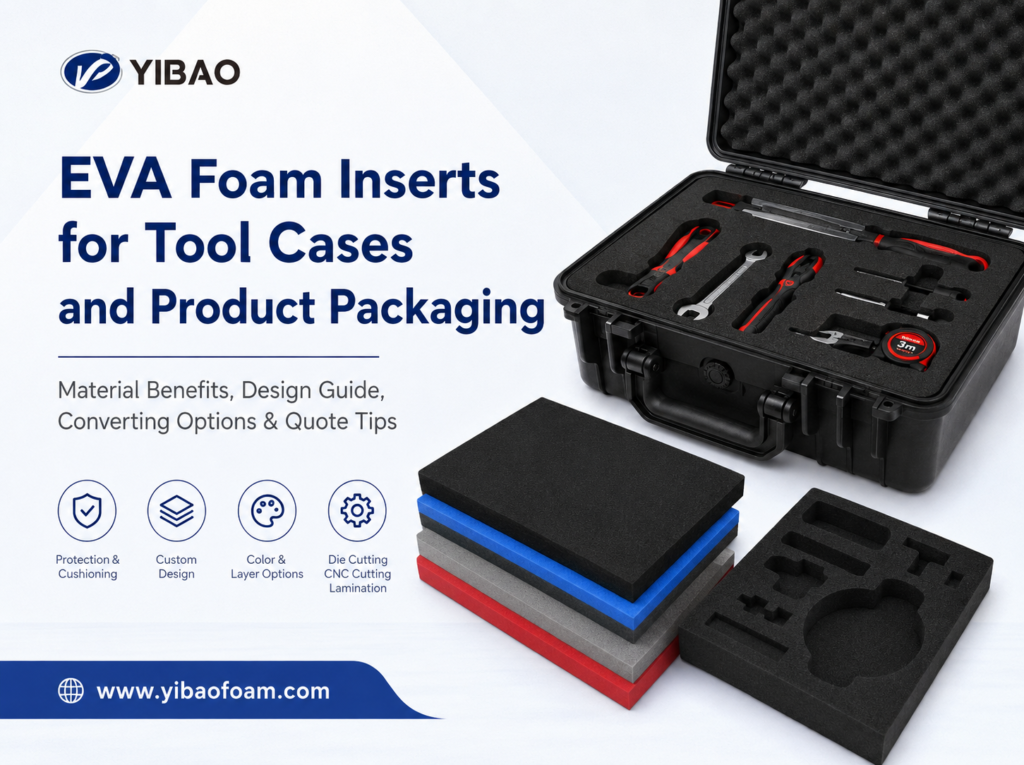
Choose the insert around how the case will actually be used.
EVA foam inserts are a strong fit when a tool case, reusable kit, instrument box, or presentation package needs organized cavities, a clean visible surface, controlled product movement, and repeatable access. The right design depends on more than foam thickness: cavity depth, finger access, layer structure, lid clearance, cutting method, and sample approval all affect the finished result.
Jump to:
In a visible tool case or product box, the insert becomes part of the product experience. It controls where each item sits, keeps accessories separated, helps users notice missing parts, and affects how easily the kit can be packed and reopened. For this type of project, EVA is often more useful than a simple filler because the insert has to protect, organize, and present at the same time.
This guide focuses on EVA inserts for tool cases, reusable service kits, sample sets, instruments, electronics, and presentation packaging. If the main requirement is hidden cushioning for shipping rather than a visible reusable tray, YIBAO’s custom foam inserts for protective packaging guide covers the broader packaging direction in more detail.
|
1
Define the use Reusable case, visible tray, sample kit, or transport protection? |
2
Map every item Main product, accessories, fragile zones, handles, cables, and removal direction. |
3
Choose the structure Cavity depth, layers, finger slots, lid clearance, and fixing method. |
4
Approve a real sample Check fit, closure, removal, movement, surface contact, and visible finish. |
When EVA Is the Right Material Direction
EVA is especially useful when the foam remains visible after the case or box is opened. A firm, structured tray can help keep tools, instruments, samples, and accessories in fixed locations while giving the package a cleaner finished appearance. Color and layered construction can also support product grouping or make an empty tool position easier to notice.
EVA is not automatically the best answer for every packaging job. If the foam is mainly a hidden liner, separator, lightweight cushion, or transport pad, PE foam may be a simpler direction to review. Material choice should follow the finished use, product weight, surface sensitivity, handling cycle, and converting method rather than the material name alone.
|
EVA is worth reviewing when…
|
Review another direction when…
|
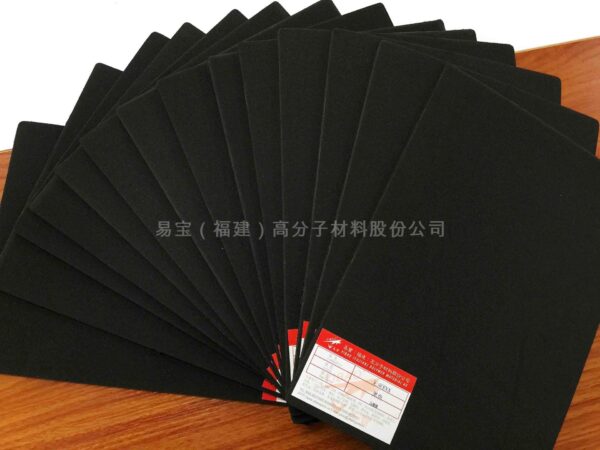
Where EVA Foam Inserts Add the Most Value
The best-fit applications share one characteristic: the insert must do more than absorb movement. It also has to organize the product, support repeated handling, or present the contents clearly.
Tool Cases and Maintenance Kits
Shaped pockets give wrenches, sockets, probes, gauges, bits, and service tools fixed positions. Contrast layers can make missing items easier to see, while finger access supports repeated removal.
Instruments and Electronic Kits
Main devices, chargers, cables, adapters, probes, and batteries can be separated so hard accessories do not rub against screens, housings, lenses, buttons, or ports.
Sample and Presentation Sets
A controlled layout helps the main sample appear first while smaller parts stay grouped in a logical order. Consistent spacing can make the set easier to understand at a glance.
Reusable Demonstration Cases
Repeated opening and repacking make wall strength, access, cavity recovery, surface wear, and item order more important than in one-way packaging.
How to Design EVA Foam Inserts for Tool Cases and Packaging
A good insert should feel controlled, not forced. The product should sit securely without scraping into the cavity, and the case should close without pushing the product into the foam. The drawing is only the starting point; the final fit needs to be confirmed with the real product and case.
The four dimensions that usually decide whether an insert feels right
Cavity depth controls hold. Side clearance controls removal. Foam bridges control wall strength. Lid clearance controls closing pressure.
Cavity Depth: Hold the Product Without Trapping It
A shallow pocket keeps more of the product visible and usually improves access. A deeper pocket increases side support, but it can make removal difficult or place pressure on surfaces that should stay clear. Product height, weight, centre of gravity, and removal direction should be reviewed together rather than selecting a depth from appearance alone.
Layering and Color Contrast
Layered construction can create different support levels without turning the insert into one deep cut. A top layer can define the visible outline, a lower layer can create depth, and a contrast color can reveal an empty tool position. Drawings should identify the layer sequence, final stack height, and any adhesive areas so the finished edges remain aligned.
Finger Slots and Removal Access
Finger notches, half-moon cutouts, or side channels help users lift products from close-fitting cavities. Access should be added where a hand naturally approaches the part, while leaving enough foam between neighbouring pockets to avoid weak bridges or tearing.
Fit, Surface Contact, and Lid Pressure
Tight fit is not always safer. Too little clearance can mark a delicate finish or slow repeated use; too much clearance allows movement. The lid also needs its own check. A bottom cavity may fit correctly while the lid pad still presses on a screen, knob, connector, or raised feature after closing. Sample approval should include the complete case in the closed position.
Design around strong contact areas, not fragile features.
Screens, lenses, ports, clips, small pins, polished edges, and raised controls may need relief space. Support the stronger frame or body area whenever possible, then confirm the contact pattern on the physical sample.
EVA vs PE for Insert Projects: A Faster Selection Check
EVA and PE can both be converted into protective parts, but they usually enter the project for different reasons. EVA is often reviewed for visible, shaped, reusable layouts. PE is often reviewed for practical cushioning, liners, separators, and transport-focused protection. The full material decision should still be confirmed against product weight, surface finish, required thickness, and sample results.
| Project Need | Start With EVA When… | Review PE When… |
|---|---|---|
| Visible tool or service case | Clean cavities, organized presentation, and repeated handling matter. | The foam is mainly a lid pad, liner, or hidden protection layer. |
| Color-coded layout | Contrast layers help show missing tools or separate groups. | Color is secondary to basic transport cushioning. |
| Shipping protection | The insert also needs a refined visible finish or reusable layout. | Pads, spacers, separators, and lightweight cushioning are the main need. |
| Sample approval focus | Fit, access, cavity edge, layer alignment, and visible finish. | Coverage, compression, movement control, and transport protection. |
For a broader material comparison, see PE Foam vs EVA Foam: How to Choose the Right Foam Sheet.
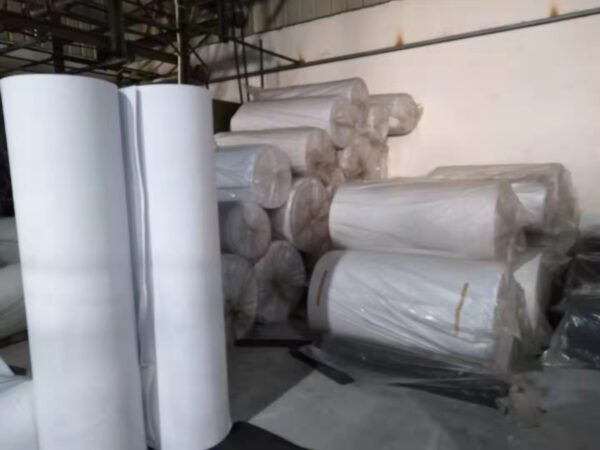
Choose the Cutting and Assembly Method After the Insert Structure Is Clear
The converting method should follow the geometry, thickness, cavity depth, order pattern, edge requirement, and sample stage. Instead of choosing CNC or die cutting first, define the finished tray and then select the process that can reproduce it reliably.
| Method | A Practical Starting Point | What to Check in the Sample |
|---|---|---|
| Die cutting | Repeated flat profiles, pads, spacers, lid foam, simple layers, and shallow pockets. | Profile accuracy, edge condition, layer repeatability, and fit. |
| CNC cutting | Deeper cavities, stepped pockets, product-specific openings, prototypes, and layouts likely to change. | Depth, corner radius, tool path marks, removal access, and cavity edge. |
| Lamination | Multi-depth structures, thicker inserts, or contrast-color layers. | Layer alignment, adhesive area, final stack height, and visible edges. |
| Adhesive backing | Inserts or pads that need to stay fixed to a case, box, panel, or packaging base. | Bonding on the actual substrate, edge lift, position, and assembly method. |
YIBAO’s foam converting capability covers die cutting, CNC cutting, lamination, adhesive backing, and other custom processing routes. For material testing discussions, ASTM D3575 is an active ASTM standard covering test methods for flexible cellular materials made from olefin polymers; it can be used as a technical reference when the relevant material and test method apply, but it does not replace application-specific package validation. ASTM D3575 reference.
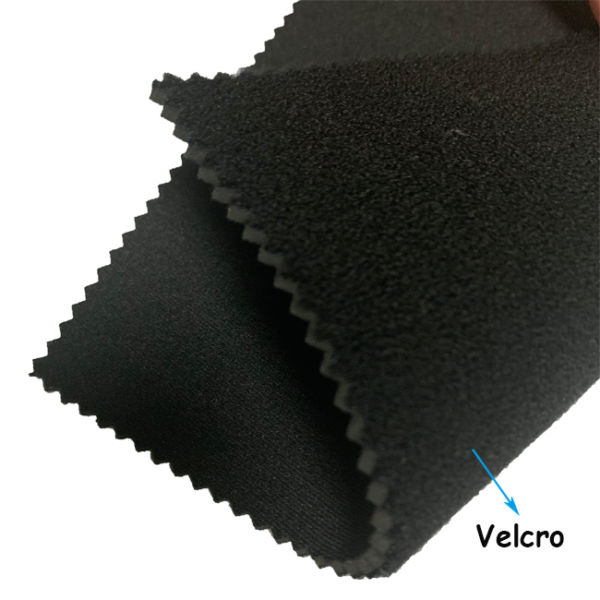
Special material requirements should be confirmed before the insert is finalized.
If a project calls for halogen-free, flame-retardant, low-odour, adhesive, color, or another defined material requirement, include that requirement in the inquiry rather than assuming a standard EVA grade will satisfy it. The material specification and finished application should be reviewed together.
Review Halogen-Free Flame-Retardant EVA Option →Sample Check Before Bulk Production
A sample should prove more than “the product fits.” It should show that the complete case works during loading, closing, carrying, opening, and repeated removal. This is where small problems in cavity depth, finger access, layer alignment, and lid pressure become visible before bulk production.
Six Checks for EVA Insert Approval
- Placement: every item sits flat, stable, and at the intended height.
- Removal: the product can be lifted without excessive force, scraping, or awkward finger access.
- Closure: the real case or box closes without forcing the product downward.
- Movement: accessories remain separated and the main product does not rattle or collide during normal handling checks.
- Surface contact: finished surfaces show no unacceptable marks after loading, closure, storage pressure, and repeated removal checks.
- Visible finish: cavity walls, layer alignment, adhesive areas, color, cutting edges, and cleanliness meet the project requirement.
If the insert uses contrast layers, check whether the lower color is exposed consistently around each cavity. If the tray uses narrow foam bridges or tight clusters of small parts, repeat the removal test several times to check whether walls remain stable. Any revision should be recorded before the bulk-production drawing is released.
What to Prepare for an EVA Insert Quote
A useful quote request should describe the product, the case, the insert function, and the order plan. This lets material direction, cutting method, layer structure, and sample work be reviewed together instead of starting with a broad foam price.
| Quote Item | Information to Prepare | Why It Matters |
|---|---|---|
| Product | Dimensions, weight, drawing or clear photos, fragile or cosmetic areas. | Defines support zones, cavity shape, clearance, and contact risk. |
| Case or box | Internal length, width, height, lid space, ribs, corners, hinge or latch limits. | Prevents fit and closure problems that outside dimensions do not reveal. |
| Item list | Main product, accessories, cables, cards, spare parts, hardware, and preferred order. | Avoids late layout changes and helps organize the complete kit. |
| Insert structure | Color, contrast layer, target feel, finger access, layer count, adhesive need, visible finish. | Guides EVA material review, cutting route, lamination, and sample planning. |
| Order plan | Prototype quantity, expected bulk quantity, target timing, and any defined material requirement. | Helps compare development and production routes without assuming one process fits every quantity. |
Have a product drawing or an existing case?
Send the internal case size, product dimensions and weight, accessory list, target finish, quantity, and any special material requirement. YIBAO can review the EVA direction, insert structure, and converting route against the project details.
Send Project DetailsRelated Guides and Product Resources
Protective Foam Insert Guide
Use this broader guide when the main problem is shipping protection, movement control, product risk, or a hidden packaging insert.
Read the Guide →PE Foam vs EVA Foam
Compare the two material directions in more detail when cushioning, surface finish, resilience, converting, or cost direction still needs review.
Compare EVA and PE →EVA Material Options
Review the EVA material category when a project has moved from general insert planning to material and sample discussion.
View EVA Materials →FAQ
How tight should an EVA foam insert fit?
It should hold the product without forcing it into the cavity. The correct clearance depends on product geometry, surface sensitivity, foam behaviour, cutting tolerance, and repeated removal. A physical sample is the safest way to confirm the final fit.
Is EVA better than PE for a reusable tool case?
EVA is often a strong starting point when the case needs shaped cavities, a clean visible finish, repeated handling, and color-layer organization. PE may still be useful for liners, lid pads, separators, or projects where practical cushioning is the main priority. The final choice should be confirmed by the real case and sample.
Can EVA inserts use different-color layers?
Yes. Layered color layouts can support presentation, product grouping, or missing-tool visibility. The layer sequence, final thickness, cavity depth, and color should be confirmed with the actual material sample before production approval.
What files help YIBAO review a custom EVA foam insert?
For simple layouts, a 2D drawing plus clear product photos may be enough to start discussion. Complex products can benefit from a 3D file or physical sample. Include internal case dimensions, product weight, accessory list, preferred layout, quantity, and any material or surface requirement.
Build the insert around fit, access, and real use.
For a visible or reusable case, EVA can be a practical material direction when the project needs clean cavities, organized item placement, color options, and repeatable handling. The final insert should still be approved as a complete system: real product, real case, real accessories, real lid closure, and real removal sequence.
Before requesting a quote, prepare product and case dimensions, weight, photos or drawings, accessory list, target appearance, quantity, and any special material requirement. Those details give the supplier enough context to review material, cavity structure, cutting method, and sample direction without guessing.