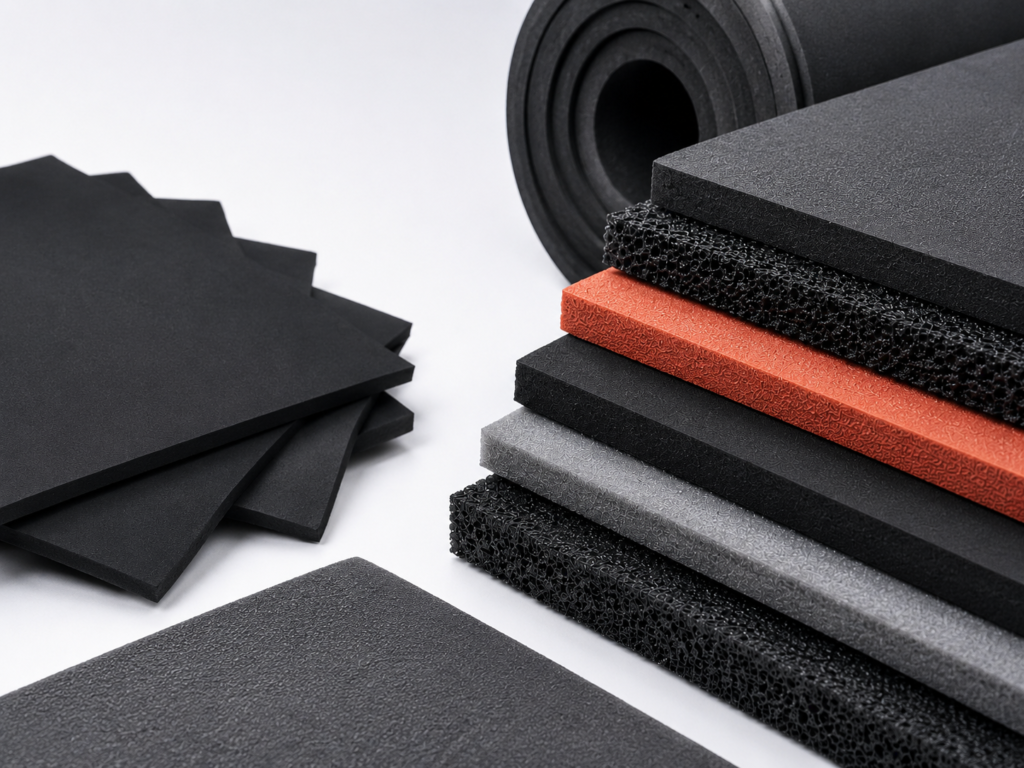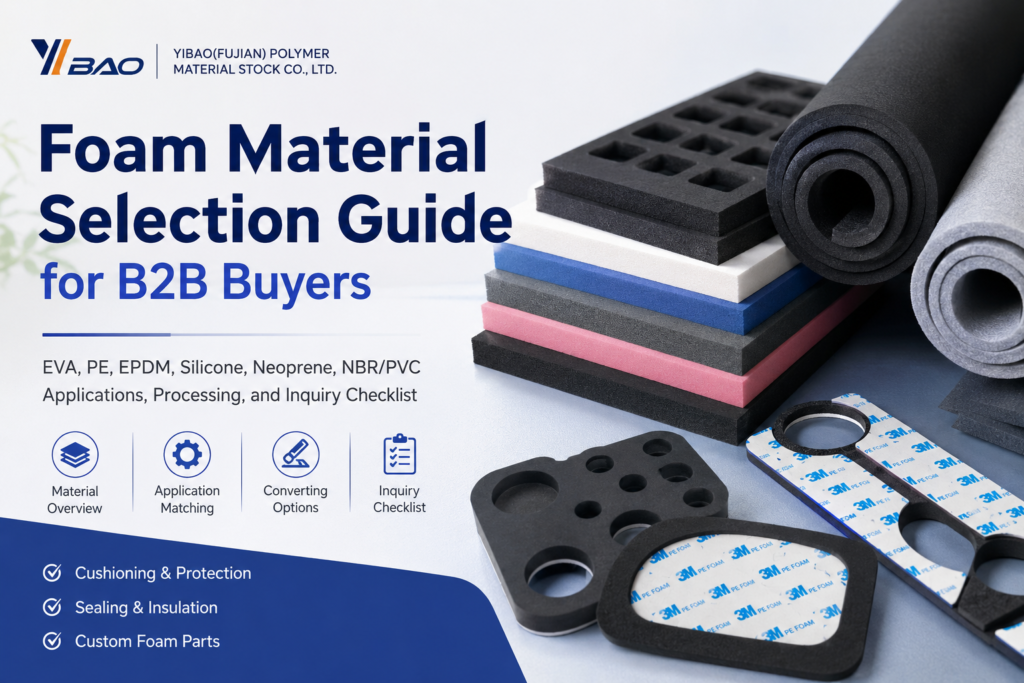
For industrial sheet projects, PE foam and EVA foam are often compared because both can support cushioning, protection, inserts, and converted parts. However, the better choice depends on load, hardness, appearance, cutting method, and the final application. Therefore, this guide explains the practical differences and shows how to match each foam sheet to real packaging, tool case, display, sealing, and assembly needs.
Quick Comparison: How the Two Foam Sheets Work in B2B Projects
First, both materials can be supplied as foam sheets and processed into pads, liners, inserts, spacers, and shaped parts. However, their best-fit roles are different. Polyethylene sheet is often selected when the project needs practical cushioning, water-resistant closed-cell structure, insulation, and industrial packaging protection.
Meanwhile, EVA sheet is often selected when the foam part remains visible. It can support smoother presentation, better shape recovery, cleaner color design, and a softer hand feel. Therefore, a transport pad and a tool case insert may need different materials, even when both parts look similar at first.
In addition, the final processing route matters. Die cutting, CNC cutting, lamination, adhesive backing, slicing, and multi-layer assembly can change the final edge quality and part cost. As a result, material choice should be reviewed together with the drawing and the finished use.
Fast direction: choose polyethylene sheet for hidden protection, cushioning blocks, separators, industrial liners, and high-volume packaging. Choose EVA sheet for visible inserts, color layers, reusable case interiors, soft-contact parts, and presentation trays.
Polyethylene Sheet Strengths: Closed Cell Structure, Cushioning, and Protection
To begin with, polyethylene sheet is valued for practical protection. It is commonly used where the foam must absorb shock, separate components, reduce rubbing, and protect products during storage or transport. In many packaging programs, the sheet works inside cartons, crates, reusable boxes, equipment packs, and internal support structures.
Moreover, its closed-cell structure helps limit water absorption compared with open-cell sponge materials. This supports use in packaging, appliance protection, automotive parts, and building-related separation. However, sealing performance still depends on compression, surface contact, adhesive selection, and installation design.
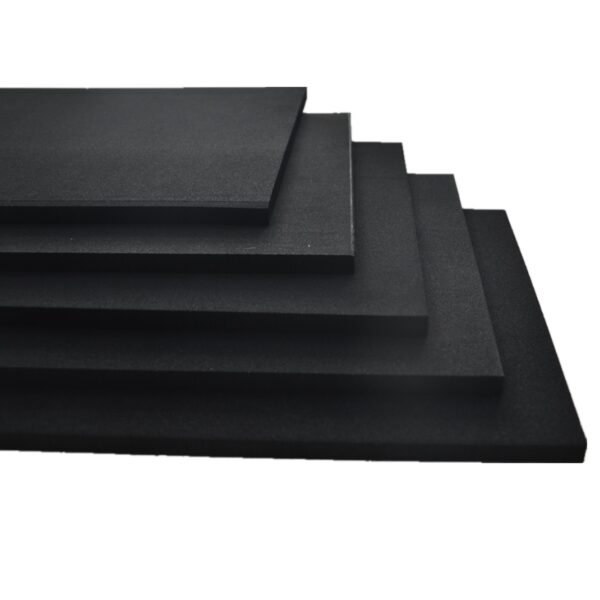
For material review, the PE FOAM category is the main route for polyethylene sheet options. It is suitable for projects that prioritize cushioning, spacing, impact reduction, insulation, and practical sheet supply.
When This Material Direction Works Better
First, it works well when the foam is mainly functional and hidden inside packaging. A sheet can line a carton, protect a glass panel, hold a device away from the box wall, or separate metal parts during shipment. Therefore, it fits transport protection where the part does not need a decorative finish.
Second, it works well when the part needs stable thickness and simple conversion. Flat pads, long strips, die-cut spacers, corner blocks, and layered sheets are common examples. In addition, it can support projects where cost direction and volume efficiency are important.
Finally, it can support insulation and vibration reduction in selected assemblies. For example, appliance, automotive, construction, and equipment applications may need foam liners or support pads. Still, every project should confirm load, compression, temperature, and adhesive needs before production.
EVA Sheet Strengths: Resilience, Color, Smooth Finish, and Inserts
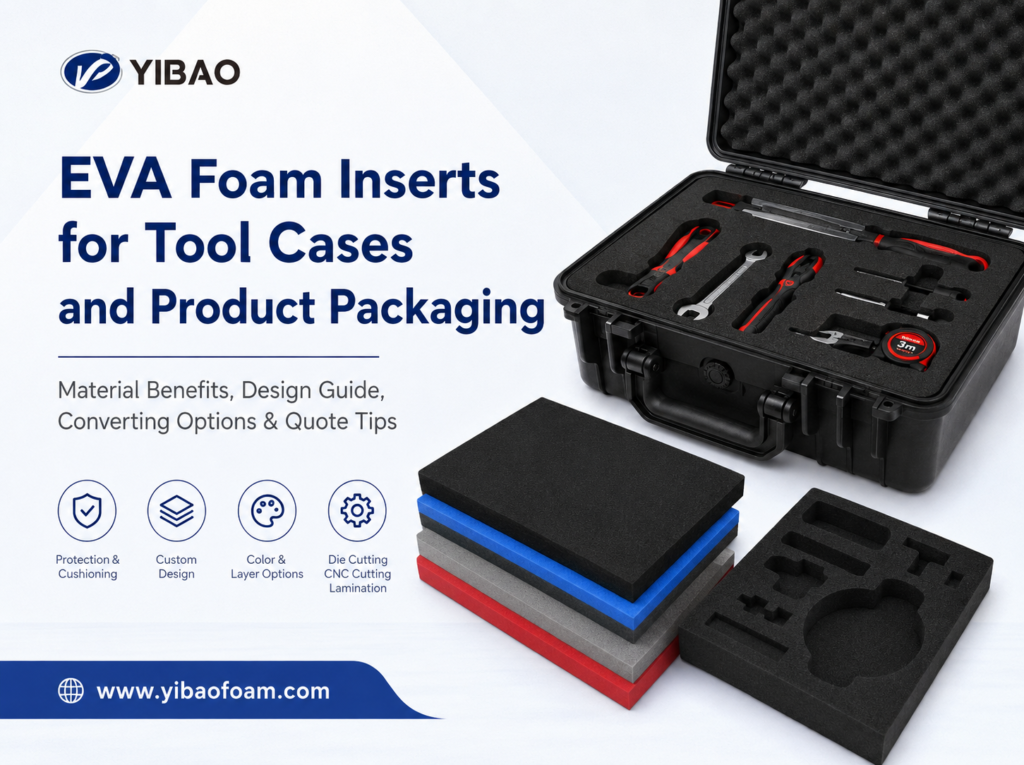
Next, EVA sheet becomes stronger when appearance and repeated handling matter. It can support a cleaner surface, more refined cavity edges, and better visual organization. Therefore, it is often chosen for tool case inserts, kit trays, protective mats, sports pads, display packaging, and reusable storage layouts.
In addition, color options and layered construction create useful design possibilities. A dark top layer can hold tools in place, while a bright lower layer can show missing items quickly. Meanwhile, smoother edges help finished inserts look more organized after CNC cutting or die cutting.
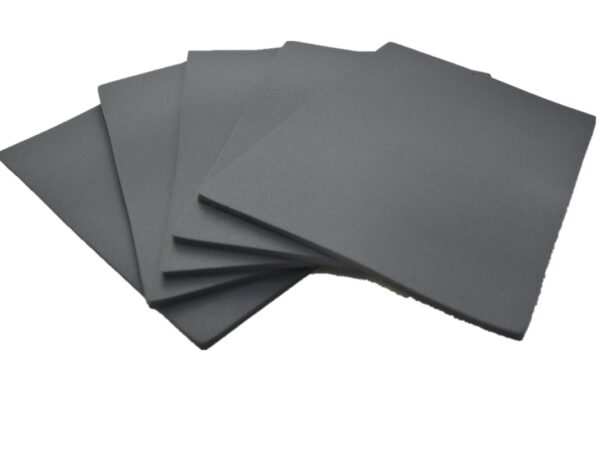
For projects that need a cleaner finished look, the EVA Business Department page is the natural route. It supports inquiries focused on visible foam parts, soft-contact applications, and shaped inserts.
When This Material Direction Works Better
First, it works well when the foam remains part of the visible product experience. Tool organizers, sample sets, instrument boxes, gift kits, display trays, and reusable cases need a more finished appearance. Therefore, surface quality and edge detail become part of the selection.
Second, it works well when touch and resilience matter. Sports pads, handle liners, bag inserts, protective guards, and soft-contact parts need comfort and shape recovery. However, softness must still match load and use cycle.
Finally, it works well for color-coded layouts. Layered inserts can improve inspection and organization. In addition, bright contrast layers can make missing tools or parts easier to notice during maintenance, assembly, and storage.
Comparison Table: Firmness, Compression, Water Resistance, Appearance, Cutting, and Cost Direction
The following table gives a practical selection view. It does not replace sample testing. However, it helps narrow the material direction before drawings, prototypes, and converted parts are confirmed.
| Selection factor | Polyethylene sheet direction | EVA sheet direction | Practical note |
|---|---|---|---|
| Main role | Cushioning, separation, insulation, industrial protection | Clean inserts, color pads, reusable trays, soft-contact parts | Start from the finished function. |
| Firmness feel | Often selected for practical load support | Often selected for softer feel and resilience | Density and hardness must be checked together. |
| Compression | Useful for pads, blocks, spacers, and transit protection | Useful for inserts that need recovery after repeated use | Test with real product weight and contact area. |
| Water resistance | Closed-cell structure supports moisture-aware packaging | Also suitable for many closed-cell applications | Sealing design needs compression review. |
| Appearance | Functional and industrial | Cleaner, smoother, and better for visible parts | Visible applications need physical sample approval. |
| Cutting | Good for pads, sheets, strips, liners, and simple die-cut parts | Good for CNC cavities, layered inserts, and shaped trays | Cutting method affects edge quality. |
| Cost direction | Often suitable for cost-sensitive protection programs | Often justified by appearance, resilience, or insert value | Total cost includes scrap, tooling, labor, and packing. |
In short, the better material is not the one with more attractive single features. Instead, the better option is the sheet that supports the complete process from selection, sampling, cutting, assembly, inspection, packing, and repeated use.
Application Scenarios: Choose by Finished Use, Not by Name Alone
First, packaging applications focus on protection. A precision instrument, electronic device, medical device, appliance component, or painted metal part needs stable support during handling. Therefore, sheet thickness, density, and contact area are more important than visual appearance.
Meanwhile, case insert applications focus on organization and presentation. A tool, instrument, sample set, or electronic kit should sit neatly in the cavity. Therefore, color, surface texture, edge accuracy, and removal space become more important.
For technical validation, test methods should be agreed before final approval. For example, ASTM D3575 covers test methods for flexible cellular materials made from olefin polymers. This kind of external method reference is useful when density, compression, water absorption, and related properties need a shared testing basis.
Best-Fit Application Map
| Industrial shipping pads | Prefer polyethylene sheet when the part is hidden and protection is the main purpose. |
| Tool case inserts | Prefer EVA sheet when clean cavities, color contrast, and repeated handling are required. |
| Appliance liners | Review polyethylene sheet for sealing, vibration reduction, spacing, and insulation concepts. |
| Display trays | Review EVA sheet when surface finish and presentation value matter. |
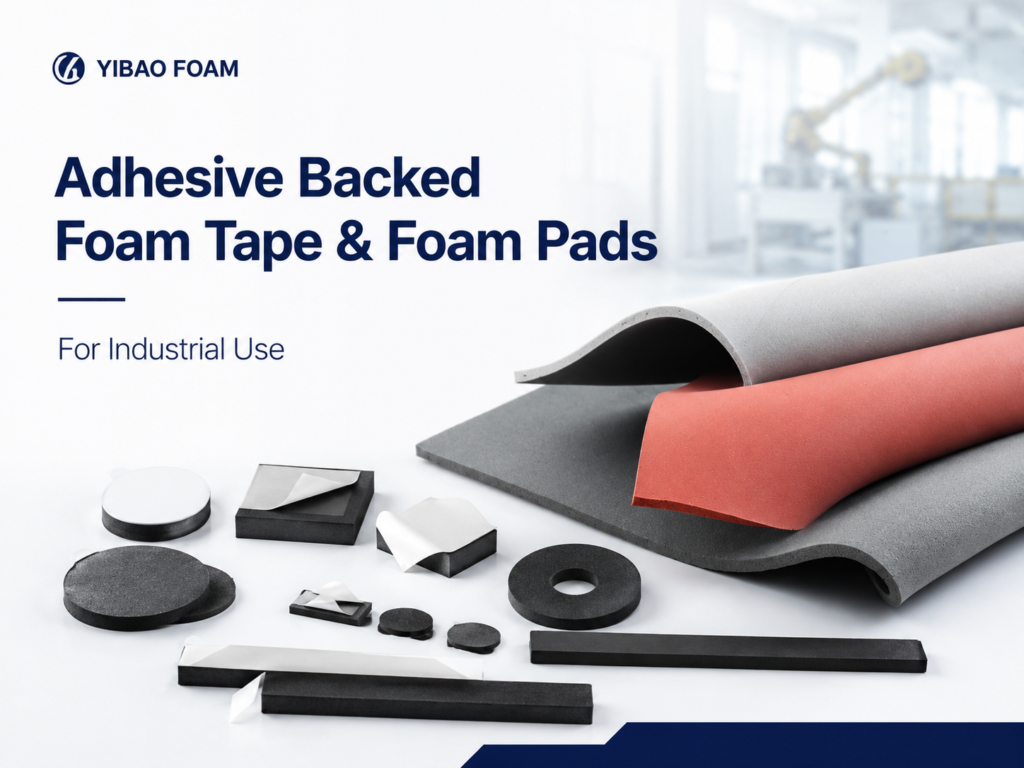
| Adhesive pads | Select foam and adhesive together, then test on the real substrate. |
Choose Polyethylene Sheet When Practical Cushioning Is the Priority
First, this material direction fits industrial packaging where the foam must protect products during transportation. It can work as a lining sheet, edge protector, corner support, separator, pad, or block. Therefore, it suits applications where the product needs support and the foam stays mostly hidden.
In addition, it fits projects that require insulation or separation. A foam sheet may reduce contact damage between two parts. It may also limit vibration transfer in an equipment box. Meanwhile, thin sheets can protect surfaces during handling or assembly.
However, thickness should not be selected alone. A 10 mm sheet may feel soft or firm depending on density and hardness. Therefore, project review should include product weight, contact area, expected compression, and available space.
Practical Purchasing Notes
- For cushioning blocks, confirm product weight and contact points first.
- For liners and spacers, confirm thickness tolerance and assembly pressure.
- For adhesive pads, test bonding on the real surface before mass production.
- For packaging, test the final carton or case structure with the foam installed.
Choose EVA Sheet When Clean Inserts or Softer Feel Matter
Next, EVA sheet becomes stronger when the foam part is seen, touched, or reused. A tool case insert must hold parts securely and still look organized. A display tray must support the product and maintain a clean impression. A sports pad must feel comfortable and recover after compression.
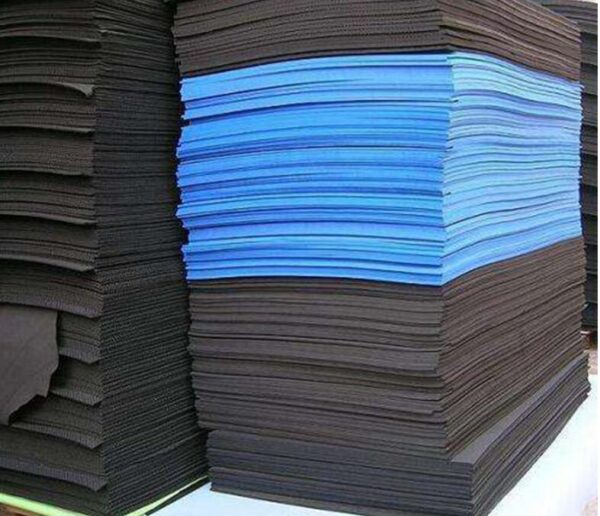
Moreover, the material direction supports color-coded designs. A two-layer insert can combine a dark upper sheet with a bright lower sheet. As a result, missing tools or components are easier to identify during maintenance and inspection.
However, cavity design matters. Thin walls, sharp inner corners, and narrow bridges may weaken the insert. Therefore, drawings should include cavity depth, finger access, wall width, tool weight, and expected handling frequency.
Practical Purchasing Notes
- For tool inserts, confirm cavity depth and removal space before cutting.
- For color layers, approve physical color samples under real lighting.
- For soft-contact parts, compare hardness and thickness together.
- For reusable trays, test repeated removal and return of the product.
How Converting Changes the Final Foam Part
Foam sheets rarely stay as raw sheets in finished projects. Instead, they often become die-cut pads, CNC-cut inserts, laminated blocks, adhesive-backed strips, or multi-layer assemblies. Therefore, material choice should always be checked with the planned converting method.
For simple pads and spacers, die cutting can be efficient. For shaped pockets and case inserts, CNC cutting may be better. Meanwhile, lamination can build thickness or create color contrast. Adhesive backing can reduce assembly time, but the adhesive must match the real substrate.
For processed foam components, the Converting page supports projects that require cutting, lamination, adhesive backing, and finished part supply.

Die Cutting
Die cutting is suitable for repeated shapes such as pads, strips, liners, gaskets, and spacers. It can support efficient production when the drawing is stable. However, very thick sheets, narrow slots, and sharp corners may need process review.
CNC Cutting
CNC cutting is useful for case inserts and complex cavities. It helps create pockets for tools, instruments, accessories, and shaped products. Nevertheless, cutting depth, wall thickness, and material firmness should be planned before sampling.
Adhesive Backing and Lamination
Adhesive backing can simplify assembly. However, adhesive performance depends on substrate, pressure, temperature, and surface texture. Lamination can create thicker blocks or color layers. Therefore, bonding and layer structure should be tested with the real part.
Selection Logic by Project Type
A clear selection process prevents overdesign and wrong sampling. First, define whether the foam is hidden or visible. Then, define whether the part mainly protects, organizes, seals, cushions, presents, or supports assembly. Finally, match the material with thickness, density, hardness, and converting method.
This approach works better than selecting from a single property. For example, a soft sheet may feel good but fail under a heavy tool. A firm sheet may support weight but transfer too much shock to a fragile product. Therefore, real application information is essential.
Best fit for practical protection
Industrial packaging, transit pads, separators, carton liners, appliance sealing concepts, vibration spacers, and hidden protection blocks.
Best fit for presentation and organization
Tool trays, instrument cases, display boxes, kit inserts, color-coded layers, reusable storage, soft pads, and visible protective components.
Best fit for converted parts
Die-cut pads, adhesive strips, laminated blocks, CNC pockets, thin liners, shaped gaskets, and custom packed components.
Specification and Inquiry Checklist
Before sampling, a complete inquiry should describe the application and the final part. This saves development time and helps avoid the wrong density, thickness, or cutting method. In addition, drawings and real product photos can improve material matching.
For foam sheet projects, the following information is especially useful:
- Application field, such as packaging, tool case, appliance, automotive, display, sports, or sealing.
- Part drawing, dimensions, tolerance, hole position, cavity depth, and edge requirement.
- Target thickness, density, hardness, color, and surface requirement.
- Product weight, contact area, fragile points, and compression condition.
- Converting process, such as die cutting, CNC cutting, lamination, slicing, or adhesive backing.
- Substrate material if adhesive is needed, such as metal, plastic, paperboard, fabric, or painted surface.
- Quantity, packing method, sample schedule, and expected production timing.
- Testing requirements, such as compression, aging, bonding, drop test, or appearance approval.
In addition, physical samples should be checked under real use conditions. A sheet may look suitable in a photo but behave differently after compression, cutting, or adhesive bonding. Therefore, prototype review should include both material and processing.
How YIBAO Supports Sheet Supply and Material Recommendation
YIBAO supports foam material selection through sheet supply, sample review, and converting discussion. The development path can begin from a material category, or it can begin from a drawing and application description. Both routes are useful when the project has not fixed the final material.
For a packaging project, the review usually focuses on cushioning, compression, contact area, and carton structure. For an insert project, the review usually focuses on cavity shape, edge quality, color, hardness, and repeated handling. For a converted part, the review usually focuses on tooling, tolerance, adhesive, lamination, and packing.
Therefore, the strongest inquiry is not only a request for a sheet price. It includes the application, drawing, thickness, density direction, color, quantity, and processing requirement. With those details, material recommendations become more accurate and production planning becomes more stable.
FAQ
Is polyethylene sheet better for packaging?
For practical packaging protection, polyethylene sheet is often the stronger first direction. It supports cushioning, spacing, lining, and shock reduction. However, final selection still depends on product weight, contact area, drop risk, thickness space, and packaging structure.
Which material is better for tool case inserts?
EVA sheet is often preferred for tool case inserts because it can support cleaner cavities, color contrast, and repeated handling. However, heavy tools may need firmer material, wider cavity walls, or a layered structure.
Can both materials be adhesive backed?
Yes. Both material directions can be supplied with adhesive backing when the adhesive is suitable for the substrate. However, bonding should be tested on the real surface because metal, plastic, fabric, painted parts, and paperboard behave differently.
What thickness should be selected?
Thickness should be selected with product weight, available space, compression target, and cutting method. Thin sheets suit liners and separators. Medium sheets suit pads and insert layers. Thick sheets or laminated blocks suit deeper cavities and heavier protection needs.
When should converting be discussed?
Converting should be discussed before material approval when the final part needs die cutting, CNC cavities, lamination, adhesive backing, or strict packing. Processing affects edge finish, tolerance, material yield, and total project cost.
Send Application Details for Foam Sheet Recommendation
In summary, PE foam and EVA foam should be selected by application, thickness, density, hardness, surface finish, and converting method. Practical protection usually points toward polyethylene sheet. Clean inserts, color design, and soft feel usually point toward EVA sheet.
For recommendation, send application, target thickness, density range, hardness preference, product weight, drawing, color request, adhesive need, and expected quantity.
- First, define whether the foam part is hidden protection or visible presentation.
- Second, compare samples by compression, surface finish, cutting result, and recovery.
- Finally, confirm the drawing, converting route, packing method, and production quantity before mass production.