
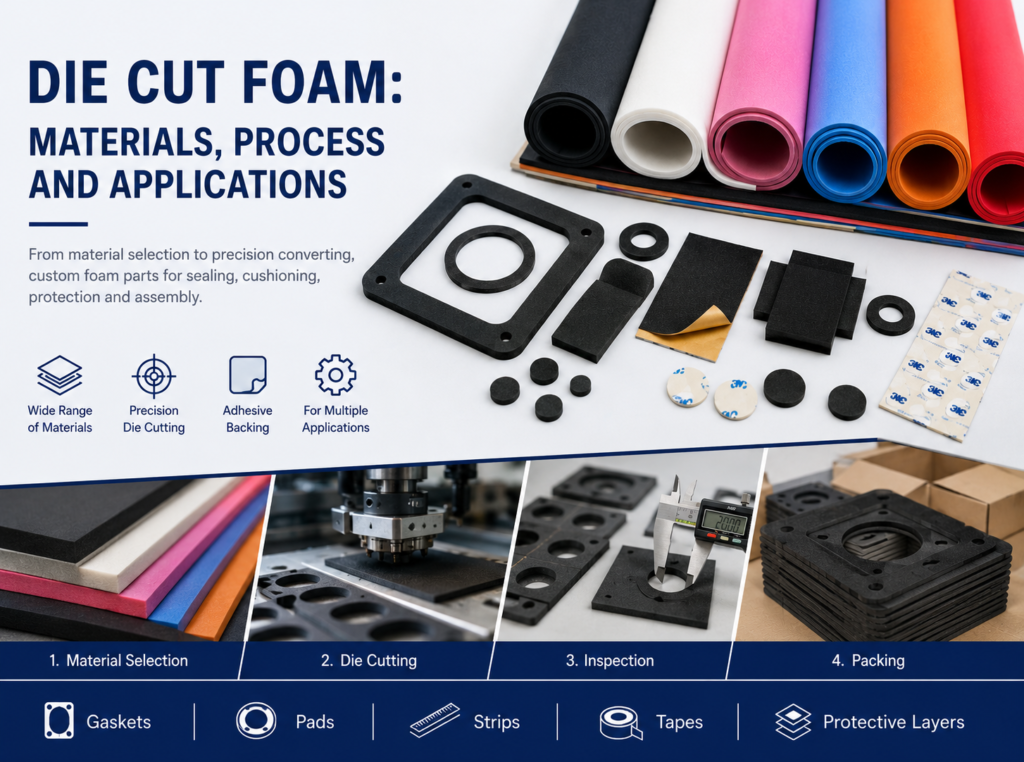
For OEM foam projects, die cut foam turns sheet, roll or adhesive-laminated foam into repeatable flat components such as gaskets, pads, strips, spacers, washers, tapes, liners and protective layers. A good part is not decided by shape alone. The foam material, thickness, compression feel, adhesive, liner, tolerance and packing method all need to match the way the part will be assembled and used.
What Die Cut Foam Means in Foam Converting
Die cut foam uses a shaped cutting tool to press through foam sheet, roll stock or laminated material. The cutting tool follows the required outline, so the finished component can match a drawing, measured sample or production layout. This method is useful when the same flat foam part needs to be supplied repeatedly with stable shape and practical production efficiency.
In a real foam converting project, the cut shape is only one part of the work. The project may also include sheet slitting, roll slitting, adhesive lamination, kiss cutting, release liner selection, hole removal, part counting, inspection and packing. A gasket frame, a long foam strip, a small adhesive washer and a protective pad can all be die cut, but they do not need the same material or handling method.
The best starting point is the job of the part. A sealing gasket needs compression and recovery. A spacer needs thickness support. A surface pad may need cushioning without scratching the contact area. A foam tape needs adhesive and liner control. When the function is clear, the material and process can be reviewed with fewer sample revisions.
This guide focuses on flat OEM die cut foam components: gaskets, pads, spacers, washers, adhesive-backed strips, protective liners, tapes and simple support pieces. It is not mainly about deep routed case inserts or complex molded foam shapes. The goal is to help engineers, sourcing teams and production buyers prepare a clearer converting request before tooling or sample production.
When die cut foam is a practical choice
Die cutting is a good direction when the part is mostly flat, the outline is repeatable, the drawing is stable and the quantity justifies a shaped tool. It is especially useful for OEM assembly parts, sealing strips, appliance pads, electronics liners, industrial gaskets and adhesive-backed foam components supplied in sheets, bags or rolls.
If the design is still changing, CNC cutting may be used first for prototypes. Once the part is approved, die tooling can support repeat production with better consistency for many flat foam parts.
Suitable Foam Materials for Die Cut Foam Parts
Material selection is where many foam converting projects succeed or fail. Foam sheets can look similar before cutting, but they behave differently under compression, heat, moisture, friction, adhesive bonding and long-term loading. The same 5 mm thickness can feel soft in one material and firm in another. For that reason, material review should begin with the working condition, not only with thickness or color.
YIBAO can review EVA, PE, EPDM, neoprene, SBR, SCR, CR, silicone foam, NBR/PVC foam, flame-retardant foam and adhesive-backed foam structures for converted parts. The sections below give a practical starting point for common OEM uses.
EVA Foam for Firm Pads, Spacers and Protective Layers
EVA foam is often selected when a die cut part needs a stable body, clean shape and firm support. It can suit pads, separators, product protection, display packaging layers, support blocks and assembly spacers. A firmer EVA grade can help maintain shape under light to medium load, while a softer grade may be better for cushioning and surface contact.
For EVA parts, buyers should confirm density direction, hardness feel, thickness, color, surface finish and whether adhesive backing is required. Thin EVA parts with narrow bridges or many small holes may need trial cutting because foam can stretch or compress during cutting. If the part is used as a spacer, the compression load should be considered before selecting a soft grade.

PE Foam for Lightweight Cushioning and Separation
PE foam is useful when low weight, cushioning and clean separation are important. It can support packaging layers, appliance protection, equipment pads, transport cushioning and simple protective sheets. Closed-cell PE foam grades may also support basic moisture resistance needs in suitable applications, but the final selection still depends on grade and use condition.
PE foam should be checked against the real product weight. A low-density foam may protect light products but collapse under heavier equipment. A denser sheet may protect the product better but feel too rigid for a contact pad. For protective layers, sample testing should use the actual product or a close substitute, not only a hand-feel check.
EPDM Foam for Sealing and Compression Recovery
EPDM foam is commonly considered for sealing gaskets, weather-exposed strips, appliance pads, automotive cushioning and enclosure sealing. It is a good direction when the part needs compression recovery and stable sealing behavior. For gasket frames, the drawing should show the gap size, contact width and compression direction, not only the outside shape.
Some EPDM projects need closed-cell material for sealing, while others need a softer sponge feel for easier compression. If the part will be compressed for a long time, the project should review recovery, load and the amount of compression. A gasket that is too soft may lose contact. A gasket that is too firm may make assembly difficult or deform the cover.
Neoprene, SBR, SCR and CR Foam for Flexible Rubber-Like Parts
Neoprene, SBR, SCR and CR foam can suit flexible pads, soft protective layers, laminated parts, sports-related foam components, sealing pads and anti-rattle strips. These materials are often reviewed when the part needs a rubber-like feel, resilience, soft compression or fabric lamination.
The exact grade matters. Some rubber foams are soft and sponge-like, while others feel more compact and supportive. If a part bends during installation, touches painted surfaces or stays under pressure, sample review under real conditions is more useful than judging the sheet only by appearance.
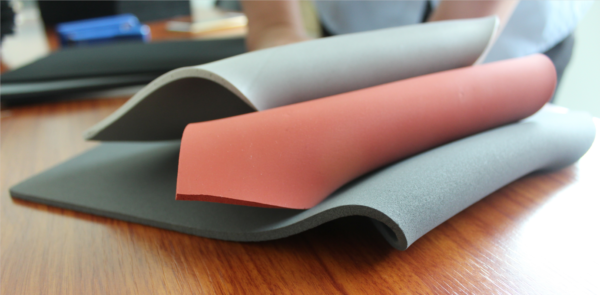
Silicone Foam for Heat-Related Soft Sealing
Silicone foam is considered when a converted part needs soft compression near higher temperature areas, electronics, lighting, appliances or specialty industrial housings. It can be used for gaskets, strips, pads and sealing layers where heat and softness need to be reviewed together.
Adhesive selection can be more demanding with silicone surfaces. The foam, adhesive, release liner and mounting surface should be reviewed as one system. This is especially important for thin strips, frame gaskets and parts that are installed near heat sources or on difficult bonding surfaces.
NBR/PVC Foam for Industrial Pads, Strips and Insulation-Related Parts
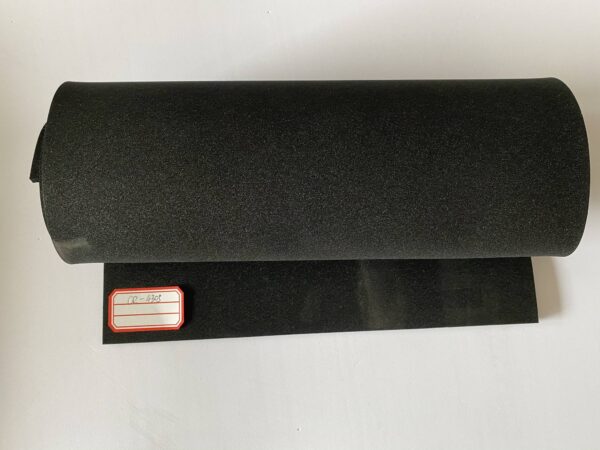
NBR/PVC foam can be reviewed for industrial pads, strips, insulation-related parts and cushioning components. It may be suitable when flexibility, sponge feel and functional performance are needed in sheet or roll form. Projects should confirm whether the part requires flame-retardant behavior, adhesive backing, specific softness, color, roll width or sheet packing.
For long strips or tape-like parts, roll direction and liner behavior should be considered early. For pads and sheets, packing compression and storage shape may matter. If the part will be used around equipment, HVAC-related areas or industrial housings, the working condition should be described clearly before material approval.
How the Foam Die-Cutting Process Works
A reliable foam converting project should be reviewed in the same order the part will be used: function, material, adhesive, tooling, cutting, inspection and packing. This sequence prevents a common problem: approving a drawing before confirming whether the foam and liner can actually be handled in production.
The process below is a practical route for OEM flat foam components. It can be adjusted depending on part size, material thickness, adhesive requirement and order quantity.
1. Application and function review
The project should define whether the part will seal, cushion, space, protect, locate, insulate or reduce vibration. A part used under a metal bracket needs a different review from a strip inside a carton or a gasket around an enclosure cover.
2. Material and thickness review
Foam type, thickness, density, hardness feel, surface condition and compression behavior are reviewed around the final application. For functional parts, material should be tested with real pressure or real assembly space whenever possible.
3. Adhesive and liner planning
When adhesive backing is required, the adhesive should match both the foam surface and the mounting surface. The liner should also match the handling method, such as manual placement, sheet picking, roll supply or kiss-cut peel-off parts.
4. Tooling and trial cutting
The cutting die follows the drawing, including outside shape, holes, slots, notches, tabs and frame openings. Trial cutting checks edge condition, waste removal, shape stability, liner cut depth and part handling before repeat production.
5. Inspection and packing
Inspection may include shape, size, hole position, adhesive coverage, liner release, edge quality and quantity. Packing should protect the parts and match the assembly flow, whether the parts are loose packed, sheet packed or supplied on rolls.
Why adhesive and liner details should be decided early
Adhesive-backed parts often look simple, but they can create production problems if the liner or adhesive is not chosen correctly. A small washer may need to stay on a kiss-cut sheet so workers can peel it easily. A long strip may need roll packing and controlled winding direction. A large frame gasket may need a split liner so it can be positioned without stretching or sticking too early.
The mounting surface also matters. Smooth metal, painted panels, textured plastic, glass, rubber and paperboard can require different adhesive behavior. Storage temperature, surface cleanliness and installation pressure can also affect performance. For this reason, adhesive should not be added as a last-minute option after the foam grade is selected.
Why packing is part of the converting plan
Packing is not only a shipping detail. It can affect whether the part arrives flat, clean and easy to use. Loose small parts may mix together. Thin strips may curl. Adhesive liners may lift if packed under stress. Thick pads may deform if compressed too heavily. A practical packing method should be discussed before sample approval, especially when the parts feed directly into assembly lines.
Die Cutting vs CNC Cutting: Which Route Fits Better?
Die cutting and CNC cutting can both shape foam, but they solve different production needs. Die cutting usually fits repeatable flat parts once the drawing is stable. CNC cutting often fits prototypes, changing drawings, thicker foam, deep pocket structures or more complex outlines.
The decision should not depend on one factor only. Part size, detail level, foam thickness, adhesive liner, edge requirement, order quantity and design stability all affect the best route. In many projects, CNC cutting is used for early samples and die cutting is used later for approved repeat parts.
| Selection factor | Die cutting | CNC cutting | Practical decision |
|---|---|---|---|
| Project stage | Stable repeat production | Prototype or changing design | Use CNC first if the shape is still being adjusted. |
| Typical parts | Pads, strips, washers, tapes, gaskets, liners | Complex profiles, thick blocks, deep pockets, low-volume samples | Match the method to part geometry and order plan. |
| Tooling | Requires a cutting die | Usually no dedicated die | Confirm drawings before die tooling. |
| Adhesive liner control | Good for kiss-cut liner formats | Depends on setup and liner depth control | Test peel behavior and liner cut depth before approval. |
| Design changes | Tool revision may add time and cost | Easier to revise | Avoid final tooling until key dimensions are stable. |
| Best use | Repeat flat components | Prototype, small batch or complex structure | Both methods can support different project stages. |
For a flat foam gasket, pad or strip that will be ordered repeatedly, die cutting is usually worth reviewing after the drawing is stable. For a new packaging insert, thick foam block or shape that is still changing, CNC cutting may be the better starting point.
Common Applications for Die Cut Foam Components
Converted foam parts appear in many industrial products because they solve practical assembly problems. They can seal small gaps, cushion surfaces, reduce vibration, separate parts, protect finishes, support cleaner placement and improve repeat handling.
Different applications need different material logic. A gasket needs compression and recovery. A pad may need surface protection. A strip may need adhesive and length stability. A protective layer may need cushioning under transport load. The application should guide both material selection and cutting method.
Gaskets and Sealing Frames
Foam gaskets help fill gaps between two surfaces. They may reduce air movement, dust entry, vibration and minor noise depending on material and design. In appliances, lighting, enclosures, automotive assemblies and equipment housings, flat gasket frames are common converted parts.
A good gasket needs more than a clean outline. It needs suitable thickness, compression range, recovery, contact width and adhesive placement. If the foam is too soft, the seal may lose contact over time. If it is too firm, assembly may become difficult or the cover may not close properly.
Pads, Spacers and Bumpers
Foam pads can protect surfaces, reduce movement or create controlled spacing. EVA, PE, EPDM, neoprene, NBR/PVC and silicone foam can all work in pad form when matched to the application. A firm EVA pad can support a component, while a softer rubber foam pad may reduce vibration or contact noise.
Pads can prevent direct contact between metal, plastic, glass and painted parts. They may also reduce scratching during transport or assembly. When the pad stays under load for a long time, compression behavior should be reviewed before confirming thickness.
Strips and Adhesive Foam Tapes
Foam strips and tapes are useful when a continuous line of sealing, cushioning or separation is needed. They can be supplied in cut lengths, sheets or rolls. Adhesive backing often makes placement faster and more consistent during assembly.
For appliance frames, display panels, light fixtures, vents, covers and equipment doors, foam strips can improve fit and reduce movement. Strip width, length, liner type and roll direction can affect assembly speed, so these details should appear in the drawing or request note.
Protective Layers and Cushioning Sheets
Protective layers help reduce surface damage and absorb minor shock. PE and EVA foam often appear in this role, while rubber foams can support flexible protection. In equipment packaging, precision instrument transport, medical device handling and industrial product shipping, flat foam layers can reduce direct contact and movement.
Protective layers should match product weight and contact surface. A soft low-density foam may protect light parts but collapse under heavy equipment. A firmer foam may support weight better but transfer more shock. Sample testing should use the real product or a close substitute.
Internal Liners, Separators and Support Pieces
Some projects use die cut foam as internal liners, separators or simple support pieces. These parts may sit inside trays, cartons, housings, covers or equipment panels. The design should stay practical: if a simple flat layer solves the problem, there is no need to add unnecessary shape details that increase waste removal or tooling difficulty.
When to Choose Die Cut Foam Instead of Standard Foam Sheet
Many buyers start by asking whether they should buy standard foam sheet and cut it in-house, or order custom die cut foam parts from a converting supplier. Both routes can be reasonable. The better choice depends on the shape, quantity, tolerance, adhesive requirement, assembly speed and how much variation the final product can accept.
Standard sheet is often enough for simple protection or general cushioning. Custom die cut foam becomes more valuable when the part must fit a product repeatedly, support assembly workers, reduce placement errors or meet a drawing. The decision is less about whether the foam can be cut and more about whether repeat accuracy and handling efficiency matter.
Choose standard foam sheet when the requirement is simple
Standard sheet can be a practical choice when the foam is used as a general layer, temporary protection, simple cushioning or trial material. If workers only need to place a rectangular sheet inside a box, separate products during transport or test a material before final design, buying sheet stock may be faster and more flexible.
This route also works when the quantity is low, the dimensions are not critical, no special adhesive liner is needed and in-house trimming does not slow the assembly process. For early development, sheet material can help the team compare thickness, density and hand feel before committing to a custom part.
Choose custom die cut foam when the part must repeat accurately
Custom die cut foam is usually the better choice when the part has a fixed outline, holes, slots, frame openings, narrow strips or a shape that must fit the same product every time. It also makes sense when workers need to peel and place parts quickly without measuring, trimming or guessing position.
A die cut gasket around a cover, an adhesive pad under a bracket, a spacer washer near a screw hole or a liner inside an equipment panel all need more control than a loose sheet. In these cases, the converted part can reduce assembly variation and help the purchasing team receive parts in a ready-to-use format.
Use die cut foam when adhesive and liner handling affect production
Adhesive-backed parts are a common reason to move from foam sheet to die cut foam. If workers must apply many small pads, long strips or gasket frames, a pre-cut adhesive part can reduce manual cutting, waste and placement errors. Kiss-cut liner sheets can also make small pads easier to count, peel and install.
For large frame gaskets, a split liner can help workers position one section first, then peel the rest after alignment. For roll-supplied strips, winding direction and liner release can affect assembly speed. These details are hard to control when a team cuts plain foam sheet by hand.
Compare total cost, not only material price
Standard foam sheet may look cheaper at first because there is no cutting die. However, in-house trimming can create hidden costs: labor time, inconsistent shapes, material waste, rejected parts, slower assembly and extra inspection. For repeated production, these costs may be higher than the tooling and converting cost of a custom part.
Custom die cut foam may be more cost-effective when the part is used every day on an assembly line, must match a drawing or needs adhesive backing. The best review compares the full workflow: material cost, tooling, waste, labor, packing, assembly speed and the risk of wrong placement.
A practical buying rule
Buy standard foam sheet when the part is simple, low-volume, rectangular, easy to trim and not critical to assembly fit. Choose custom die cut foam when the shape repeats, adhesive placement matters, holes or slots are required, workers need ready-to-use parts or the foam directly affects sealing, protection, spacing or product quality.
If the project is between the two options, start with sheet or CNC-cut samples to confirm material and thickness. After the design is stable, move to die cut foam for repeat supply.
How to Choose Foam Material by Part Function
A material table can help narrow the starting direction, but it should not replace drawing review or sample testing. Foam performance can change by density, hardness, thickness, cell structure, surface skin, adhesive system and packing method.
| Application need | Material direction | Common converted form | What to confirm |
|---|---|---|---|
| Soft sealing | EPDM, neoprene, silicone foam | Gasket, frame, ring, strip | Compression range, recovery and contact width |
| Firm spacing | EVA foam | Pad, washer, spacer | Hardness, load and thickness stability |
| Light cushioning | PE foam, EVA foam | Layer, pad, separator | Product weight and contact surface |
| Heat-related sealing | Silicone foam | Gasket, strip, pad | Heat condition, compression and adhesive |
| Industrial pad or strip | NBR/PVC, EPDM, neoprene | Pad, strip, tape | Softness, durability and working condition |
| Assembly positioning | Foam with pressure-sensitive adhesive | Kiss-cut part, tape, strip | Mounting surface, liner style and peel behavior |
For rubber foam gasket discussions, industry specifications such as ASTM D1056 for flexible cellular rubber materials may help clarify compression, density, aging and water absorption requirements when those details are relevant to the project.
The practical selection route is simple: define the part function, choose a material family, review thickness and compression, decide adhesive and liner, then test a sample under real assembly conditions. This is more reliable than choosing material only from a catalog name.
Design Checklist Before Tooling
A clear design package reduces repeated questions and prevents avoidable tooling changes. The drawing should include both the shape and the function of the part, especially when adhesive backing, kiss cutting or tight assembly fit is required.
Drawing and shape details
Show outer size, inner holes, slot positions, corner radius, critical dimensions and quantity per design. CAD files are useful, but a clear PDF drawing or measured sample photos can support early review. Narrow frames, small holes and thin bridges should be highlighted because foam may stretch or compress during cutting.
Thickness, hardness and tolerance
Thickness should match gap size, compression space and load. A thicker foam is not always safer. Foam is flexible, so tolerance should reflect functional fit rather than metal-part assumptions. Mark critical dimensions separately and allow practical control on non-critical areas.
Adhesive and liner details
State whether adhesive is needed on one side, both sides or not at all. Describe the mounting surface, such as metal, plastic, glass, painted panel, rubber or paperboard. Also confirm the liner preference: paper liner, film liner, split liner, tabbed liner or kiss-cut liner sheet.
Application and working condition
Describe where the part sits, what surface it touches, whether it compresses and whether it faces heat, water, dust, oil, vibration or outdoor exposure. Even one short application paragraph can prevent wrong material assumptions.
Packing and assembly flow
Confirm whether parts should be loose packed, sheet packed, roll packed, counted by bag or supplied as kiss-cut parts on liner. The packing method should support the way workers pick, peel and place the parts on the production line.
How to Request a Quote for Custom Die Cut Foam
A useful quote request should be clear and application-focused. It does not need to be complicated, but it should include enough detail for material review, process planning and sample preparation. If the drawing is not ready, measured sample photos and installation photos can still help with the first review.
Drawing or sample: CAD file, PDF drawing, sketch, sample photos or measured dimensions.
Material direction: EVA, PE, EPDM, neoprene, silicone, NBR/PVC or an application description if the material is not decided.
Performance need: cushioning, sealing, spacing, heat-related use, surface protection, vibration control or assembly positioning.
Size details: outside size, hole size, slot size, thickness, critical dimensions and tolerance notes.
Adhesive and liner: one-side adhesive, double-side adhesive, no adhesive, liner type and mounting surface.
Quantity and packing: sample quantity, trial quantity, expected repeat volume, sheet packing, roll packing or kiss-cut liner sheet.
Working condition: temperature, moisture, compression, outdoor exposure, oil contact, vibration or storage conditions.
Why sample approval matters
Sample review is strongly recommended for new projects. A sample can confirm fit, compression, adhesive behavior, liner release, edge appearance, waste removal and packing format before larger production. This is especially important when the part affects sealing, product protection or assembly speed.
During sample review, do not check only the outside shape. Install the part in its real location if possible. Press it, bend it, peel the liner, close the cover, load the product or place it on the surface it will touch. Many foam problems appear only after the part is used in the real assembly condition.
For project review, send drawing, material direction, thickness, adhesive need, liner preference, packing method and quantity through the YIBAO contact page.
Quality Checks for Converted Foam Parts
Quality control for die cut foam should match the function of the part. A decorative protective pad, a sealing gasket and an adhesive strip do not need the same inspection focus. Before production, the buyer and supplier should agree which dimensions and performance points are critical.
Dimensional and shape checks
Outer size, hole position, slot location, frame width and overall shape should be checked against the drawing. Foam flexibility means that the inspection method matters. The part should be placed naturally without stretching, twisting or forcing it flat in a way that does not represent real use.
Edge and waste removal checks
Clean edges are important for appearance and handling. For narrow frames and small internal holes, waste removal should be checked because foam pieces can stay inside the part or tear during stripping. If the design has many small holes, the tooling and waste removal method should be reviewed before production.
Adhesive and liner checks
Adhesive-backed foam parts should be checked for adhesive coverage, liner release, edge lifting, part shifting and peel handling. For kiss-cut parts, the foam and adhesive should be cut cleanly while the liner remains usable. If the cut goes too deep, the liner may tear during peeling. If the cut is too shallow, the part may not release cleanly.
Packing and counting checks
Packing should protect the parts and support easy counting. Small parts may need sheets or counted bags. Long strips may need roll packing or careful bundling. Thick pads should not be compressed in a way that changes their shape before assembly.
Common Mistakes to Avoid
Choosing by thickness only: Thickness matters, but density, hardness, compression recovery and cell structure matter as well. A five-millimeter part in one material may perform very differently from the same thickness in another material.
Leaving adhesive selection until the end: Adhesive should be matched with foam type, mounting surface, liner and working condition. A gasket that seals well may still be difficult to install if the adhesive or liner is wrong.
Using unrealistic tolerances: Foam can compress, stretch or rebound during cutting. Critical areas should be identified, while non-critical areas should allow practical production control.
Ignoring the assembly worker: A part may look correct on a drawing but be hard to peel, position or handle. Split liner, tabbed liner, sheet layout or roll packing can make a big difference in assembly speed.
Approving a sample without real-use testing: Hand-feel and visual checks are not enough for sealing, cushioning or adhesive parts. The sample should be tested in the real gap, on the real surface or with the real product whenever possible.
FAQ: Die Cut Foam and Foam Converting
Plan a Custom Die Cut Foam Part
For OEM gaskets, pads, strips, tapes, spacers, washers and protective layers, prepare the drawing, thickness, material direction, adhesive requirement, liner style, quantity and packing notes. YIBAO can review the converting route and help match the foam material to the application.