
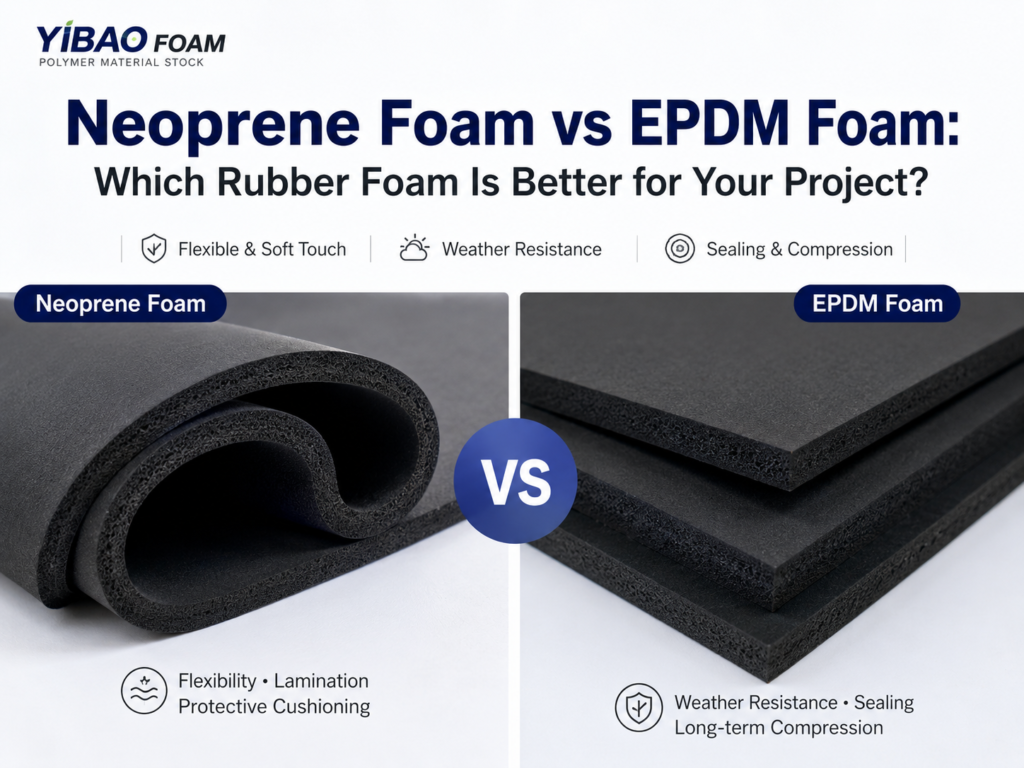
When a rubber sponge project needs cushioning, lamination, sealing, or outdoor durability, the comparison between neoprene foam and EPDM foam becomes a practical material decision. Therefore, this guide compares the two directions by function, working environment, compression needs, surface treatment, processing route, and sample preparation.
Instead of repeating a basic material introduction, this article focuses on project selection. The goal is simple: match the material to the finished part, reduce sample waste, and make the next inquiry easier to prepare.
Why Rubber Foam Projects Compare These Two Material Directions
First, both materials belong to flexible rubber sponge material families. As a result, they may appear in the same early discussion for pads, sleeves, seals, strips, laminated sheets, protective layers, and converted components.
However, the finished part usually decides the better direction. A wearable support panel needs soft touch, flexibility, fabric bonding, and repeated bending. Meanwhile, an outdoor gasket needs weather resistance, compression recovery, and stable sealing pressure.
In addition, sheet price is not the full cost picture. A material that cuts cleanly, laminates well, compresses correctly, and suits the environment can reduce rework. Therefore, material selection should include both product function and processing fit.
For example, sports braces, laptop sleeves, footwear pads, diving-related sheets, and soft protective panels usually point toward CR, SBR, or SCR sponge. By contrast, door strips, light pads, appliance seals, outdoor enclosure gaskets, and automotive pads often point toward EPDM rubber sponge.
Practical Comparison Table for Project Selection
In practice, a useful comparison starts with the working condition. Therefore, this table uses common selection questions instead of theoretical claims. It helps narrow the first sample direction before drawings, thickness, adhesive, and converting details are finalized.
| Selection Factor | CR / SBR / SCR Sponge Direction | EPDM Rubber Sponge Direction |
|---|---|---|
| Main project logic | Better fit for soft goods, fabric lamination, comfort layers, protective cushioning, and flexible parts. | Better fit for outdoor seals, weather-facing pads, gaskets, strips, and long-term compression parts. |
| Weather direction | Suitable for many general uses, but not usually the first choice for harsh outdoor sealing. | Strong direction for sunlight, ozone, rain, heat, cold, and aging exposure. |
| Oil and fluid direction | May suit some general contact conditions, although actual fluid exposure needs sample testing. | Usually not the first direction for heavy oil, fuel, or grease contact. |
| Flexibility and touch | Often selected when hand feel, bending comfort, textile surface, and soft protection matter. | Often selected when sealing pressure, recovery, and stable installation matter more than touch. |
| Fabric lamination | Strong direction for one-side or two-side fabric-laminated sheets. | Usually selected more for sealing function than decorative textile lamination. |
| Compression use | Good direction for cushioning, impact support, soft padding, and wearable protection. | Good direction for seals, gaskets, vibration pads, and gap-filling strips. |
| Typical finished parts | Sports supports, wetsuit sheets, bags, sleeves, footwear pads, protective liners, comfort panels. | Automotive seals, appliance pads, outdoor gaskets, window strips, lamp pads, enclosure seals. |
Overall, the table should guide the first sample direction. However, final approval should still come from real-part testing, especially when the application involves compression, adhesive backing, lamination, or outdoor exposure.
CR, SBR, and SCR Strengths: Flexibility, Lamination, and Protective Cushioning
To begin with, CR, SBR, and SCR sponge materials often make sense when the finished product must bend, recover, and feel comfortable. This direction is common in sports goods, diving-related sheets, braces, sleeves, footwear layers, bag panels, and protective pads.
Moreover, soft goods rarely depend on sponge alone. The final structure may include fabric, adhesive, stitching, color matching, printing, or die-cut shaping. Therefore, a sponge material with good lamination compatibility can support more design routes.
For instance, a support brace may need a sponge core with enough cushion and a textile surface with suitable stretch. A bag panel may need a stable layer that protects contents without feeling rigid. In both cases, comfort and processing behavior work together.
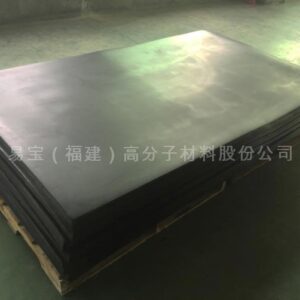
Soft Touch and Bending Comfort
First, wearable and handheld products need more than shock absorption. They also need comfort, smooth bending, and stable recovery after repeated movement. As a result, CR/SBR/SCR sponge is often reviewed for products that wrap, fold, stretch, or press against fabric layers.
At the same time, thickness should match the real function. A thicker sheet can improve cushioning, yet it may reduce flexibility. Conversely, a thinner sheet can bend more easily, although it may provide less pressure support.
Therefore, a practical test should include bending, compression, stitching, adhesive bonding, and finished product assembly. A flat sample may look correct, but the actual part may behave differently after lamination and cutting.
Fabric Lamination and Surface Options
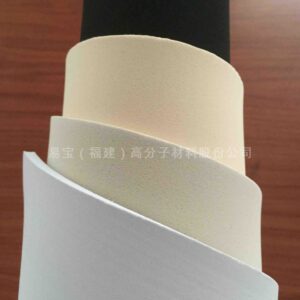
Additionally, fabric lamination can change the final product experience. A textile layer can improve color, surface feel, abrasion direction, sewing stability, and visual quality. Because of this, CR/SBR/SCR sponge is often used when the surface becomes part of the product value.
For example, nylon, polyester, jersey, terry, and other textile surfaces can create different stretch, touch, and appearance. However, the fabric choice should match the sponge, adhesive, cutting method, and finished thickness.
In short, the laminated structure should be tested as a full composite. This approach gives a clearer answer than testing raw sponge and fabric separately.
SBR Sponge Direction for Practical Cushioning and Soft Goods
In many projects, SBR sponge enters the discussion when cushioning, flexibility, and cost balance all matter. It can support bag panels, sports accessories, footwear components, protective pads, and water-sport related soft goods.
However, SBR should still be selected by function, not by name alone. A promotional sleeve may need a different hand feel from a support brace. Likewise, a packaging pad may need different compression behavior from a shoe insert.
Therefore, a useful inquiry should describe the finished part, the surface material, the target thickness, and the expected compression feel. With those details, the sample direction becomes easier to narrow.
Where SBR Often Fits
For soft goods production, SBR sponge can support products that need a flexible pad but do not require the same outdoor sealing profile as EPDM rubber sponge. In addition, it can pair with fabric or other surface materials for a cleaner finished appearance.
For instance, bag panels, sleeves, braces, simple pads, footwear inserts, and exercise products may benefit from a practical cushioning layer. Meanwhile, the finished construction can use textile lamination, adhesive backing, die cutting, or sewing.
As a result, SBR direction often works best when the core requirement is comfort, padding, and shape support. Still, the final grade should be confirmed with a sample that reflects the actual product structure.
EPDM Strengths: Weather Resistance, Outdoor Seals, and Gasket Performance
By comparison, EPDM rubber sponge becomes more suitable when the part must face outdoor air, moisture, sunlight, ozone, heat, cold, or repeated compression. This direction often appears in automotive seals, appliance pads, building strips, lamp pads, and enclosure gaskets.
Furthermore, sealing parts depend on compression recovery. A gasket should compress enough to close a gap, yet it should not collapse too quickly. Therefore, thickness, density direction, cell structure, width, adhesive, and installation pressure should be reviewed together.
In addition, EPDM direction can support applications where part life matters more than soft touch. The material is often considered when aging resistance, weather exposure, vibration reduction, and sealing stability become central requirements.
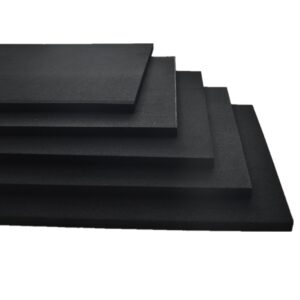
Weather-Facing Use
First, outdoor sealing creates a different challenge from indoor cushioning. The part may face rain, dust, sunlight, heat, cold, and ozone over time. Therefore, EPDM direction is usually a stronger starting point for those conditions.
For example, a window strip may experience sunlight and temperature cycling. A lamp pad may face heat, vibration, and moisture. Similarly, an outdoor control cabinet gasket may need to keep sealing pressure during seasonal changes.
Consequently, the application note should explain exposure conditions clearly. A phrase such as “outdoor enclosure gasket with rain exposure” is more useful than a general phrase such as “rubber pad.”
Gasket and Strip Performance
Moreover, a seal can fail even when the material family is suitable. A part may be too thin, too narrow, too soft, too hard, or poorly supported by the groove. As a result, the drawing must show the real assembly condition.
In particular, compression percentage should match the gap. Too little compression may leave leakage paths. Too much compression may flatten the sponge and reduce recovery.
Therefore, gasket selection should include groove size, contact surface, part thickness, strip width, installation pressure, and adhesive plan. This information helps align material choice with part design.
Application Fit: Which Direction Works Better in Real Projects?
Different applications need different selection logic. Therefore, the following scenarios show how material direction can be narrowed without overcomplicating the first sample request.
Sports Support and Wearable Protection
For braces, guards, belts, and sleeves, flexibility and surface comfort often drive the selection. CR/SBR/SCR sponge with fabric lamination is usually a practical starting point.
Bags, Sleeves, and Protective Panels
For bags and sleeves, the material often needs cushion, shape, and a clean textile surface. Laminated CR/SBR/SCR sponge can support both protection and appearance.
Automotive Pads and Door Strips
For automotive-related pads and seals, aging direction, vibration behavior, compression, odor direction, and installation fit often matter. EPDM direction is commonly reviewed first.
Appliance and Building Seals
For appliance and building applications, the seal may need dust blocking, air sealing, vibration reduction, or sound damping. EPDM direction can support these roles when aging resistance matters.
Choose CR/SBR/SCR Direction When Soft Goods Matter
First, this direction makes sense when the finished product needs comfort, flexible support, surface fabric, and protective cushioning. Sports supports, diving-related sheets, straps, sleeves, bags, footwear pads, and protective liners often fit this use pattern.
Additionally, laminated sponge materials can improve appearance and handling. A textile surface can provide color, texture, stretch, seam strength, and a cleaner finished look. Therefore, CR/SBR/SCR sponge often works well when the visible or touch surface matters.
However, the material should not be selected only because the product needs “soft rubber.” A soft sheet may compress too much. A firm sheet may protect better but feel less comfortable. As a result, the sample set should include real thickness and surface options.
Choose EPDM Direction When Long-Term Sealing Matters
In contrast, EPDM direction becomes the stronger starting point when the finished part must seal, recover, and resist outdoor exposure. Automotive pads, appliance seals, building strips, outdoor enclosures, and equipment gaskets often follow this route.
Moreover, sealing parts usually work under pressure. They must fill a gap, resist deformation, and remain stable during repeated assembly or environmental change. Therefore, the material must match both the environment and the mechanical design.
Finally, gasket testing should use the real assembly whenever possible. A hand-compressed sample may feel suitable, yet the installed part may need a different thickness, width, or compression level.
How Processing Changes the Material Decision
Processing often decides whether a material works in production. Die cutting, slitting, skiving, splitting, laminating, coating, adhesive backing, and punching can all change part behavior. Therefore, material selection should move together with converting planning.
For soft goods, fabric lamination may affect stretch, curl, edge quality, and thickness. In addition, sewing and heat exposure can influence the finished panel. As a result, a laminated sample should be tested after cutting and assembly.
For gasket work, adhesive backing and die-cut edges may be more important. A narrow gasket may need stable release liner handling. Meanwhile, a long strip may need clean edges and controlled winding tension.
Besides material type, the inquiry should include processing expectations. Plain sheet supply, roll slitting, custom thickness, adhesive backing, textile lamination, and finished die-cut shapes require different preparation steps.
Specification Note
For flexible cellular rubber materials, ASTM D1056 is often referenced in specification discussions for sponge or expanded rubber. Therefore, application notes should clarify cell structure, compression direction, aging exposure, fluid contact, density direction, and low-temperature needs when these items are relevant.
Sample and Specification Checklist for Rubber Sponge Projects
Before sampling, a clear specification checklist can reduce repeated communication. It also helps compare material directions based on real use, not only on material names. Therefore, the following details should be prepared whenever possible.
1. Application Environment
- Indoor, outdoor, semi-outdoor, vehicle, appliance, sports, or industrial use.
- Sunlight, ozone, moisture, heat, cold, vibration, dust, or washing exposure.
- Possible contact with oil, sweat, cleaning agents, painted surfaces, or plastic parts.
2. Size and Thickness
- Target thickness or finished thickness range.
- Sheet size, strip length, roll format, or finished part dimensions.
- Tolerance needs for length, width, holes, corners, and edge shape.
3. Function and Compression
- Cushioning, sealing, insulation, vibration damping, protection, or appearance.
- Static compression, repeated compression, bending, folding, or impact use.
- Gap size, groove size, assembly pressure, and contact surface.
4. Processing Needs
- Plain sheet, laminated sheet, adhesive-backed sheet, or die-cut part.
- One-side or two-side fabric lamination, film, coating, or release liner.
- Slitting, punching, skiving, splitting, kiss cutting, or custom shape cutting.
Furthermore, drawings make the sample process more accurate. Even a simple sketch can show holes, narrow areas, adhesive zones, rounded corners, and assembly pressure. As a result, the material recommendation can move closer to the real production condition.
For projects that need sheet selection, cutting support, adhesive planning, or finished part discussion, send the application environment, sheet size, target thickness, drawing, and processing notes through the YIBAO Foam contact page.
How to Compare Samples Without Slowing the Project
First, choose a small number of realistic sample directions. Too many random samples can slow testing and make feedback unclear. Therefore, the first sample set should match the main application function.
Second, test the sample in the real part shape whenever possible. A sheet sample may appear suitable, yet a narrow strip, laminated panel, or die-cut gasket may behave differently. As a result, finished-shape samples often provide better feedback.
Third, test adhesive and substrate together. Adhesive performance can change with metal, plastic, glass, fabric, paint, or coated surfaces. Therefore, bonding tests should use the same surface used in production.
Finally, record feedback in simple terms. Notes such as “too soft after compression,” “edge curls after cutting,” “surface feel is suitable,” or “seal does not recover enough” can guide the next sample quickly.
Explore the Right Product Direction
After the comparison step, the next useful action is to review the closest material family. The following routes help connect the project requirement with YIBAO Foam material categories.
Neoprene / SBR / SCR / CR Division
Best-fit route for flexible soft goods, laminated sheets, sports protection, footwear padding, bags, sleeves, and protective cushioning.
View Soft Goods MaterialsEPDM Division
Best-fit route for outdoor sealing, automotive pads, appliance gaskets, weather-facing strips, vibration pads, and long-term compression parts.
View EPDM MaterialsAll Foam Products
Useful when a project may need comparison across rubber sponge, silicone, EVA, PE, NBR/PVC, flame-retardant foam, or converting services.
Browse All ProductsFAQ
Is CR/SBR/SCR sponge the same as EPDM rubber sponge?
No. Although both directions belong to flexible rubber sponge discussions, they serve different project needs. Generally, CR/SBR/SCR sponge supports flexibility, lamination, comfort, and protective cushioning, while EPDM rubber sponge supports weather resistance, outdoor sealing, and gasket stability.
Which rubber sponge direction is better outdoors?
For outdoor sealing and weather-facing parts, EPDM direction is usually the stronger starting point. It is commonly reviewed for seals, strips, pads, gaskets, appliance parts, and automotive applications that face aging, ozone, moisture, and temperature change.
Can CR, SBR, or SCR sponge be laminated with fabric?
Yes. CR/SBR/SCR sponge materials are often paired with fabric for sports supports, soft goods, sleeves, bags, footwear parts, and protective products. However, fabric type, stretch direction, adhesive choice, and total thickness should be tested before production.
Can EPDM direction be used for gaskets?
Yes. EPDM direction is widely used for gaskets, sealing strips, pads, and compression parts, especially where outdoor exposure or long-term aging resistance matters. For best results, drawings should include thickness, width, length, hole position, adhesive needs, and expected compression.
Which material direction should be sampled first?
The first sample should follow the main function. For comfort, lamination, and protective cushioning, CR/SBR/SCR sponge is often the first direction. For outdoor sealing, gasket work, and long-term compression, EPDM direction is often the first direction.
Conclusion: Select by Function, Environment, and Processing Route
In summary, rubber sponge selection should begin with the finished part function. CR/SBR/SCR sponge is often a practical direction for soft goods, laminated fabric, wearable protection, bags, sleeves, footwear, and cushioned panels. Meanwhile, EPDM rubber sponge is often a stronger direction for outdoor seals, automotive pads, appliance strips, building gaskets, and long-term compression parts.
Therefore, the material name should not be the only decision point. A successful project should also confirm sheet size, thickness, compression level, surface finish, adhesive backing, cutting method, and packaging. In addition, sample testing should reflect the real assembly condition.
- First, define the application environment, including indoor or outdoor use, moisture, sunlight, ozone, heat, vibration, and surface contact.
- Second, confirm sheet size, thickness, part drawing, lamination, adhesive backing, and converting needs before sampling.
- Finally, compare samples in the real part shape so cushioning, sealing, recovery, and surface behavior can be checked accurately.
Send Application Details for Rubber Sponge Material Matching
For a clearer comparison between neoprene foam and EPDM foam, prepare the application environment, sheet size, target thickness, finished part drawing, compression need, lamination plan, adhesive requirement, and processing method. Then, share those details with YIBAO Foam for a more accurate sample direction.