

In a real workshop, foam does not work in a clean drawing. It sits near oil mist, warm equipment, vibrating covers, tool marks and repeated assembly pressure. Therefore, NBR foam is often reviewed when a pad, seal or insulation layer must stay useful around lubricant, grease and mechanical movement. Instead of choosing by thickness alone, industrial teams need to understand why the material works, where it fits, how to judge samples and when to move from sheet material to custom converted parts.
Problem First
Why oily environments change foam selection
At first glance, many black foam sheets look similar. However, the working environment quickly separates them. A foam pad near a machine cover may face oil mist, warm air, repeated compression and vibration at the same time. As a result, a material that looks fine on the desk may fail after weeks of service.
For example, a general cushioning pad may feel soft during sampling. Yet, after contact with lubricant, its edge may swell or soften. Then the pad may lose its original shape. Once that happens, a cover can start to rattle, a seal line can open, or an adhesive layer can lift from the surface.
Therefore, oil resistance should be treated as a working condition, not as a marketing word. In many industrial projects, the part does not need to soak in oil. Instead, it may need to survive oily hands, greasy dust, compressor residue, cutting-fluid mist or maintenance contact. This practical difference is important.
A useful foam part must keep contact pressure after installation. Meanwhile, it should protect the surface, reduce noise and hold its position. Because of that, the selection process should start with real use. The best question is not “Which foam is softer?” The better question is “What will this part experience after assembly?”
A common failure scene
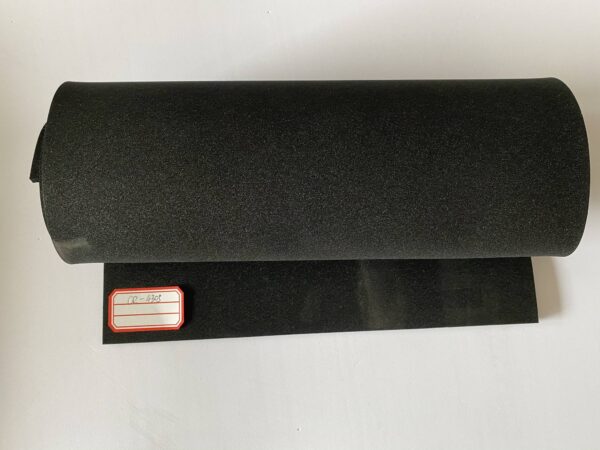
Consider a small foam strip around an equipment access panel. During installation, the strip compresses neatly. The panel closes well, and the first inspection looks good. However, after the machine runs for a period, warm air and oil mist reach the foam surface.
Later, the strip may feel sticky or too soft. In some cases, it may flatten at the screw points. Then dust enters the gap, and the panel begins to make noise during operation. This is not only a material issue. It is also a selection issue because the first sample was not tested under the real scene.
Therefore, a better approach is to describe the environment before asking for a grade. Oil type, contact frequency, temperature, compression force, surface condition and assembly method should all be part of the discussion. With these details, sample selection becomes much more accurate.
Material Logic
The simple principle behind nitrile-based foam
Nitrile-based foam is valued because nitrile rubber chemistry is known for better behavior around oils than many general-purpose foam materials. In simple terms, it is often chosen when the foam must stay useful near lubricant or grease. However, material chemistry is only one part of the story.
For a technical reference, ENEOS Materials describes NBR as an acrylonitrile-butadiene copolymer with strong oil resistance, widely used in automotive parts and industrial goods. This supports why nitrile-based foam is commonly reviewed for oil-adjacent pads, seals and gaskets.
The foam structure also matters. A suitable cell structure helps the sheet compress and recover. Meanwhile, the surface texture affects how well it sits against metal, plastic or coated parts. If the foam is too open, it may collect residue. If it is too smooth and firm, it may not fill small gaps well.
For this reason, a practical material review should look at three layers. First, the chemistry should match oil exposure. Second, the physical structure should match compression. Third, the finished part design should match installation. When all three match, the foam is more likely to work in production.
Oil contact
Check oil mist, grease, lubricant and cleaning residue before selecting the first sample.
Compression
Match density and thickness with real closing force, not only the drawing gap.
Converting
Review edge quality, adhesive backing, liner release and part shape during sample trials.
Why NBR/PVC blends are common in industrial parts
In many projects, NBR/PVC foam provides a practical balance. The nitrile side supports oil resistance. The PVC side can help with sheet handling, processing stability and application flexibility. Therefore, the blend is often easier to convert into strips, pads and gaskets.
This matters because most industrial foam is not used as a raw sheet. It is cut, laminated, slit, packed, peeled and pressed into position. If the sheet has poor handling behavior, production will notice it quickly. Operators may see curled edges, stretching strips, weak adhesive release or inconsistent pad placement.
Therefore, the blend should be judged as a working material, not only as a data sheet. It should resist the environment, but it should also cut cleanly, stay flat, hold adhesive and keep a neat edge. These details improve both assembly quality and daily production speed.
Oil resistance does not mean ignoring other risks
Oil resistance is important, but it does not replace every other requirement. For example, a pad near a hot component still needs temperature review. A strip used in a visible position still needs edge and appearance control. A gasket under long compression still needs compression set testing.
Moreover, the adhesive may fail before the foam body fails. A pad can have a suitable foam layer, yet still lift from a powder-coated surface. Therefore, adhesive backing should be tested with the real substrate, especially when oil residue or surface texture is present.
Use Scenes
Real application scenes: where the material makes sense
A useful industrial article should not only list applications. Instead, it should explain why those applications need the material. YIBAO’s NBR/PVC foam product information covers automotive, household appliance, packaging and building material uses. These areas are connected by one idea: a soft material must perform inside a real assembly, not only on a sample table.
Automotive and transport assemblies
In automotive-related assemblies, foam parts often sit near doors, lights, trunk areas, covers and brackets. These areas may face vibration, dust, temperature changes and oily residue.
For example, a small shock absorbing pad near a metal bracket can reduce knocking noise. At the same time, it must resist compression marks and remain stable when grease reaches the surface.
Appliances and commercial equipment
In refrigerators, freezers, air conditioners and vending machines, foam parts often hide behind panels or inside housings. Although the part is not always visible, its failure can still be obvious.
A loose panel can buzz. A poor seal can allow dust or air leakage. A flattened pad can create vibration noise after repeated operation.
Precision packaging pads
Protective packaging is not always clean and dry. Industrial instruments, mechanical parts and medical-related devices may have machined surfaces, lubricated areas or sensitive edges.
A protective pad should support the product without bottoming out. It should also avoid scratching the surface during transport.
Building and panel sealing
In building-related use, foam may appear around doors, windows, panels and sound insulation layers. Here, compression and surface contact are often the main concerns.
A seal that loses shape quickly will not keep the gap closed. Therefore, recovery after compression should be checked carefully.
Selection Method
How to judge the right grade without relying on parameters only
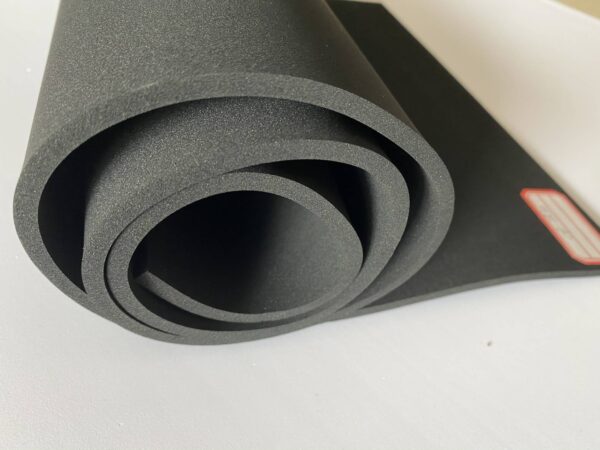
Parameters are useful, but they are not the whole decision. Density, thickness and hardness can guide the first comparison. However, a foam part succeeds only when it works in the assembly. Therefore, sample judgment should combine lab thinking with workshop thinking.
1. Start with the failure risk
First, define what failure would look like. Would the part flatten? Would the adhesive lift? Would the panel rattle? Would oil soften the edge? Would the product move inside the package? This question helps avoid a vague material search.
2. Match density with closing force
Density affects how the foam feels and supports pressure. A bolted metal cover can usually handle a firmer strip. A snap-fit plastic cover may need softer compression. Therefore, density should follow the real assembly force.
3. Test with real oil and real surfaces
Oil resistance should be tested with the actual fluid when possible. Cutting oil, engine oil, grease, compressor oil and cleaning residue may behave differently. Adhesive-backed parts should also be pressed onto the real production surface.
4. Let production operators handle the sample
A sample that looks suitable in engineering review may still be slow on the line. Operators can quickly reveal liner issues, curling, stretching, difficult peeling or unstable placement.
Practical selection table
| Material | Best for | Key property | Suggested YIBAO page |
|---|---|---|---|
| Nitrile foam sheet | Oil-adjacent seals, pads and industrial gaskets | Oil resistance with flexible compression | NBR/PVC FOAM |
| NBR/PVC blend | Appliance sealing, automotive pads and converted strips | Balanced oil resistance, sheet handling and processing stability | NBR/PVC foam sheet |
| Adhesive-backed foam parts | Fast assembly pads, washers, strips and custom shapes | Peel-and-stick installation with controlled geometry | Converting |
From Sheet to Part
Converting, adhesive backing and pad design
A raw sheet is only the beginning. In most industrial projects, the foam must become a strip, pad, gasket, washer, spacer or custom shape. Therefore, converting quality can decide whether the material works smoothly in production.
For example, a long adhesive strip must stay straight after peeling. A small pad must not curl on the liner. A washer should keep a clean inner hole. A gasket should not tear at narrow corners. These are not just appearance details. They affect speed, waste and final assembly quality.
Adhesive backing should be tested early
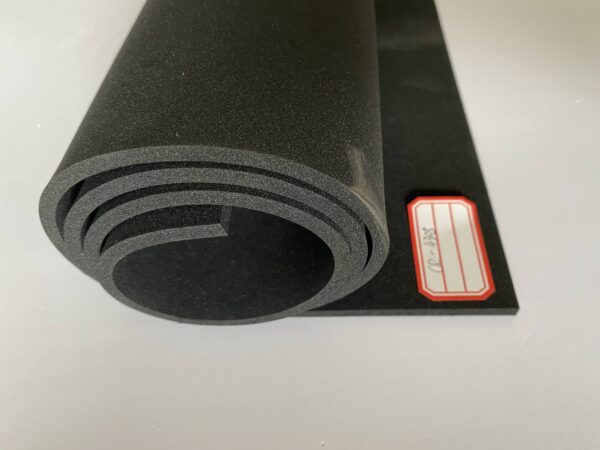
Adhesive backing can save installation time. However, it can also become the weak point if selected too late. Painted metal, powder-coated steel, stainless steel, ABS plastic and rubber-like surfaces all bond differently.
In oily areas, surface preparation matters even more. A pad may bond well to a clean sample plate but lift from an oily machine cover. Therefore, testing should include realistic cleaning steps, pressure, aging time and temperature.
Part shape should also respect the material. Narrow bridges, sharp inside corners and very small holes can become difficult during die cutting or peeling. A small design change often improves production stability without changing the function.
Practical Testing
Workshop-style experience tips for sample testing
Before formal testing, simple hands-on checks can reveal many problems. These checks do not replace lab reports. However, they help engineering, sourcing and production teams understand how the foam behaves in the real assembly.
Press the sample in the actual gap
First, place the sample where it will actually work. Close the cover, tighten the screws or press the housing as production would. Then reopen it and check the mark. A good sample should compress evenly without permanent deep crushing.
If the foam barely touches the opposite surface, the thickness may be too low. If the cover feels forced, the foam may be too thick or too firm. Therefore, this quick check can guide the next sample round before more formal testing begins.
Expose it to the real fluid
Next, expose a small piece to the actual oil, grease or cleaning residue. Watch for swelling, softening, surface change or edge damage. After that, compress the exposed sample again. This combined check is more realistic than looking at oil exposure alone.
If the foam body looks acceptable but the adhesive edge lifts, the adhesive needs review. If the surface becomes too soft, the material grade may need adjustment. If the sample stays stable, the project can move to more structured approval testing.
Sourcing Checklist
What to prepare before requesting samples
A clear inquiry helps material selection move faster. Instead of only asking for a foam sheet quotation, prepare a short application description. This helps YIBAO Foam understand the scene, suggest a direction and avoid unnecessary sample rounds.
- Application scene: machinery cover, appliance seal, packaging pad, bracket cushion, gasket strip or insulation layer.
- Oil exposure: oil mist, grease touch, direct contact, cleaning residue or occasional maintenance contamination.
- Assembly method: bolted cover, snap-fit housing, manual placement, adhesive backing or roll-fed installation.
- Part format: sheet, roll, strip, die-cut pad, washer, gasket, liner-backed part or laminated construction.
- Surface condition: painted metal, plastic, rubber, powder coating, stainless steel or textured surface.
- Testing focus: oil resistance, compression recovery, adhesive peel, edge quality, packing stability or noise reduction.
Photos and drawings are especially helpful. A photo of the gap can show whether a soft seal or firmer pad is more suitable. A drawing can show whether the part has fragile corners or narrow holes. Meanwhile, expected annual quantity helps determine the most practical converting method.
Internal Reading
Extended reading and related YIBAO pages
The following pages support material review, application planning and custom processing discussions. They also help keep internal navigation natural without overloading the article with repeated commercial links.
Common Questions
FAQ
Is nitrile-based foam only useful when oil contact is heavy?
No. It can also be useful where oil contact is occasional but still possible. For example, maintenance areas, compressor zones and machinery covers may only face oil mist or greasy touch. Even then, oil resistance can help reduce long-term material risk.
What makes NBR/PVC foam different from general cushioning foam?
NBR/PVC foam is often selected when oil resistance, sheet handling and converted part stability matter together. General cushioning foam may work in clean and dry packaging, but oily industrial environments usually require a more focused material review.
Can oil resistant foam be made into adhesive-backed pads?
Yes. Oil resistant foam can be converted into adhesive-backed pads, strips, washers and gaskets. However, adhesive selection should be tested on the actual surface, especially when oil residue, powder coating or textured plastic is involved.
How should a sample be judged before mass production?
The sample should be installed in the real assembly, compressed under actual force and exposed to realistic oil or residue. In addition, edge cleanliness, adhesive peel, liner release and recovery after compression should be checked.
What information should be sent for a custom foam inquiry?
Useful information includes application scene, oil type, working temperature, target thickness, drawing, compression condition, adhesive surface, annual quantity and whether the part needs die cutting, slitting, lamination or roll supply.
Material Support · Sample Review · Custom Converting
Move from material idea to a workable foam part
A reliable foam part should make the assembly quieter, cleaner and easier to control. It should not create new problems on the line. Therefore, the most effective path is simple: define the scene, test the sample under real pressure, and confirm the converted format before mass production.
YIBAO Foam can support material suggestions, sample matching and custom processing for NBR foam pads, insulation layers, sealing strips and converted industrial foam components. Send the application details, drawing or target part photo to begin a practical review.
- For material selection: describe oil exposure, temperature, compression and surface contact.
- For sample testing: prepare the real substrate, real pressure and real fluid if possible.
- For custom parts: provide drawing size, adhesive needs, liner format and expected quantity.